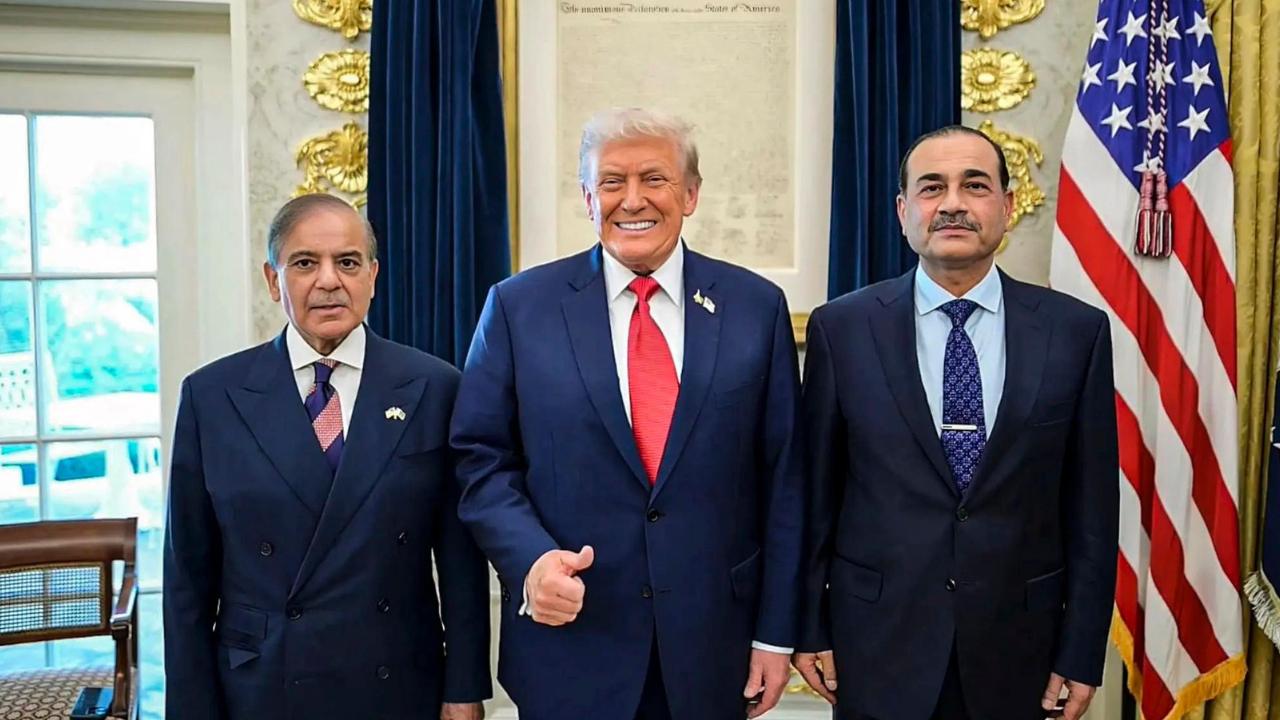
The temporary suspension of the US-Israel military campaign against Iran on April 8 cannot be understood through the lens of traditional multilateral diplomacy. While conventional analysis misinterprets Washington’s restraint as a diplomatic concession or an acknowledgment of regional mediation, a structural audit of the theater reveals a highly calculated application of maximum economic leverage paired with calculated tactical pauses. When President Donald Trump declared aboard Air Force One that the cessation of kinetic strikes was executed as a "favour" to Pakistan, he articulated an explicit strategy of transactional bilateralism that subordinates long-term alliance structures to immediate, localized tactical advantages.
This geopolitical pause operates on a clear cost-benefit optimization matrix. By shifting from active aerial bombardment—initiated during the flare-up on February 28—to a tightly maintained naval blockade of Iranian ports, the United States has substituted expensive kinetic ordnance for a compounding economic stranglehold. The strategic rationale for granting Islamabad a rhetorical and diplomatic victory rests not on a sudden alignment of values, but on a precise calculation of regional dependencies, logistical access, and the enforcement limits of the maritime blockade. Also making waves lately: The Secret Safeguards That Strained the Nuclear Chain of Command.
The Strategic Leverage Framework
The decision to freeze active bombardment while maintaining a comprehensive maritime blockade rests on three distinct operational pillars.
- The Cost-Function Shift: Aerial campaigns incur significant political, financial, and logistical deprecation. By migrating the operational posture to an enforcement blockade, the United States forces Iran into a state of structural economic consumption without risking American airframes or expending precision-guided munitions. The blockade functions as an economic tax that compounds over time, depleting Tehran’s foreign exchange reserves and forcing internal resource rationing.
- The Pakistani Buffer Constraint: Pakistan shares a highly volatile, porous border with Iran across Balochistan. A total structural collapse of the Iranian state risks a massive refugee crisis, cross-border militant spillover, and the destabilization of a nuclear-armed state in Islamabad. By utilizing Pakistan as an intermediary, the United States preserves Islamabad’s internal stability while simultaneously exploiting its reliance on Gulf energy imports, which have been severely choked by the near-closure of the Strait of Hormuz.
- The Externalized Diplomatic Backchannel: By positioning Field Marshal Asim Munir and Prime Minister Shehbaz Sharif as the formal architects of the peace process, Washington establishes a highly effective buffer. This architecture allows the US administration to issue maximalist demands, reject Iranian counterproposals, and walk away from high-level summits—such as the aborted Islamabad talks involving Vice President JD Vance, Steve Witkoff, and Jared Kushner—without collapsing the overarching channel of communication.
This structural layout creates a deliberate asymmetry. While Iranian Foreign Minister Abbas Araghchi points to "contradictory messages" from Washington as a sign of diplomatic failure, the variation in public messaging is an intentional mechanic designed to prevent Iran from establishing a stable negotiating baseline. More information regarding the matter are covered by USA Today.
Logistical Duplicity and the Neutrality Paradox
The primary structural failure in the current mediation framework lies in the unverified neutrality of the broker. Recent satellite imagery and intelligence briefings indicating that Iranian military aircraft landed at Pakistani airbases during the height of the kinetic campaign expose a deep operational paradox. Pakistan is attempting to execute a dual-track strategy: presenting itself to Washington as an indispensable regional stabilizer while quietly offering logistical refuge to Iranian assets to mitigate the threat of immediate cross-border blowback.
This dual-track approach introduces a severe structural vulnerability into the negotiation framework.
[Iranian Logistical Flight Path] ---> [Pakistani Air Logistics Bases]
                                               |
                                     (Strategic Opacity)
                                               |
[Washington Kinetic Decisions] <--- [Islamabad Mediation Track]
The model demonstrates that the mediation channel is inherently compromised by local survival imperatives. Pakistan’s historical track record—specifically its management of the 2020 Taliban negotiations which facilitated a highly unstable US withdrawal from Afghanistan—indicates that Islamabad prioritizes regional containment over permanent non-proliferation objectives.
Furthermore, the involvement of major external actors introduces conflicting economic vectors. During the state visit to China, the administration secured an agreement from Chinese President Xi Jinping regarding the necessity of keeping the Strait of Hormuz open to global commerce. However, Beijing’s alignment is purely transactional; China requires the stabilization of maritime energy corridors to protect its industrial manufacturing supply chains, yet it actively supports Pakistan’s mediation infrastructure to prevent an absolute consolidation of American hegemony in Western Asia.
The Nuclear Decoupling and Technology Bottleneck
The structural impasse holding back a permanent diplomatic resolution is rooted in an irreversible technological asymmetry. The administration has established a non-negotiable parameter: a comprehensive, verifiable 20-year halt to all Iranian nuclear enrichment activity and the complete surrender of its enriched uranium stockpile.
The strategic assessment underlying this aggressive posture relies on recent intelligence indicating that recent kinetic strikes severely degraded Iran’s core nuclear facilities. The administration's current calculations operate on the hypothesis that Tehran lacks the internal technical capability, specialized processing equipment, and uncompromised facilities required to safely extract or redeploy damaged nuclear fuel rods under the pressure of an active naval blockade.
Iran's negotiation strategy relies on demanding immediate, comprehensive sanctions relief before addressing its enrichment levels or dismantling its regional proxy infrastructure. This creates an irreconcilable structural deadlock.
- The Verification Deficit: Past diplomatic arrangements demonstrated that temporary enrichment freezes are easily reversible. A 20-year commitment requires intrusive, real-time telemetry and physical inspection mechanisms that the current Iranian political leadership views as a fundamental violation of sovereignty.
- The Choke Point Leverage: Iran's primary retaliatory capability remains its asymmetric threat to maritime shipping in the Strait of Hormuz. The administration’s deployment of a "shoot and kill" order against small tactical watercraft attempting to deploy naval mines directly counters Iran’s primary tool of economic leverage.
Strategic Playbook for Regional Operations
Corporate entities, energy logistics providers, and institutional investors must abandon the expectation of a rapid return to regional normalization. The current ceasefire is not a precursor to a comprehensive treaty; it is a stabilized state of economic warfare.
Organizations must immediately execute a structural pivot to insulate supply chains from rapid escalation cycles. The primary operational directive is the immediate diversification of maritime transport routes away from the Persian Gulf. Energy infrastructure firms must accelerate capital expenditure into bypass pipelines—such as the UAE’s accelerated Fujairah pipeline initiative—to insulate crude oil delivery from sudden operational disruptions within the Strait of Hormuz choke point.
The second operational directive requires a complete re-evaluation of sovereign risk models concerning South Asian and Middle Eastern counter-parties. The transactional nature of US foreign policy under the current administration means that localized security guarantees can be instantly rewritten or abandoned if the broader economic cost function changes. Supply chain and logistics frameworks must embed a permanent geopolitical risk premium into all operations traversing the Indian Ocean and Gulf Oman sectors, assuming that active kinetic engagement could resume within a 72-hour window upon any definitive failure of the indirect Islamabad channel.