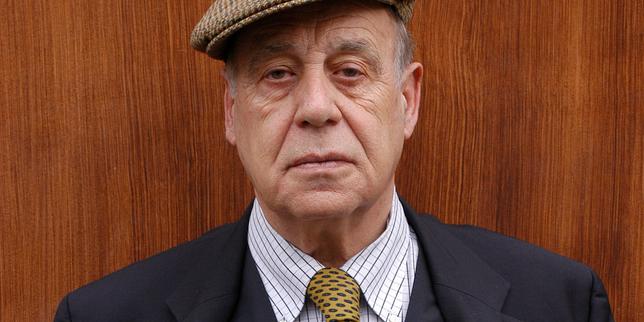
The crisp air of a Swiss courtroom usually smells of old paper, polished oak, and quiet certainty. Decades ago, a man named Hans sat in those rooms, watching his father, a distinguished reserve artillery colonel and town judge, dispense orderly, patrician justice. Hans was a good bourgeois boy from Thun. He belonged to a conservative student fraternity. He wore the right clothes, spoke with the right cadence, and inherited a world built on a foundational myth: that Switzerland was a clean, innocent island of peace floating entirely above the grime of global politics.
Then Hans died, and Jean was born.
It happened because of a chance encounter in 1964 with a man smelling of cheap cigars and wet green fatigue jackets. Ernesto "Che" Guevara had arrived in Geneva for a global sugar conference. Jean, then a young communist academic, was assigned as his driver. Mesmerized by the myth of the Cuban revolution, Jean begged the comandante to take him along, to let him fight in the jungles of Latin America.
Guevara looked out the window of the car, past the pristine facades of the lakeside banks, and shook his head. He told the young man that the real fight was not in the mountains. He pointed at the stone buildings where the world’s wealth was stored, sorted, and scrubbed. "It's here, at the heart of the system, that you must fight," Guevara told him. "Because that's where the monster's brain is."
Jean Ziegler spent the next sixty years doing exactly that. When he passed away in Geneva at ninety-two, succumbing to the long, slow erosion of Parkinson’s disease, a profound silence settled over the financial capitals of Europe. For over half a century, Ziegler had been the most hated man in his own country. He was the state’s grand betrayer, the academic who looked at the postcard-perfect image of snow-capped mountains and purple cows and saw a giant machinery for laundering the sins of the world.
To understand why a man with a comfortable professor's chair at the University of Geneva would choose to spend his life being sued, vilified, and branded a traitor by his neighbors, you have to look at what he saw when he left the safety of the valleys.
Consider a hypothetical child standing on the red dirt of a village in the Democratic Republic of the Congo. The child’s stomach is swollen from kwashiorkor, the slow starvation that eats a body from the inside out. This child is not starving because the earth is stingy. The earth produces more than enough food to feed every human mouth twice over. No, the child is starving because the money meant for their village's well, their mother’s medicine, and their local school has been systematically siphoned out of the country by a dictator who travels in a private jet.
Where does that money go? For decades, the answer was simple. It went into numbered accounts in Zurich and Geneva, shielded by a code of absolute bank secrecy that was treated with the sanctity of religious scripture.
Ziegler saw this up close in 1961, traveling through the newly independent Congo as a young translator. He watched starving children beg outside the high wire gates of luxury hotels while Mobutu Sese Seko’s guards beat them back with batons. Later, when he discovered that Mobutu’s vast, blood-soaked fortunes were sitting quietly in the vaults of Swiss banks, protected by polished men in tailored suits who went to church every Sunday, something inside him broke.
He realized that the neatness of his homeland was paid for by the chaos of somewhere else.
In 1976, he threw a molotov cocktail made of ink and paper into the quiet living rooms of his compatriots. He published Une Suisse au-dessus de tout soupçon—Switzerland Exposed. It was an unsparing, furious inventory of how the nation’s wealth was built on the misery of the global south, the flight of dirty capital, and the quiet storage of gold stolen by dictators and despots.
The reaction was immediate and ferocious. The establishment did not debate him; they tried to ruin him. He was hit with a barrage of lawsuits from banks, corporations, and politicians. His parliamentary immunity as a Social Democratic politician was stripped away. He faced massive financial ruin, forced to use his book royalties and teaching salary just to pay off legal fees and damages. Neighbors crossed the street to avoid him. To the Swiss elite, he was an existential threat to the national brand.
But Ziegler was entirely unbothered by the isolation. He knew that the opposite of love isn't hate; it's indifference.
He moved with a frantic, theatrical energy. He spoke in a booming, dramatic baritone, waving his hands, using words like "assassination" to describe the mechanics of global trade. When he was appointed the United Nations Special Rapporteur on the Right to Food in 2000, he took his private war to the global stage. He famously declared that a child who dies of hunger does not die of natural causes. That child is murdered by an economic system that values commodity speculation over human life.
He attacked the production of biofuels, pointing out that burning corn to fill the tanks of European SUVs meant taking bread out of the mouths of families in Michoacán. He testified before the US Senate about the dark history of dormant Swiss bank accounts belonging to Holocaust victims, forcing his country to finally confront its wartime role as Nazi Germany's banker.
His critics called him a hypocrite. They noted that he lived in a lovely home in the wealthy Geneva suburb of Russin while preaching Marxist revolution. They pointed to his romantic, arguably blind devotion to Cuba, where he chose to ignore the regime's authoritarian cracks because he so desperately needed to believe that someone, somewhere, was successfully resisting the capitalist machine.
Those criticisms weren't entirely wrong. Ziegler was a complex, sometimes contradictory figure—a bourgeois intellectual who loved the finer things but spent his life weaponizing his privilege against the very class that gave it to him. He was a man who converted to Catholicism late in life because, as he put it, there was simply too much love in the world for it not to have a divine source. He harbored a deep, almost childlike need for hope.
In his final years, bent by illness but still writing, he published one last book asking a question that sounds less like an academic thesis and more like a prayer: Where is hope?
His answer was always the same. Hope is found in the refusal to look away. It is found in the willingness to be uncomfortable, to disrupt the clean, quiet peace of those who profit from the distance between the boardroom and the battlefield.
With his death, Switzerland lost its greatest mirror. The banks have largely changed their laws now; the old era of absolute secrecy has been chipped away by international pressure, partly because of the cracks Ziegler helped hammer into the wall decades ago. Yet the fundamental machinery of global inequality remains as quiet, as polished, and as deadly as ever.
The judge’s son from Thun never went back to the courtroom. He chose the cold wind of public scorn instead. He understood that a clean conscience is often just the luxury of those who can afford to pay someone else to do their dirty work.