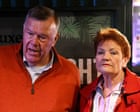
When Pauline Hanson's newly minted One Nation Member of Parliament, David Farley, walked into the House of Representatives chamber this week, his actions completely undermined the primary economic message of his own political movement. By casting a vote alongside the Greens and teal independents to wind back fuel tax credits, Farley did not just commit a procedural error. He voted directly against the financial interests of regional industries—including miners, truck drivers, and farmers—that form the bedrock of One Nation's core constituency.
The fallout was instantaneous. Industry groups expressed sharp disapproval, and Coalition strategists seized on the moment to portray the populist party as structurally unequipped for federal governance. Farley quickly blamed his voting record on parliamentary inexperience and a lack of support staff. However, an examination of the Canberra machine reveals that this incident highlights a far larger structural issue facing minor parties and independent representatives. For a deeper dive into this area, we suggest: this related article.
The Reality of the Chamber Floor
The official explanation from Farley's office focused on the rapid pace of the parliamentary legislative process and a lack of technical support. The first-term MP, who recently won the Farrer by-election following the resignation of former Liberal leader Sussan Ley, claimed that an understaffed office left him exposed during rapid-fire votes.
In a public statement, Farley noted that he sought immediate advice from the Clerk of the House of Representatives to correct the record, only to find that parliamentary rules prevent changing an official vote after a division has concluded. He attributed the error to the Labor government’s allocation of staff, claiming his small team was completely overwhelmed by the legislative workload. For further context on this topic, detailed analysis can also be found on NBC News.
While the administrative burden on minor parties is genuine, experienced political players note that the mechanics of the house floor are designed to be clear. Parties routinely use designated voting whips or visual cues to ensure alignment on complex amendments. To major party strategists, a representative sitting on the wrong side of the carpet during a high-stakes division is a clear sign of systemic organizational failure rather than a minor clerical oversight.
Regional Backlash and Coalition Pressure
The legislative amendment in question aimed to cap the fuel tax credit scheme, which currently refunds the 52.6 cents per litre fuel excise to businesses operating heavy off-road machinery. For regional communities, this rebate is an essential economic safeguard against rising operational costs.
The reaction from key industry leaders was swift and severe. Minerals Council of Australia chief executive Tania Constable expressed deep disappointment, publicly stating that Farley had failed his first major legislative test by voting against the interests of regional Australia. The National Farmers' Federation joined the Coalition in demanding immediate policy clarity from One Nation leadership, noting that the vote aligned the party with urban environmental advocates rather than rural producers.
The Coalition exploited the mistake immediately to wedge One Nation on its home turf. National Party figures dismissed the excuse of political inexperience, publicly stating that the federal parliament is no place for training wheels. Shadow ministers used the incident to argue that a vote for minor party populists ultimately yields unpredictable legislative outcomes that can harm regional economies.
The Resource Gap for Minor Parties
Farley’s defense regarding a lack of advisors touches on an ongoing institutional debate within Australian politics. The allocation of staff to crossbenchers and minor parties remains entirely at the discretion of the Prime Minister. While major parties command vast, publicly funded secretariats filled with policy specialists, minor parties frequently operate with small, multi-role teams.
This structural imbalance creates a distinct vulnerability when complex bills are amended rapidly on the house floor. Without dedicated policy staff to analyze late-stage amendments in real time, rookie politicians face significant risks.
However, historical precedent shows that successful independent and minor-party representatives mitigate this risk by establishing strict voting protocols or establishing informal alliances with major party whips to avoid procedural errors. Blaming the system after a high-profile legislative error rarely satisfies an angry constituency.
Managing the Political Damage
Behind the scenes, One Nation leadership moved quickly into damage control. Party officials reportedly issued private assurances to mining and agricultural executives, reiterating that the party remains completely committed to defending the existing fuel tax credit regime.
This legislative error is not the first time Farley’s political positioning has required intervention from party leadership. Earlier this month, Pauline Hanson held private discussions with the new MP after he expressed public support for current migration intakes and indicated plans to display the Aboriginal and Torres Strait Islander flags in his electorate office. Farley later modified his stance online, confirming that the Australian national flag would hold sole prominence in his office.
The recurring need for internal corrections points to a broader challenge for populist political movements. When a party expands its parliamentary footprint via by-elections or protest votes, it frequently recruits candidates who lack formal legislative training. This structural gap creates a clear vulnerability on the floor of parliament, where a single incorrect vote can instantly compromise an entire national platform.