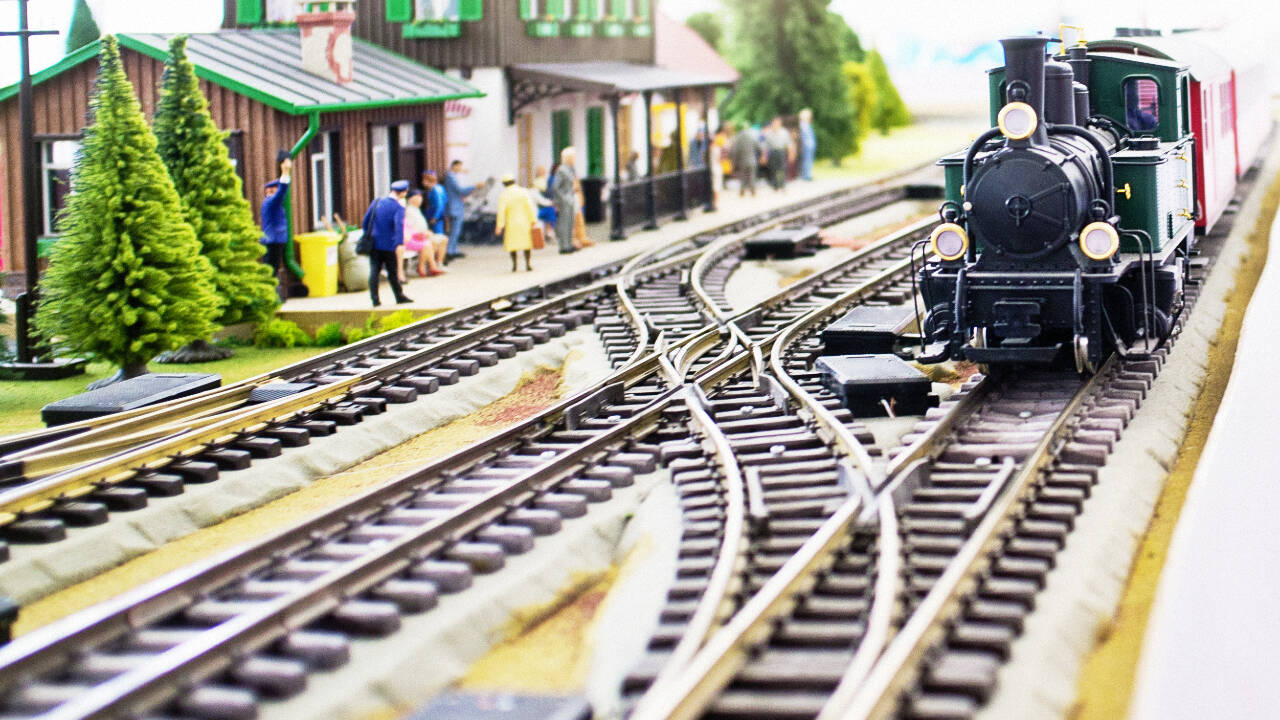
Most model trains live in basements or garages, running in tight circles around plastic mountains. Train Mountain in southern Oregon threw out that rulebook completely.
Near Chiloquin, a 2,200-acre expanse of ponderosa pine forest and high desert holds more than 32 miles of 7.5-inch gauge track—with some counts pushing well past 35 miles depending on how spurs and loops are tallied. It didn't start as a corporate theme park or a master-planned tourist attraction. It began with a backyard loop and a simple deal between neighbors.
How a Backyard Loop Became a 2,200-Acre Network
Ed St. John started small. He built a backyard railroad called the Over-The-Hill Live Steamers and figured out something practical: if he provided the materials, volunteers from nearby Medford were happy to show up and help lay track.
That small line still exists today as the Klamath and Western loop. Enter Quintin Breen, a lawyer with a lifelong railroading obsession who spotted St. John's project and started buying adjacent acreage with a much bigger layout in mind. By 1992, the two railroads connected, and Breen later purchased St. John's property, folding the original backyard line into what became Train Mountain.
Honest truth? Plenty of hobbyists dream up sprawling backyard empires. Almost nobody pulls off buying up thousands of acres of rural Oregon land to make it real.
Two Nonprofits Keep the Wheels Turning
If you visit expecting a standard commercial ticket booth, you'll find a different structure altogether:
- Train Mountain Institute (TMI) owns the 2,200-acre property and runs educational programs, a library, and the Train Mountain Museum. The museum collection includes over 50 full-sized rail cars, maintenance-of-way equipment, and related pieces.
- Train Mountain Railroad (TMRR) operates as a 501(c)(7) member-benefit group that supplies the volunteer sweat equity—maintaining right-of-way, running shops, and hosting monthly meets.
- Klamath & Western Railroad leases trackage rights from TMI on St. John's original loop, keeping public rides and a summer Saturday lunch stand going.
That split matters because it explains why the place feels authentic rather than polished-to-death. Retirees, machinists, welders, engineers, and families show up with real tools and real grit. Oregon Public Broadcasting (OPB) captured volunteers cutting recycled plastic ties and assembling thousands of feet of track a year, while builders have poured years—in one documented case, around 8,000 hours over a decade—into hand-crafting a scale steam locomotive.
What Riding 7.5-Inch Gauge Actually Feels Like
Picture sitting on the train rather than watching it from across a room. At 7.5-inch gauge—often associated with 1/8 scale equipment—locomotives sit roughly knee-high, yet adults, kids, and even dogs ride along at around 5 mph through pine timber, meadows, bridges, and tunnels.
Clicking over rail joints at walking-to-jogging speed sounds slow on paper. Out in the woods, five miles an hour feels unhurried and surprisingly immersive, especially when live steam hisses and smoke drifts through cool mountain air.
A few details catch first-timers off guard:
- It isn't a casual drop-in amusement park every day of the year. Public access revolves around specific schedules, tours, and member meets, while Klamath & Western runs summer Saturday rides on its loop.
- The scale is huge for a hobby line, yet intimate. Because the tracks wind across 2,200 acres, you can ride for miles without feeling trapped in a tiny circle.
- The Triennial draws a global crowd. Every three years—structured around a year to recover, a year to plan, and a year to execute—the Train Mountain Triennial brings in over 1,000 attendees, with some hauling equipment from places as far away as Germany and Australia.
Myths vs. Reality About Mega Miniature Railroads
People hear "32-mile miniature railroad" and immediately jump to wrong conclusions. Let's clear a few up.
Myth: It's a toy train set. A 7.5-inch gauge live steam or gas-electric locomotive isn't a fragile plastic toy. Boilers, valves, brakes, turnouts, and heavy grades demand real mechanical skill and safety discipline.
Myth: One person built all 32 miles alone. Even with visionaries like Ed St. John and Quintin Breen at the start, a track network of that length across rugged terrain depends on ongoing volunteer labor, donations, and maintenance crews.
Myth: Track mileage numbers never vary. You'll see sources cite 31 miles, 32 miles, 35 miles, or over 36 miles depending on the year, surveyed routes, and whether sidings and spurs are included. Don't get hung up on a single milepost; focus on the sheer scale of the corridor through southern Oregon timberland.
Where Train Mountain Fits in Rail Hobby Culture
Live steam and backyard/club riding railways have a long lineage—Walt Disney famously ran a backyard miniature railroad that inspired plenty of fans—but Train Mountain took the "let's build more track" impulse to an extreme. Instead of squeezing a loop into a suburban lot, it turned high-desert forest near Crater Lake country into a working rail playground and educational campus.
For anyone curious about mechanical engineering, volunteer-run nonprofits, or classic rail culture, it's a rare study in what happens when stubbornly big ideas meet hands-on builders.
How to Plan a Visit or Get Involved
If you want to experience this kind of railroading firsthand rather than just reading about it, start with concrete steps:
- Check official schedules before driving to Chiloquin. Verify current visitor hours, tour availability, and Klamath & Western summer Saturday operating dates directly through Train Mountain or Train Mountain Institute.
- Pair the trip with nearby southern Oregon stops. Because the property sits near Chiloquin in Klamath County, it pairs naturally with a broader southern Oregon road trip near Crater Lake—just plan lodging and fuel stops ahead in rural areas.
- Start small if you want to build your own line. Before laying hundreds of feet of track, visit a local live-steam or garden-railway club to test riding positions, learn gauge standards, and see how drainage, curvature, and grades behave outdoors.
- Volunteer first if you're tempted to go big. Spending a work session on track maintenance or shop upkeep shows you the real work behind every smooth mile of rail.