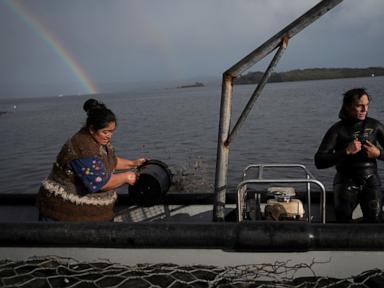
Intensive salmon aquaculture in southern Chile operates on a classic economic distortion: private enterprises capture the export revenues of high-density biomass production while socializing the ecological degradation of fjords across local communities and wild marine ecosystems. The ongoing civil and regulatory push by Chilean coastal populations, indigenous Kawésqar communities, and marine scientists to restrict salmon farming in protected waters is not a routine environmental dispute. It represents a structural collision between industrial extractivism and the biological carrying capacity of semi-enclosed sub-Antarctic fjords.
To understand why the Chilean regulatory framework is fracturing, one must examine the unit economics of Atlantic salmon (Salmo salar) production in regions like Los Lagos, Aysén, and Magallanes. Unlike Norway, where Atlantic salmon is native and subject to strict spatial separation and fallowing mandates, Chile introduced an exotic apex predator into fragile, low-flushing fjord ecosystems. By treating public marine concessions as zero-cost waste sinks, operators artificially compressed production costs, transforming Chile into the world’s second-largest salmon producer at the direct expense of benthic survival and wild fisheries.
The Three Mechanisms of Fjord Degradation
Standard reporting on Chilean aquaculture frames the conflict as a vague battle between jobs and nature. In operational reality, the ecological collapse around salmon net-pens is driven by three distinct, measurable biophysical mechanisms that compound over multi-year production cycles.
1. Benthic Hypoxia and Eutrophication
Open-net salmon farming is an open-loop system. Uneaten feed pellets and fish feces fall directly through the mesh cages onto the seafloor. Because Patagonian fjords feature deep basins separated by shallow glacial sills, deep-water circulation is naturally sluggish.
When organic carbon accumulates faster than benthic microbes can oxidize it, dissolved oxygen levels plummet. This triggers a predictable biological cascade:
- Aerobic die-off: Native polychaetes, crustaceans, and mollusks suffocate, eliminating the base of the local food web.
- Anaerobic takeover: Sulfate-reducing bacteria colonize the dead zones, producing hydrogen sulfide and methane gas.
- Outgassing events: Disturbances in water temperature or currents release toxic hydrogen sulfide plumes upward, causing mass mortality in wild fish populations and farmed stock alike.
2. Chemical Loading and Antimicrobial Resistance
High stocking densities create acute stress and suppressed immune systems in caged salmon, accelerating the transmission of endemic pathogens such as Piscirickettsia salmonis (SRS) and sea lice (Caligus rogercresseyi). Because Salmo salar lacks evolutionary resistance to local Patagonian parasites, operators rely heavily on chemical interventions.
Antiparasitic bath treatments—using compounds like azamethiphos, deltamethrin, and hydrogen peroxide—are flushed directly into surrounding currents. These neurotoxins do not discriminate between parasitic copepods and native larval crustaceans, decimating local populations of crabs, shrimp, and krill. Simultaneously, the administration of prophylactic and therapeutic antibiotics via medicated feed introduces active pharmaceutical ingredients into wild sediments. This creates selective pressure that drives antimicrobial resistance in marine bacteria, a documented public health hazard that transfers across trophic levels.
3. Genetic and Trophic Disruption via Mass Escapes
Patagonian weather systems routinely subject marine infrastructure to extreme wind and wave energy. Structural failures in net-pens result in mass escape events, releasing hundreds of thousands of non-native salmon into southern channels.
While industry defenders frequently argue that escaped Atlantic salmon fail to establish self-sustaining wild populations in Chile due to reproductive barriers, this misses the immediate trophic damage. Escaped salmon are voracious, generalist predators. During their survival window in the wild, they consume massive quantities of native pelagic fish—such as sardines, anchovies, and silversides—directly competing with native sea lions, dolphins, and artisanal fishing fleets. They also act as mobile vectors, spreading viral and bacterial diseases from isolated farm sites to wild fish populations across vast geographic distances.
The Regulatory Arbitrage of Protected Areas
The core legal flashpoint in Chile centers on the presence of aquaculture concessions inside the National System of State-Protected Wilderness Areas (SNASPE), particularly within national parks and marine reserves in the Magallanes region.
Historically, salmon companies secured hundreds of marine concessions inside waters adjacent to terrestrial national parks before comprehensive marine spatial planning existed. Under Chilean law, a terrestrial national park did not automatically extend its protection to the marine column and seabed bordering its coastline unless explicitly designated. Operators exploited this jurisdictional gap, locking in perpetual, transferable property rights over public waterways.
The current push by Chilean citizens and environmental coalitions targets this exact mechanism through two primary levers:
- Enforcement of the SBAP Law: The creation of the Biodiversity and Protected Areas Service (SBAP) establishes a unified legal mandate that prohibits industrial salmon farming inside newly defined marine protected areas and restricts the renewal of non-compliant concessions.
- Indigenous Coastal Marine Spaces (ECMPO): Under the Lafkenche Law, indigenous communities can claim customary use rights over coastal zones to preserve traditional subsistence practices. By filing ECMPO petitions, Kawésqar and Mapuche-Williche communities have successfully frozen the approval of new aquaculture concessions across millions of hectares, effectively using indigenous land-sea tenure as a defensive shield against industrial expansion.
The Structural Limitations of Current Reform Strategies
Activists and policymakers attempting to dismantle intensive aquaculture in Patagonia face severe structural constraints. Any strategy that ignores these operational realities will fail to halt ecological decline.
The Relocation Bottleneck
Moving cages out of protected areas requires relocating them to exposed, high-energy offshore waters. Offshore aquaculture demands substantially higher capital expenditure for reinforced moorings, automated feeding barges, and larger service vessels. Smaller Chilean operators lack the balance sheets to finance this transition, creating a market consolidation dynamic where only multinational conglomerates can survive, further concentrating lobbying power.
The Monitoring Deficit
Chile’s National Fisheries and Aquaculture Service (SERNAPESCA) operates with chronic resource constraints relative to the geographic scale of Patagonia. The coastline of southern Chile stretches over 80,000 kilometers of intricate channels and islands. Regulatory oversight relies heavily on self-reported environmental impact assessments (INFA) funded by the salmon companies themselves. Without independent, real-time telemetry measuring dissolved oxygen and benthic turbidity at the cage perimeter, statutory limits remain largely theoretical.
The Macroeconomic Trap
Salmon is Chile’s second-largest export after copper, generating billions in foreign exchange and anchoring the regional economies of Puerto Montt, Chiloé, and Punta Arenas. A rapid, uncompensated revocation of concessions triggers immediate regional unemployment and sovereign credit friction. Therefore, purely punitive regulatory bans without economic transition frameworks generate fierce political resistance from regional labor unions and municipal governments.
The Operational Blueprint for Marine Recovery
To permanently decouple Chilean salmon production from fjord degradation, policymakers and conservation coalitions must stop fighting concession-by-concession legal battles and instead alter the fundamental cost structure of marine farming.
First, Chile must replace static spatial concessions with dynamic carrying-capacity quotas. Rather than granting a company the permanent right to farm a specific square kilometer of water regardless of environmental conditions, regulators must tie allowable biomass directly to real-time benthic oxygen levels and regional nitrogen thresholds. If dissolved oxygen drops below a critical threshold, the operator’s permitted stocking density for the subsequent cycle automatically contracts by a fixed percentage.
Second, the state must mandate closed-containment systems for all farming operations operating within semi-enclosed fjords. Semi-closed floating raceways or land-based Recirculating Aquaculture Systems (RAS) capture up to 85 percent of solid waste and prevent sea lice entry by drawing water from below the parasite zone. By taxing open-net waste discharge at a rate that exceeds the amortized capital cost of closed-containment retrofits, the market will naturally force the retirement of destructive net-pens.
Finally, conservation coalitions must operationalize debt-for-nature swaps and concession buybacks targeted specifically at dormant licenses inside protected areas. Hundreds of approved concessions in Magallanes are currently unstocked, held on corporate balance sheets as speculative assets. Retiring these unbuilt concessions immediately through targeted sovereign-backed green bonds prevents the geographic footprint of the industry from expanding southward while avoiding the political friction of shutting down active payrolls. Until the cost of waste disposal is internalized onto corporate balance sheets, the degradation of the Patagonian commons will remain a mathematically guaranteed outcome.