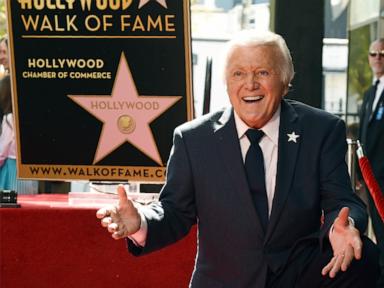
Tony Butala, the founding tenor and enduring architect of the classic pop vocal group The Lettermen, has died at the age of 87. For over six decades, Butala anchored the trio’s signature close-harmony sound, delivering timeless adult contemporary hits like "The Way You Look Tonight," "When I Fall in Love," and "Goin' Out of My Head/Can't Take My Eyes Off You." While mainstream music obituaries predictably reduce his legacy to a nostalgic footnote of 1960s easy listening, a closer examination of the mid-century recording industry reveals a far more compelling reality. Butala did not merely sing pleasant ballads; he engineered a bulletproof business model and a distinct vocal arranging style that outlasted the British Invasion, survived the collapse of traditional studio pop, and kept a three-man vocal group profitable on the road for more than sixty years.
Most casual listeners assume vocal groups of the late 1950s and early 1960s were passive vessels for record label executives and studio arrangers. That assumption falls apart the moment you look at how Butala built The Lettermen from the ground up. Born Anthony John Butala in Sharon, Pennsylvania, in 1938, he was a working professional long before his voice ever graced a Capitol Records master tape. As a child performer, he sang with the Robert Mitchell Boys Choir in Los Angeles, appearing in major Hollywood productions including White Christmas and The War of the Worlds. That early immersion in studio discipline taught him two critical lessons that would define his entire career. First, vocal precision is non-negotiable when microphones are hot and studio time costs money. Second, a singer without control over their own arrangements and trademarks is entirely disposable.
Engineering a Sound Between Jazz and Pop
To understand why The Lettermen succeeded when hundreds of competing vocal groups vanished by 1965, you have to dissect the mechanics of their vocal blend. In the late 1950s, the American pop market was sharply divided. On one side stood the raw, triplet-driven street corner doo-wop of groups like The Platters and The Flamingos. On the other stood complex, jazz-inflected vocal ensembles like The Four Freshmen and The Hi-Lo's, whose dense harmonic extensions alienated casual Top 40 radio listeners.
Butala spotted an unoccupied middle lane. When he formed The Lettermen in 1959, eventually stabilizing the classic lineup with Jim Pike and Bob Engemann, he deliberately stripped away the rhythmic aggression of rock and roll while smoothing out the dissonant edges of jazz vocalese.
The secret lay in the voicing. Instead of stacking harmonies in wide, theatrical intervals, Butala positioned the three voices in tight, almost conversational proximity. As the lead tenor, Butala possessed a remarkably pure, vibrato-controlled upper register that sat comfortably above Pike’s warm baritone and Engemann’s grounding bass-baritone. They sang like a single instrument. By utilizing subtle dynamic swells—starting a phrase in a near-whisper before blooming into full, resonant three-part harmony—they created an intimacy that translated brilliantly through the tiny AM transistor radios and console stereos of the era.
Consider their 1961 breakthrough single, "The Way You Look Tonight." Written by Jerome Kern and Dorothy Fields in 1936, the song was already a well-worn standard associated with Fred Astaire. Capitol Records initially hesitated to release The Lettermen’s version, viewing it as too soft for a market increasingly dominated by twist records and teen idols. Butala’s arrangement flipped the song’s tempo, slowing it down into a lush, unhurried ballad driven by delicate acoustic guitar and understated strings. It climbed to number 13 on the Billboard Hot 100 and hit number three on the Easy Listening chart. More importantly, it established a template. The Lettermen proved you could take an established standard, strip away its big-band bombast, and sell it to both teenagers slow-dancing at prom and their parents buying LPs at the department store.
The Architecture of the Mashup
Music historians frequently credit modern DJs and late-twentieth-century producers with inventing the song mashup. They are wrong by roughly thirty years. In 1967, facing an industry completely upended by The Beatles, Motown, and psychedelic rock, Butala and his group pulled off one of the most audacious structural feats in pop chart history.
Traditional pop ballads were dying on Top 40 radio. The Lettermen needed a way to modernize their sound without abandoning the middle-of-the-road audience that bought their albums. Their solution was to fuse two completely separate hit songs into a single, seamless narrative track. They took Little Anthony and the Imperials' 1964 soul ballad "Goin' Out of My Head" and wove it directly into Frankie Valli’s 1967 solo smash "Can't Take My Eyes Off You."
This was not a simple medley where one song fades out and another begins. The arrangement required meticulous harmonic surgery. The vocal lines overlapped, counter-melodies traded places, and the rhythmic pulse shifted dynamically to accommodate both compositions without jarring the listener. The resulting single, "Goin' Out of My Head/Can't Take My Eyes Off You," shot to number seven on the Billboard Hot 100 in early 1968. It earned the group a gold record and kicked off a wave of hybrid recordings, including their 1969 hit "Hurt So Bad" and their pairing of "Traces" with "Memories."
Behind the scenes, this era also exposed the brutal business realities of group longevity. By the late 1960s, the grueling touring schedule began fracturing the original lineup. Bob Engemann departed in 1967, replaced by Jim Pike’s brother, Gary Pike. Jim Pike himself stepped away in 1974 due to vocal strain, bringing in Donovan Tea. Throughout every personnel shift, Butala remained the constant. He understood early on that the brand had to be bigger than any single ego—even as his own voice remained the unmistakable sonic anchor of the enterprise.
Survival in the Post-Album Economy
Most legacy acts from the 1960s spent the 1970s and 1980s either chasing disco trends with embarrassing results or playing county fairs for pennies while their former labels collected all the publishing and master royalties. Butala refused to play that game. Recognizing that radio airplay for soft vocal harmony was effectively dead by the mid-1970s, he pivoted the group’s entire operational focus toward direct-to-consumer touring and independent catalog control.
The Lettermen became relentless road warriors, routinely playing over 150 dates a year across performing arts centers, symphony halls, casinos, and international venues, particularly in Asia, where their crisp English enunciation and romantic ballads made them perennial superstars in the Philippines and Japan.
While critics in New York and Los Angeles dismissed the group as square or overly sentimental, Butala ignored the press and watched the balance sheet. He recognized a fundamental truth about the live entertainment business that modern touring acts are only now rediscovering: you do not need a current Top 40 hit to sustain a multi-million-dollar touring operation if you own your niche completely. By cultivating a fiercely loyal demographic that valued dress-up concert experiences, clean vocal execution, and emotional sincerity, The Lettermen insulated themselves from the boom-and-bust cycles of the record industry.
The Mechanics of Vocal Longevity
How does a high tenor continue singing demanding lead parts into his eighties without shredding his vocal cords? For rock and soul singers who rely on chest-voice belting and laryngeal grit, aging is unforgiving. Once the vocal folds lose elasticity, the high notes vanish, leaving behind a raspy facsimile of their younger selves.
Butala’s survival as a vocalist came down to classical breath support and placement. Trained in choral singing from the age of seven, he never forced volume from his throat. Instead, he relied on pharyngeal resonance—directing sound into the upper cavities of the mask—which allowed his voice to cut through a live orchestra with minimal physical strain. Even in his late seventies, when performing live, Butala maintained the intonation and tonal clarity that defined his 1960s Capitol recordings. He treated his voice like a precision woodwind rather than a percussion instrument, avoiding the vocal blowouts that sidelined countless peers.
The Overlooked Cultural Footprint
There is a persistent tendency in music journalism to equate cultural significance with rebellion. If an artist did not smash a guitar, get arrested, or challenge the political establishment, historians often assume they had no real impact on the culture. That narrow worldview completely misses how most people actually experience music.
Music is not solely a soundtrack for social upheaval; it is also the backdrop for the quiet, unglamorous milestones of ordinary life. For millions of listeners, Tony Butala’s voice was the sound of first dances at weddings, quiet Sunday mornings with the newspaper, and long drives home after night shifts. In an era marked by the Vietnam War, civil unrest, and rapid social fragmentation, The Lettermen offered a deliberate, unapologetic refuge of order and melodic predictability.
Beyond his own recordings, Butala actively worked to preserve the broader ecosystem of vocal group harmony. In 1989, he founded the Vocal Group Hall of Fame in his hometown of Sharon, Pennsylvania. At a time when the Rock and Roll Hall of Fame was routinely ignoring foundational vocal ensembles—treating doo-wop, barbershop, and traditional pop trios as second-class citizens—Butala put his own capital and reputation on the line to build a physical institution dedicated to their preservation. He understood that if the practitioners did not write their own history, the industry’s gatekeepers would erase it entirely.
What Modern Music Industry Executives Still Get Wrong
Look at the current state of mainstream pop production, and you will see the exact opposite of everything Butala stood for. Today’s vocal tracks are heavily quantized, pitch-corrected to robotic perfection, and layered with dozens of artificial harmonies generated by studio software. The human element—the slight, organic micro-fluctuations in breath and timing that happen when three real people stand around a single microphone and lock into a chord—has been largely engineered out of commercial music.
When three human voices blend naturally, they produce acoustic overtones—phantom frequencies that do not exist in any single voice alone, yet ring clearly in the room when the intervals are tuned properly. You cannot replicate that physics with a plug-in. Butala spent sixty years chasing that exact acoustic phenomenon, refining it night after night on stages across the world until he finally retired from full-time touring in 2019, passing the torch to a younger generation of singers trained in his exact methodology.
Tony Butala’s passing closes the book on an era when craftsmanship, vocal discipline, and long-term business sense were enough to build a permanent career in entertainment. He never chased cool, he never apologized for sentimentality, and he never surrendered control of the sound he built from scratch. When the final chord of "The Way You Look Tonight" fades out, what remains is not just a relic of mid-century pop, but a masterclass in how to make a human voice last forever.