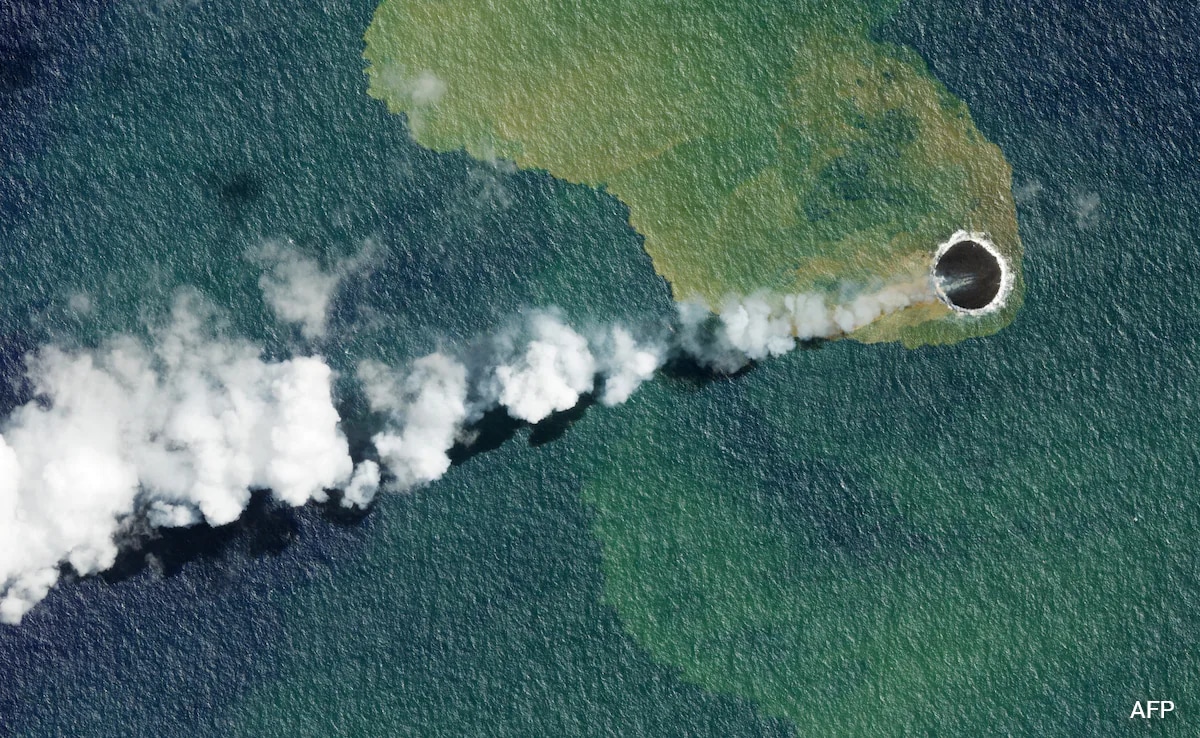
When the Hunga Tonga-Hunga Ha'apai volcano blew its top in January 2022, it didn't just trigger tsunamis. It launched 150 million metric tons of water vapor into the stratosphere. That's enough to fill 60,000 Olympic-sized swimming pools. For climate scientists, this was a massive, terrifying real-time experiment. Most people focused on the immediate warming effect of all that water vapor. But a team of researchers looked closer at the chemical fallout in the atmosphere. What they found changes how we look at methane, the second most destructive greenhouse gas we face.
It turns out that a giant volcanic blast can inadvertently trigger a massive cleanup crew for atmospheric pollution. By studying this specific eruption, atmospheric chemists stumbled onto a chemical pathway that could help us scrub methane out of the sky much faster than we currently do.
We are losing the battle against methane. It traps roughly 80 times more heat than carbon dioxide over a 20-year timeline. While everyone talks about cutting emissions from oil wells and cow burps, we spend almost no time talking about atmospheric removal. The Tonga data proves we need to change that.
The Accidental Chemical Cleanup in the Stratosphere
Atmospheric scientists from Harvard University and the University of Maryland started tracking the chemical composition of the plume right after the blast. They used satellite data from NASA's Microwave Limb Sounder to see how the injection of water altered the upper atmosphere. The results were wild.
The sheer volume of water vapor triggered a cascade of chemical reactions. When solar radiation hit that massive moisture cloud, it split the water molecules apart. This process generated an unprecedented surge of hydroxyl radicals. Atmospheric scientists call these molecules OH. You can think of OH as the detergent of the atmosphere.
OH is incredibly reactive. It hunts for hydrogen atoms, and methane happens to be a perfect target. When OH collides with methane, it breaks the gas down into water and carbon dioxide. While carbon dioxide is still a greenhouse gas, it is far less potent in the short term than methane.
The Tonga eruption effectively supercharged this natural cleaning cycle. The concentration of OH inside the volcanic plume spiked to levels never seen in the modern satellite record. It showed us that if you can find a way to safely increase OH production, you can rapidly collapse the lifespan of atmospheric methane.
Why Current Methane Strategies Are Failing
Most global climate policies rely entirely on emissions reduction. We penalize leaking pipelines. We design feed supplements for livestock. We try to capture gas from landfills. These are fine initiatives, but they aren't enough. Methane levels in the atmosphere are still rising at record rates.
The problem is that natural sources are accelerating. As arctic permafrost melts and tropical wetlands warm up, they release massive pulses of methane that humans can't easily plug. We can't put a cap on a Siberian tundra or a Brazilian swamp.
That's where the Tonga insight becomes vital. Instead of just playing defense at the source, we have to look at the sink. The natural lifespan of a methane molecule in the atmosphere is about nine to twelve years. If we can drop that lifespan down to five or six years by boosting natural chemical sinks, we could drastically cool the planet within a decade.
The Danger of Playing God with the Atmosphere
Let's be clear about the risks. The Tonga eruption wasn't a clean, perfect miracle. Along with water vapor, it pumped massive amounts of sulfur dioxide into the air, which temporarily depleted the ozone layer over the Southern Hemisphere.
We can't just go around spraying water into the stratosphere to create OH radicals. If you get the dosage wrong, you risk destroying the ozone layer that protects us from ultraviolet radiation. The Harvard research team noted that the intense OH production inside the Tonga plume coincided with a rapid drop in local ozone levels.
This is the classic dilemma of atmospheric engineering. You fix one problem and accidentally trigger another. It means any future technology designed to mimic this volcanic cleanup has to operate in the lower atmosphere, the troposphere, where ozone depletion isn't a catastrophic threat.
Turning the Tonga Data into Actionable Tech
We don't need to wait for another volcano to utilize this chemistry. Several research startups are already working on ways to scale up OH production safely closer to the ground.
One method involves iron salt aerosols. When you spray tiny particles of iron dust over the ocean, they react with sunlight and natural humidity to produce OH radicals. This accelerates the destruction of methane in the marine boundary layer, safely away from the sensitive stratosphere.
Another avenue is basic titanium dioxide coatings on structures like buildings or ships. When exposed to sunlight, these surfaces act as photocatalysts, breaking down moisture in the air into methane-eating OH molecules.
The next step isn't to build giant geoengineering machines. It's to fund localized, controlled field trials to measure the exact ozone impact of artificial OH generation. We need strict monitoring frameworks to ensure that intentionally boosting atmospheric detergents doesn't disrupt wider weather patterns.
If you want to support this shift, start looking closely at corporate climate pledges. Stop settling for vague carbon offset certificates that claim to plant trees. Start demanding that climate tech investments allocate capital toward atmospheric methane removal technologies. The data from the 2022 Tonga eruption gave us the blueprint. Now we have to build the tools.