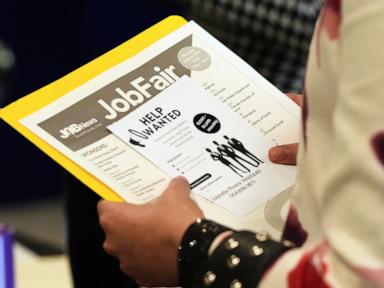
Sarah sits at her kitchen table, staring at a lukewarm mug of coffee. It is 8:29 AM on a Thursday. Her laptop is open, the browser refreshed for the fourth time in ten minutes. Somewhere across the country, in a sterile government building in Washington, D.C., a digital switch is about to be flipped.
At exactly 8:30 AM, the United States Department of Labor will release the weekly initial jobless claims report. If you found value in this post, you should check out: this related article.
To the suits on Wall Street, this report is a data point. It is a line on a chart that moves algorithms, shifts stock prices, and influences the Federal Reserve's decisions on interest rates. But to Sarah—and to millions of Americans like her who have spent the last six months sending resumes into the digital void—this number is a weather vane. It tells her whether the economic storm is clearing, or if the freeze is setting in.
We have been conditioned to look at the economy through massive, sweeping numbers. We look at the Gross Domestic Product. We look at the monthly nonfarm payrolls. But those numbers are lagging indicators. They tell us where the train was three weeks ago. Weekly jobless claims are different. They are the closest thing we have to a real-time pulse check on the American workforce. For another perspective on this story, check out the recent update from Business Insider.
Consider what happens when a company decides to lay off workers. They don't wait for the end of the month to file the paperwork. The impact is immediate. The newly unemployed show up at their state offices or log into crash-prone websites to file for benefits. By the following Thursday, those individual heartbreaks are aggregated into a single, stark number.
The current economic narrative is deeply confusing. On one hand, we are told the labor market is resilient. On the other hand, anyone who has tried to look for a job recently knows the truth feels entirely different. The ghost jobs—postings that stay up for months but never seem to result in a hire—are proliferating. The interview processes have stretched from two weeks to two months, involving endless take-home assignments and panel presentations.
The upcoming Thursday report is crucial because the country is standing at a tipping point. For over a year, the Federal Reserve has kept borrowing costs high to combat inflation. The theory was simple: cool down the economy, slow down hiring, and prices will stop soaring. It worked. Inflation has come down significantly from its peak. But the mechanism of that cooling is what we are witnessing right now in real-time.
When money becomes expensive to borrow, businesses stop expanding. They pause their ambitious five-year plans. They put new headcount on hold. If things get tighter, they look at their existing staff and start making hard choices.
Let us look at a hypothetical business to understand how this trickles down. Imagine a mid-sized logistics firm in Ohio. For three years, they couldn't hire fast enough. They offered signing bonuses. They overlooked gaps in resumes. Now, faced with higher interest rates on their corporate debt and slowing consumer demand, the CEO decides to freeze all open positions. They aren't firing people yet, but they are leaving empty desks empty.
If a worker leaves, the remaining staff absorbs the workload. This is the invisible phase of a cooling labor market. It doesn't show up in the mass layoff headlines. It is a quiet deceleration.
But if the economy slows too much, that freeze turns into a fracture. That is what economists call the "tipping point." Historically, unemployment rises slowly at first, and then all at once. The weekly jobless claims report is the early warning radar for that sudden drop.
If the number of people filing for unemployment benefits begins to consistently tick upward, it means the freeze has broken, and companies are actively shedding weight to survive.
The confusion lies in the dissonance between macroeconomic data and lived experience. When you read that the unemployment rate is historically low, around 4%, it sounds like a triumph. But that statistic masks a more grueling reality. It doesn't measure the quality of the jobs. It doesn't measure the person who took a 30% pay cut just to keep health insurance. It doesn't measure the contract worker whose hours were cut in half.
The upcoming report will give us three specific insights into this hidden friction.
First, it will show the raw number of new entries into the unemployment system. This is the baseline. A number hovering below 220,000 indicates a highly stable, if quiet, market. Anything climbing toward 250,000 or higher suggests that corporate belt-tightening has shifted from a hiring freeze into active layoffs.
Second, the report tracks "continuing claims"—the number of people who are already receiving benefits and filed again because they haven't found work. This is where Sarah’s story lives. If initial claims are low but continuing claims are high, it means companies aren't firing people in droves, but they absolutely refuse to hire new ones. The door is shut. Once you are out, you stay out for a very long time.
Third, it provides a geographic map of economic pain. The national average frequently hides regional disasters. A tech slowdown hits California and Washington; a manufacturing slump hurts the Rust Belt; a cooling tourism season impacts Florida. By parsing the state-level data tucked inside the report, we see exactly where the ice is thickening.
The stakes extend far beyond corporate boardrooms. The Federal Reserve is watching these exact numbers with an intensity that borders on obsession. For the past few years, their mandate was singular: fight inflation. But they have a dual mandate. The second half of their job is to ensure maximum employment.
If the Thursday report signals that the labor market is deteriorating faster than expected, the central bank faces a massive pivot. They will have to cut interest rates quicker and deeper than originally planned, not celebrate a victory over inflation, but panic-stop a recession.
But cutting rates is not an instant fix. It takes months, sometimes up to a year, for a rate cut to work its way through the financial system and convince a business owner in Ohio that it is safe to start hiring again. By the time the numbers look terrible, the damage is already done.
That is why this specific Thursday matters so much. It is about momentum. It is about catching the slide before it becomes an avalanche.
The clock on Sarah's computer hits 8:30 AM. She hits refresh.
The screen blinks. The new numbers populate the financial news feeds. The analysts will spend the rest of the day debating whether a variance of 5,000 claims means the economy is heading for a soft landing or a hard crash. They will use terms like "seasonal adjustment factors" and "labor market churn."
But away from the noise of the trading floors, the real result of that number plays out in quiet kitchens across the country. It dictates whether a manager decides to hit "send" on a job offer today, or wait until next quarter. It determines whether someone can pay their rent without draining their savings, or if they need to move back in with their parents.
The market moves on numbers, but the country lives on confidence. And right now, confidence is waiting on a Thursday morning report to tell it whether it is safe to breathe.