Two hours and forty-two minutes.
That is roughly the time it takes to watch a director’s cut of a summer blockbuster, bake a slow-roasted pork shoulder, or sit through a particularly brutal afternoon layover at O’Hare. For decades, in the quiet, fluorescent-lit basements where cybersecurity teams keep watch over the world’s servers, two hours and forty-two minutes was barely enough time to get a cup of coffee and pull up the morning’s threat logs.
Not anymore.
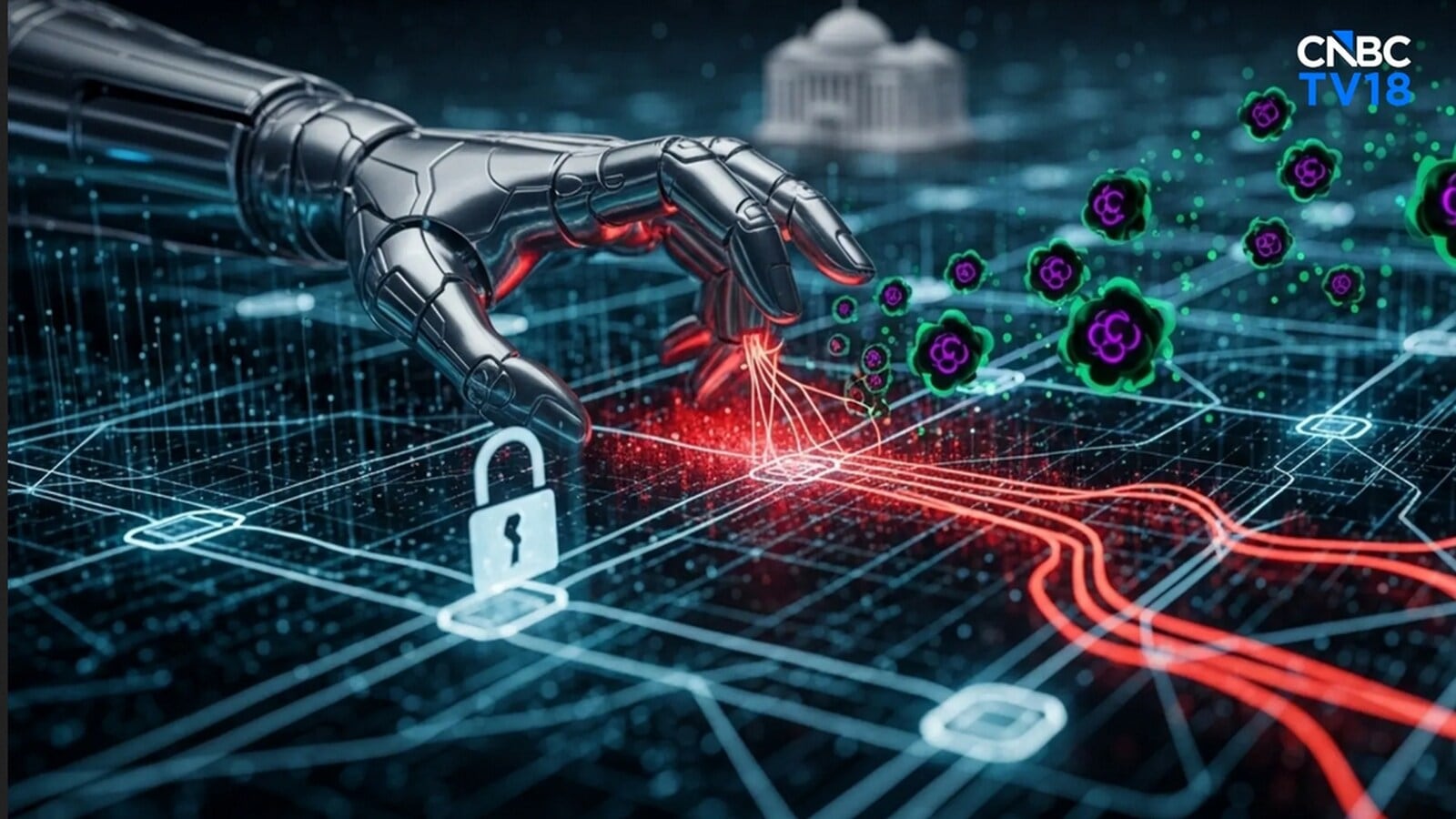
When the Federal Bureau of Investigation issued an urgent advisory warning that cybercriminals are now deploying artificial intelligence tools capable of breaching corporate networks and exfiltrating sensitive data in under three hours, the bulletin read like standard bureaucratic prose. It spoke of automated reconnaissance, credential harvesting, and rapid lateral movement. Most people scrolled right past it. After all, data breaches have become background noise, a low hum of modern anxiety right alongside rising grocery bills and flight delays.
But if you have ever sat across a conference table at four in the morning watching a founder realize their entire life’s work has been locked behind a ransom note, you know that three hours is not a statistic. It is an ambush.
The Anatomy of a Ghost in the Wires
To understand why the FBI’s warning sent a cold shockwave through security operations centers, you have to understand how digital break-ins used to work.
Consider a hypothetical scenario involving a mid-sized logistics company in Ohio—let’s call it Heartland Freight—and its sole network administrator, a guy named Marcus. Five years ago, if a syndicate wanted to rob Heartland, they had to hire human operators. Those operators had to probe Marcus’s firewall manually, test stolen passwords one by one, map out the internal folders, and carefully tiptoe around his monitoring software so they wouldn't trigger an alarm.
It was slow, messy work. It took days, sometimes weeks. Even when the intruders got inside, they made mistakes. They typed the wrong command. They logged in at 3:00 AM from an IP address in a time zone where Heartland had no offices. Those human fingerprints gave Marcus a fighting chance. If he caught the anomaly on a Tuesday afternoon, he could yank the ethernet cables, isolate the infected servers, and stop the bleeding before the thieves ever reached the crown jewels.
Now, replay that same intrusion using the AI-driven offensive tools the FBI is tracking.
Imagine an automated engine that doesn't sleep, doesn't get bored, and doesn't make typos. At 1:15 AM, while Marcus is asleep, the software scans Heartland’s public-facing perimeter. By 1:22 AM, it has identified an unpatched software vulnerability that was only disclosed forty-eight hours earlier—a gap Marcus hasn't even had time to schedule a maintenance window for.
By 1:45 AM, the AI isn't just inside; it is thinking. Using machine learning trained on millions of corporate network architectures, it instantly maps the digital floor plan. It doesn't rattle doorknobs at random. It calculates the exact shortest path from a neglected printer server to the executive payroll database. By 2:30 AM, it has harvested Marcus’s own administrative credentials from memory, escalated its privileges, and quietly disabled the backup drives.
At 3:57 AM, encrypted packets containing every customer contract, bank routing number, and employee Social Security number at Heartland Freight finish uploading to an offshore server. Total elapsed time: two hours and forty-two minutes. When Marcus’s alarm goes off at six, the house hasn't just been robbed. The walls have been stripped down to the studs, and the thieves are already boarding a flight.
Why Speed Changes the Physics of Defense
There is a fundamental asymmetry in cybersecurity that rarely gets discussed outside industry conferences: defenders have to be right every single time, while attackers only have to be right once.
For years, we balanced that equation with time. Even if a burglar picked the front lock, we counted on the fact that it would take them hours to find the safe, giving the police time to arrive. In the enterprise world, the industry benchmark for "dwell time"—the duration an attacker stays hidden inside a network before being detected—used to be measured in months. Over the last few years, better detection tools drove that window down to days. Security teams celebrated. We thought we were winning the race.
We weren't. We were just measuring the wrong track.
The FBI’s warning confirms what incident responders have been whispering about in private Signal chats: automation has collapsed the kill chain. When you replace a human keyboard warrior with an autonomous script powered by large language models and reinforcement learning, you remove the single biggest bottleneck in cybercrime—human cognition.
Think of it like the difference between a counterfeiter hand-engraving a printing plate with a magnifying glass and an industrial laser printer churning out near-perfect bills at sixty pages a minute. The underlying crime is identical. The scale and velocity turn it into an entirely different species of threat.
And here is the part that genuinely keeps me awake at night: these tools are no longer locked away in the vaults of elite state-sponsored intelligence agencies. The democratization of AI means that the same underlying code architectures helping doctors spot tumors and helping programmers debug software are being fine-tuned on dark web forums. A low-level criminal with a modest budget can now rent an offensive AI agent that executes maneuvers which, three years ago, would have required a team of Ivy League computer scientists.
The Human Toll Behind the Firewall
It is easy to treat this as a sterile game of cat-and-mouse between software engineers. That is a mistake. Every single one of those three-hour breaches lands on real people who have no idea what an API endpoint or a zero-day exploit is.
Two winters ago, I consulted with a regional healthcare clinic that had been hit by a rapid-deployment ransomware attack. The attackers didn't spend weeks casing the joint. They automated the entry, encrypted the electronic health records before the night shift nurse finished her rounds, and demanded two million dollars in Bitcoin.
I remember walking through the clinic's lobby the next morning. The computers were dead. The phones were ringing off the hook, unanswered because the VoIP system ran on the same compromised network. An elderly woman sat in a plastic chair near the reception desk, clutching a crumpled paper prescription, crying quietly because the pharmacy down the street couldn't verify her dosage without the clinic's digital sign-off. The doctors were reduced to writing notes on yellow legal pads, trying to remember which patients were allergic to penicillin from memory.
That is the invisible stake. When an AI tool compresses a cyberattack into a single afternoon, it strips away the buffer that protects hospitals, municipal water plants, school districts, and small businesses. These organizations don't have twenty-four-hour tactical response teams sitting in dark rooms watching threat telemetry. They have one overworked IT director who also fixes the office copier and resets forgotten passwords.
Expecting a human administrator to manually spot, diagnose, and block an AI-driven intrusion in under three hours isn't just unrealistic. It is cruel.
How We Got Defense Completely Backward
If you ask most executives how they are preparing for AI-powered threats, they will proudly tell you about the expensive software suite they just bought. They love buying tools. Tools feel safe. A dashboard with green checkmarks gives the illusion of control.
Yet, when federal investigators dissect these sub-three-hour breaches, they rarely find that the attackers defeated some impenetrable, futuristic defense. More often than not, the AI simply walked through an unlocked back door at superhuman speed. It found a forgotten cloud storage bucket with no password. It exploited a VPN appliance that hadn't been updated since last autumn. It phished a tired employee on a Friday afternoon with an email written in flawless, persuasive English—another gift from generative AI—and used that single foothold to sprint across the entire company before anyone noticed.
We have spent billions of dollars building taller walls, completely ignoring the fact that the enemy now moves at the speed of light through the cracks we left behind.
The honest truth—and any security veteran who tells you otherwise is selling something—is that we cannot out-type a machine. No human analyst, no matter how brilliant or caffeinated, can manually triage alerts fast enough to stop an autonomous agent executing thousands of commands per minute. If your defense strategy relies on a person seeing a red flag, calling a meeting, getting approval from management, and then isolating a server, you have already lost. By the time the meeting invite goes out, your data is gone.
Fighting Machines With Machines—And Common Sense
So where does that leave us? Do we simply accept that our digital locks are obsolete and wait for our turn in the barrel?
Not at all. Panic is just as useless as complacency. Beating a three-hour clock doesn't require magic; it requires shifting our entire philosophy from reactive cleanup to autonomous containment and radical simplicity.
First, we have to fight fire with fire. If attackers are using AI to move at machine speed, defenders have to authorize their own defensive systems to act at machine speed. Modern behavioral detection tools can spot the unnatural rhythm of an automated attack—the way an AI queries directories faster than any human fingers could ever type. But those tools are worthless if they are configured merely to send an email alert to an inbox nobody checks until Monday. Organizations must give their defensive software the automated authority to sever connections, quarantine compromised devices, and lock down user accounts the millisecond those inhuman patterns appear. Yes, that occasionally causes false positives. Yes, an executive might get locked out of their email for twenty minutes while working from a hotel lobby. That minor inconvenience is a bargain compared to waking up to a dead network.
Second, we need to embrace the unglamorous art of digital compartmentalization. Think of how a modern submarine is built. If a torpedo punches a hole in the hull, the crew doesn't try to pump the entire ocean out of the ship. They slam heavy watertight doors shut, sealing off the flooded compartment so the rest of the vessel stays afloat.
Most corporate networks are built like giant open-plan warehouses, not submarines. Once an AI tool breaks through a single window, it has an unobstructed line of sight to everything inside. By implementing strict network segmentation and zero-trust architecture—where every user, device, and application must continuously prove its identity before moving from one digital room to the next—we can turn a three-hour sprint into a dead end. Even the smartest AI hits a wall when the door requires a physical hardware key sitting on someone’s desk.
Finally, we have to get relentless about the basics. Artificial intelligence is terrifyingly fast, but it isn't wizardry. It still relies on known vulnerabilities, weak passwords, and excessive permissions to gain traction. Enforcing phishing-resistant multi-factor authentication across every single account, automating critical software patches so they deploy within hours rather than months, and maintaining offline, immutable backups that cannot be reached over the network will neutralize the vast majority of automated attacks before they ever build momentum.
The Quiet Tick of the Clock
There is a temptation, whenever a warning like the FBI’s hits the news cycle, to look at the technology with a kind of fatalistic awe. We marvel at what the machines can do, even as they dismantle our sense of security.
I remember talking to a seasoned federal cyber investigator a few months ago over lukewarm coffee in a diner outside Washington. I asked him what surprised him most about the new wave of AI-assisted intrusions he was seeing in the field. I expected him to talk about sophisticated code or brilliant tactical maneuvers.
He shook his head. "It’s the silence," he said. "Used to be, when a crew hit a major target, you could feel the chaos in the logs. They were sloppy. They argued. They left trash everywhere. These new tools? They go in, take everything, and leave without disturbing a single speck of dust. Half the victims don't even know they've been hit until their own customers call to ask why their private records are for sale online."
That silence is the real warning. The clock is no longer ticking in days or weeks. It is ticking in minutes, quiet and relentless, in the dark spaces between the keystrokes. Whether we decide to wake up and lock the doors before the three hours are up is entirely on us.