Stitch by stitch, an ancient army marches across nine centuries of linen.
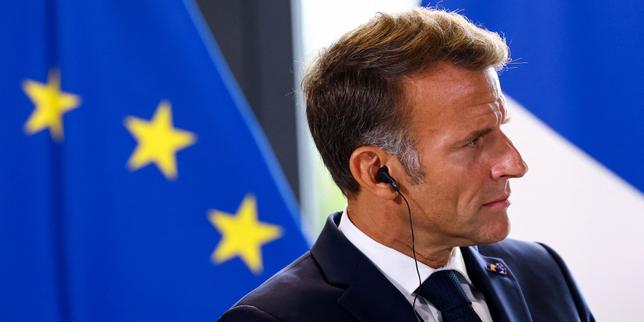
Silence fills the gallery in London. Outside, the modern roar of traffic dissolves against thick, medieval stone. Inside, two men stand shoulder to shoulder, gazing down at a narrow strip of embroidered wool that has somehow survived fires, revolutions, and the indifferent teeth of time. Emmanuel Macron has crossed the English Channel. King Charles III stands beside him. They are not merely inspecting an artifact. They are standing in the long, complicated shadow of 1066. Expanding on this idea, you can also read: The Water That Remembers The Mountains.
History is rarely a straight line. More often, it is a knotted thread, pulled this way by ambition and that way by necessity.
The Weight of a Nine Hundred Year Old Cloth
Consider what it takes for an object to survive this long. Wool on linen. Needle and thread, wielded by anonymous hands shortly after the Battle of Hastings. It depicts the Norman conquest of England, a violent reshuffling of crowns, bloodlines, and borders. William the Conqueror triumphed over Harold Godwinson, and the map of Europe fractured and reformed. Observers at USA Today have provided expertise on this situation.
For nearly a thousand years, this fragile masterpiece remained anchored in Normandy. It was a local treasure, a fragile survivor of wars that consumed nations. Transporting it across the Channel today is not a simple logistical checkbox. It is an act of profound diplomatic choreography.
When a nation lends its most sacred historical artifact, it is offering a piece of its soul.
Emmanuel Macron understands the gravity of the gesture. Diplomacy in the twenty-first century is often reduced to press conferences, handshakes on tarmac runways, and transactional trade agreements. But true alignment requires something deeper. It requires shared memory. By bringing the Bayeux artifact to British soil for exhibition, the French president and the British monarch are engaging in a dialogue that bypasses contemporary political friction.
They are whispering across the ages.
A Diplomatic Language Written in Wool
We forget that nations are just stories we tell one another.
Imagine standing in that gallery. The air is cool, strictly regulated to protect fibers that are older than most standing cathedrals. Macron leans in. Charles points toward a specific panel—perhaps the fateful arrow piercing Harold's eye, or the frantic construction of the invasion fleet. In that quiet gesture, the centuries collapse.
France and Britain have spent the better part of a millennium locked in a dance of rivalry and affection. They have fought hundred-year wars, carved up empires, and stood back-to-back against the darkest tides of the twentieth century. Yet, the old ghosts never entirely vanish. Brexit cast a cold wind over the Channel. Political tides shift constantly.
An artifact like this changes the weather.
It reminds both sides that their histories are inextricably braided together. You cannot untangle the Norman influence from the English language, nor can you separate the cultural destiny of Britain from continental Europe. The needlework is the proof. It is a monument to a moment when everything changed, rendered not in cold marble, but in the vulnerable, fading colors of dyed wool.
The Fragility of Alliance
There is something inherently terrifying about moving an object of this magnitude.
Conservationists hold their breath. Insurance policies run into astronomical figures. Every microscopic shift in humidity, every vibration of a specialized transport vehicle, poses a silent threat. Why take the risk?
Because isolationism is a rotting disease of the imagination.
When leaders lock themselves behind fortress walls and digital screens, they forget the human impulse to cross water and look at what the neighbor has made. Cultural exchange is the antidote to paranoia. It is an acknowledgment that beauty and history belong to humanity before they belong to any single state.
Charles III, a monarch whose life has been defined by duty, heritage, and a deep reverence for the past, recognizes this acutely. He has spent decades championing preservation, traditional crafts, and the unspoken continuity of human labor. To stand beside the French leader before this ancient embroidery is to acknowledge a shared burden. To lead a modern democracy or a constitutional monarchy today is to navigate storms that William the Conqueror could never have imagined.
Yet the questions remain fundamentally the same. How do you hold a fractured people together? How do you write a story that outlives you?
The Echoes in the Stone
The exhibition will eventually end. The specialized crates will be sealed. The priceless strip of history will make its careful, heavily guarded journey back across the Channel to its permanent home in Bayeux.
The politicians will return to their respective capitals. New crises will dominate the morning briefings. The endless churn of modern urgency will demand attention, pulling minds back to economic forecasts, defense pacts, and diplomatic cables.
Yet something fundamental shifts when leaders pause to look at the work of anonymous hands from the year 1070.
For a brief, suspended moment, the noise stops. The petty grievances of the present day look small against the vast expanse of centuries. The needle kept moving. The stitches held.
In the dim light of the London gallery, two men look at a picture of a war fought nearly a thousand years ago, and for an instant, there is only peace.