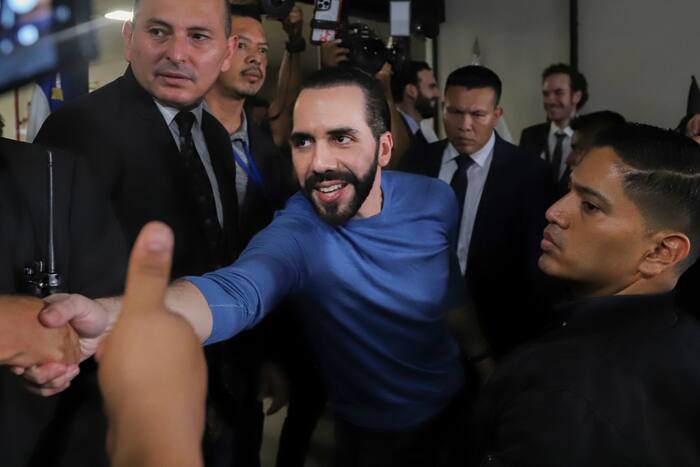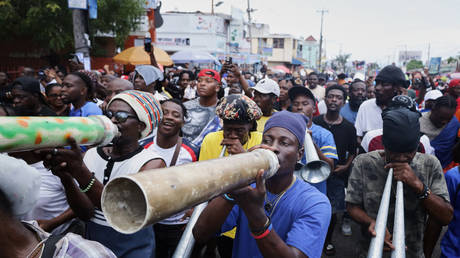
Thousands of Haitians have flooded social media and public discourse to celebrate El Salvador’s aggressive military crackdown on street gangs, viewing President Nayib Bukele’s iron-fisted security model as the only viable blueprint to rescue their own collapsing nation. As armed coalitions paralyze Port-au-Prince, displace hundreds of thousands of residents, and dismantle state institutions, desperate citizens in Haiti are looking toward Central America for proof that entrenched criminal syndicates can be broken. This viral wave of cross-border solidarity exposes a profound exhaustion with traditional diplomatic interventions and a growing appetite for extreme authoritarian solutions when democratic governance fails to provide basic physical safety.
The Anatomy of a Viral Cross-Border Phenomenon
Videos showing Salvadoran security forces marching thousands of tattooed, shackled gang members into the Terrorism Confinement Center (CECOT) have circulated widely across Haitian WhatsApp groups, TikTok feeds, and Facebook pages. The reaction from Haiti is rarely academic. Instead, the comment sections and shared clips carry an unmistakable tone of raw envy and urgent pleading. Learn more on a related topic: this related article.
For an outsider, the sight of heavily armed soldiers parading stripped, submissive prisoners raises immediate alarms regarding due process and human rights. For a resident of Port-au-Prince who cannot buy groceries without crossing sniper fire or paying extortion tolls to armed warlords, those images represent something entirely different. They represent the restoration of state monopoly over violence.
El Salvador was once widely considered the murder capital of the Western Hemisphere. Between MS-13 and Barrio 18, criminal networks controlled territory, taxed businesses, and dictated who lived or died in entire neighborhoods. Within a few years of declaring a state of exception in March 2022, Bukele’s administration arrested tens of thousands of suspected gang members, causing homicide rates to plummet dramatically. Further journalism by NBC News explores similar views on this issue.
Haitians watching these broadcasts are drawing a direct line between San Salvador’s recent past and Port-au-Prince’s agonizing present. When Haitian social media users share clips of Salvadoran raids, they frequently overlay captions asking why their own leadership—or the international community—refuses to deploy similar decisive force against coalitions like Viv Ansanm.
Why Traditional Security Models Failed Haiti
To understand why the Salvadoran model holds such magnetic appeal in Haiti, you have to look at the wreckage of every conventional approach tried over the past three decades. Haiti has hosted multiple United Nations peacekeeping missions, absorbed billions of dollars in foreign security assistance, and endured countless diplomatic summits. None of it stopped the descent into chaos.
The Collapse of the Haitian National Police
The Haitian National Police (PNH) has been systematically outgunned, underfunded, and overwhelmed. At its peak, the force numbered roughly 15,000 officers for a population exceeding 11 million people—a ratio far below international standards even in peaceful nations. Attrition, targeted assassinations of officers, and mass migration have shrunk that operational footprint considerably.
Meanwhile, Haitian armed groups have evolved from fragmented neighborhood defense committees into heavily armed, politically connected paramilitary organizations. Armed with high-caliber rifles smuggled largely from the United States, these groups control major highways, ports, and fuel terminals.
The Limits of International Peacekeeping
When the Kenyan-led Multinational Security Support (MSS) mission began deploying to Haiti, expectations were tempered by bitter historical memory. Past interventions left behind mixed legacies, ranging from political instability to public health disasters, without building durable local institutions.
Furthermore, international forces operate under strict rules of engagement and logistical constraints. They cannot simply sweep through densely populated slums like Cité Soleil or Bel-Air and detain every young man suspected of gang affiliation. Yet, to a population trapped in a war zone, incremental progress and bureaucratic caution feel indistinguishable from surrender.
The Dangerous Illusion of a Copy-and-Paste Solution
The enthusiasm for El Salvador’s crackdown rests on a seductive premise. It suggests that ending gang rule is merely a question of political willpower—find a leader willing to take the gloves off, build a massive prison, and the nightmare ends.
Reality is far less accommodating.
Institutional Capacity Matters
Bukele did not conjure his crackdown out of thin air. Before launching mass arrests, he consolidated total control over El Salvador’s executive, legislative, and judicial branches. He had a functioning, centralized military, a cohesive national police force, and an intact tax base capable of financing rapid prison construction and sustained military deployments.
Haiti possesses none of those foundational pillars right now.
- No Functioning Legislature: Haiti has operated without an elected parliament or a sitting president for extended stretches, relying on fragile transitional councils plagued by internal infighting.
- Compromised Infrastructure: Major prisons in Port-au-Prince were stormed and emptied by armed gangs in early 2024, releasing thousands of inmates back onto the streets. You cannot execute a mass incarceration strategy when the state cannot even secure existing cellblocks.
- Territorial Fragmentation: In El Salvador, the state still controlled the national treasury, the ports, and the primary road networks when the crackdown began. In Haiti, armed groups actively blockade the capital from the rest of the country, strangling supply chains and choking off state revenue.
The Intelligence Deficit
Mass arrests in El Salvador relied heavily on years of accumulated police intelligence, neighborhood informants, and—crucially—visible gang identifiers. Members of MS-13 and Barrio 18 famously covered their bodies and faces in distinctive tattoos declaring their allegiance, making street-level identification remarkably straightforward for security patrols.
Haitian gang members rarely wear permanent organizational tattoos. They blend seamlessly into civilian populations, discarding weapons and changing clothes within minutes of an ambush. Conducting sweeping, indiscriminate raids in Port-au-Prince without granular intelligence would not dismantle the gangs; it would primarily ensnare innocent civilians, triggering fierce backlash and uniting neighborhoods against the state.
What Bukele Actually Offered Haiti
The viral celebrations were not sparked purely by Haitian wishful thinking. Nayib Bukele himself actively fanned the flames, using his formidable social media presence to insert El Salvador into the Haitian crisis.
In early 2024, as Port-au-Prince descended into acute anarchy, Bukele posted on X that his government could "fix" Haiti, provided they received a United Nations Security Council resolution, the consent of the host country, and full financial coverage for the mission.
The post racked up millions of views and triggered immediate euphoria across the Haitian diaspora and inside the country. To many, it sounded like a concrete rescue offer from the one leader on earth who had actually defeated a comparable threat.
Analysts who track regional security saw something much more calculated. Bukele’s offer came with conditions virtually impossible to meet—specifically, expecting international donors to bankroll a foreign military expedition with no clear exit strategy or human rights guardrails. Even if the funding materialized, deploying Spanish-speaking Salvadoran troops into Creole-speaking neighborhoods in Port-au-Prince would create massive operational blind spots. Soldiers unfamiliar with the terrain, the language, and the complex web of local political alliances would struggle to distinguish combatants from non-combatants.
Later announcements regarding El Salvador sending a small contingent of personnel to assist with medical evacuations and advisory roles within the broader multinational framework underscored the gap between viral rhetoric and operational reality. Offering helicopter medevac support is a long way from clearing armed strongholds in Artibonite or Delmas.
The Human Rights Trade-Off Nobody Wants to Discuss
When human rights organizations criticize the Salvadoran model, they point to well-documented abuses. Under the state of exception, constitutional rights were suspended. Tens of thousands of people were detained without warrants, held incommunicado for months, and subjected to mass trials where hundreds of defendants were processed simultaneously.
Independent monitors and journalists have documented thousands of arbitrary detentions involving teachers, farmers, and street vendors with zero ties to criminal networks. Dozens of detainees have died in state custody.
To international observers in Geneva or Washington, these statistics represent an unacceptable erosion of democratic norms. To a mother in Port-au-Prince whose daughter cannot walk to school without risking kidnapping for ransom, those critiques sound like luxury opinions held by people living behind secure borders.
This is the core friction driving the Haitian reaction. When a state fails completely to protect the right to life, citizens stop caring about procedural rights. They become willing to accept collateral damage—even the risk of wrongful imprisonment—if it breaks the daily terror of gang rule.
History shows that security crises frequently birth public demand for strongmen. From Latin America to Eastern Europe, populations exhausted by crime and economic collapse repeatedly trade civil liberties for order. The tragedy is that once emergency powers are granted and democratic guardrails are dismantled, they are almost never returned voluntarily.
The Deeper Roots of Haiti’s Armed Crisis
Focusing exclusively on military strikes—whether Salvadoran or Haitian—obscures the economic and political engine keeping Haiti’s gangs alive.
Unlike traditional street gangs that rely primarily on petty extortion and retail drug sales, Haiti’s major armed coalitions have historically functioned as the enforcers for political and economic elites. For decades, politicians hired armed groups to suppress rival voters, clear land, or intimidate business competitors. Wealthy oligarchs used them to protect monopolies and sabotage rival import operations at the ports.
Over time, the enforcers realized they held all the leverage. They stopped taking orders from their political patrons and began taxing the elites directly, seizing control of customs terminals and distribution corridors.
A purely kinetic crackdown—kicking down doors and filling prisons—addresses the foot soldiers on the street. It does nothing to dismantle the financial networks, corrupt customs officials, and weapons traffickers who keep the ammunition flowing. Without cutting off the flow of high-powered weapons from abroad and prosecuting the white-collar financiers in the capital, arresting street-level fighters simply creates vacancies for the next generation of desperate, unemployed young men.
The Reality of Security Reform in Collapsed States
If Haiti cannot simply import the Salvadoran playbook, what does a realistic path forward actually look like? Security analysts who have studied post-conflict stabilization point to a grueling, unglamorous sequence of requirements that rarely produce viral TikTok videos.
- Securing Strategic Chokepoints First: Before attempting neighborhood-by-neighborhood sweeps, security forces must permanently secure the ports, the airport, and the main highway arteries connecting Port-au-Prince to the agricultural regions. Starving the gangs of customs revenue and imported ammunition weakens their operational capacity faster than street battles.
- Rebuilding the Police Pipeline: Foreign forces can temporarily hold territory, but they cannot police Haiti forever. Rebuilding the Haitian National Police requires aggressive vetting to purge gang informants, doubling officer salaries to reduce bribery incentives, and providing armored vehicles and tactical intelligence gear.
- Targeting the Supply Chain: Overwhelmingly, the rifles and ammunition terrorizing Haiti originate in the United States, particularly Florida. Meaningful intervention requires aggressive interdiction at American ports and maritime borders, not just patrols on the streets of Port-au-Prince.
- Restoring Basic Governance: Gangs thrive in vacuums where the state provides zero services. In many marginalized neighborhoods, gang leaders distribute food, pay medical bills, and settle disputes because no government agency exists there. Retaking territory permanently means bringing clinics, schools, and clean water immediately behind the armored vehicles.
The thousands of Haitians cheering for Salvadoran anti-gang strikes are sending an unmistakable signal to the world. Their patience for diplomatic hand-wringing, gradualist reforms, and endless transitional committees has hit zero. They want the violence stopped, and they do not care which ideological rulebook gets torn up to make it happen. Yet admiring a strongman from afar is easy; surviving the unchecked state power he wields once the cameras turn off is an entirely different gamble.