Ten years after the 2016 referendum, Britain's political class still treats the European Union like an unexploded bomb in the middle of the living room. Don't touch it. Don't mention it. Pretend the plaster isn't falling off the ceiling.
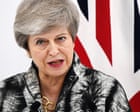
That's basically the message former Prime Minister Theresa May delivered when she told Greater Manchester Mayor Andy Burnham to "move on" from Brexit, right as Westminster critics piled onto calls for closer EU ties. It sounds neat on a broadcast clip. It makes for a clean headline. It also ignores the daily reality facing British manufacturers, regional mayors, and exporters trying to grow an economy stuck in low gear.
I've watched UK political messaging cycle through the exact same choreography for a decade now, and the pattern never changes. Whenever a senior figure outside Westminster points out that trade friction with our largest neighbor is hurting regional growth, the reflex in London isn't to debate the numbers. It's to accuse them of trying to rerun 2016.
What Actually Sparked the Clash Between May and Burnham
To understand why this row blew up, you have to look at the different jobs Theresa May and Andy Burnham actually do—and the different voters they answer to.
As Prime Minister from 2016 to 2019, May spent three exhausting years trying to thread an impossible needle. Her famous "Brexit means Brexit" line was meant to project certainty while her cabinet tore itself apart over customs unions, single market access, and the Northern Ireland border. When she tells Burnham to move on, she's speaking from the scars of a parliament that nearly broke itself over withdrawal terms. For her, reopening any constitutional or institutional argument over Europe isn't policy. It's self-harm.
Burnham sits in a completely different seat. Running Greater Manchester means dealing with hard infrastructure, foreign direct investment, and local supply chains every single week. Regional mayors don't have the luxury of hiding behind constitutional abstractions when local firms tell them customs paperwork, regulatory divergence, and mobility restrictions are adding costs they didn't face a decade ago.
So when Burnham pushes for closer economic alignment and pragmatic cooperation with Brussels, he isn't asking for another referendum. He's asking why Britain is voluntarily keeping barriers up against a market of 450 million people right on its doorstep.
Critics immediately jumped on those remarks as backdoor rejoinism. That label is lazy, and honestly, it's deliberate. Framing every proposal for regulatory alignment or youth mobility as an attempt to overturn the referendum saves opponents from having to explain how the current arrangement delivers growth.
Why Westminster Keeps Confusing Trade Policy With Identity Politics
Here is the core mistake people make when following British political rows over Europe. They treat "Brexit" as a single, binary event that finished in January 2020 when the UK formally left the EU, or in January 2021 when the Trade and Cooperation Agreement (TCA) took effect.
It wasn't an ending. It was the start of a permanent negotiation.
Every major non-EU European economy—Switzerland, Norway, Turkey—spends decades continuously updating, patching, and renegotiating its relationship with Brussels. Trade rules change. Standards evolve. Supply chains shift. Standing still in international trade doesn't mean keeping things the same; it means falling behind every time your neighbor updates its rulebook and you don't.
Yet in British politics, the word "Brexit" stopped describing a set of trade and legal arrangements years ago. It became a tribal badge.
- For Conservative critics, defending the post-2020 settlement means defending political legitimacy. If you admit the TCA creates avoidable friction, you risk validating the people who warned against a hard break in the first place.
- For Labour's national leadership, touching Europe feels like walking into an electoral trap in the exact northern and Midlands constituencies that backed Leave in 2016 and returned Labour to power later.
- For regional leaders like Burnham, the political math looks different. Voters in Greater Manchester, Liverpool, or the West Midlands care far more about jobs, transport, and living standards than preserving ideological purity around a ten-year-old ballot.
That gap explains why May's advice lands so awkwardly outside the Westminster bubble. Telling a mayor to "move on" from the UK's largest trading relationship is like telling a shop owner to move on from discussing rent with their landlord. You can stop talking about it, sure. The bill still arrives every month.
The Economic Reality Behind Calls for Closer EU Ties
Strip away the Westminster point-scoring and look at what advocates of closer EU ties are actually asking for. Nobody in mainstream British politics is proposing a swift return to full EU membership. Brussels wouldn't even entertain an application without cross-party consensus in London, which doesn't exist.
Instead, the real argument is over specific, practical fixes inside or alongside the existing Trade and Cooperation Agreement.
First, there is veterinary and sanitary alignment—often called an SPS agreement. Right now, British food and agricultural exporters face physical checks, export health certificates, and border delays when shipping goods into the EU. A mutual recognition deal on plant and animal health standards would strip out huge chunks of that paperwork overnight, without putting Britain back into the single market as a whole.
Second, mutual recognition of professional qualifications and easier business travel. Service industries make up roughly 80% of the UK economy. Architects, engineers, touring musicians, and financial consultants have spent years dealing with patchwork national rules across 27 member states whenever they try to work on the continent for a few weeks.
Third, energy and security cooperation. Since Russia's full-scale invasion of Ukraine reshaped European security, Britain and the EU have realized that geographic reality doesn't care about treaty boundaries. Linking electricity grids efficiently across the North Sea and coordinating defense procurement isn't ideological nostalgia. It's basic self-interest.
Critics argue that any alignment makes Britain a "rule-taker"—accepting EU regulations without having a vote in Brussels on how they're written. That criticism is completely fair and deserves an honest answer rather than a brush-off.
Yes, aligning with EU product or food standards means following rules set in Brussels. Small and medium-sized economies next to giant regulatory blocs face that trade-off everywhere in the world. Canadian manufacturers build to US specifications if they want to sell south of the border. British carmakers already build vehicles to EU safety and emissions standards because running two separate assembly lines for a smaller domestic market makes zero commercial sense.
The real question isn't whether Britain takes rules from Brussels. In dozens of sectors, British businesses already do that voluntarily just to keep their export customers. The question is whether the UK government formalizes that alignment to remove border checks and border costs, or keeps the checks in place purely to preserve the theoretical right to diverge.
What Critics Get Right—And Where Their Argument Breaks Down
If you want to understand this debate properly, you have to give the skeptics credit where it's due. Not every critic warning against closer EU ties is fighting yesterday's culture war.
There are genuine risks in piecemeal alignment.
- Brussels drives a hard bargain. The European Commission has always resisted "cherry-picking"—letting non-members enjoy the benefits of single market access in select sectors without accepting the broader obligations of free movement and budget contributions. Every concession the UK seeks comes with a price tag, whether that's fishing quotas, youth mobility visas, or financial contributions to EU programs.
- Political bandwidth is finite. Governments only have so much legislative time and diplomatic energy. Spending years haggling with Brussels over technical annexes can crowd out domestic reforms in planning, housing, energy grid connections, and skills training—areas where Britain's problems are entirely homegrown.
- Regulatory flexibility has real value in fast-moving sectors. In areas like artificial intelligence, gene editing, or financial services regulation, moving faster than Brussels can give the UK a genuine competitive edge if ministers actually use that freedom well.
Where critics lose credibility is when they pretend the current post-Brexit settlement is a finished masterpiece that needs zero maintenance.
It isn't. Even the architects of the Trade and Cooperation Agreement built a formal five-year review mechanism into the treaty because everyone involved knew the original text was rushed together under intense deadline pressure in late 2020. Reviewing and upgrading a trade deal isn't betrayal. It's normal statecraft.
Why Regional Mayors Keep Breaking the Westminster Silence
Notice who is pushing hardest for a more pragmatic European policy right now. It rarely comes from frontbenchers in Westminster first. It comes from metro mayors.
Andy Burnham isn't alone. Regional leaders across England's major city-regions have spent the past few years building direct relationships with European counterparts, trade bodies, and investors. When you sit across the table from a German industrial firm or a Dutch logistics operator deciding where to build a European hub, you hear unvarnished feedback immediately.
Westminster politicians filter everything through focus groups and newspaper front pages. Mayors filter everything through inward investment pipelines and local employment numbers.
That difference makes mayors far less patient with slogans like "move on." You can't tell an aerospace supplier in the North West to "move on" from customs delays when just-in-time components are sitting in a queue at Dover or Rotterdam. You can't tell university vice-chancellors in Manchester to "move on" when international research collaboration and student mobility directly fund local jobs.
By speaking out, Burnham is doing what regional leaders are supposed to do: dragging Westminster's attention toward economic friction that London would rather ignore because it's politically awkward.
How to Read the Next Phase of UK-EU Politics Without Falling for Spin
Whenever another headline pops up accusing a British politician of "reopening Brexit" or "betraying the referendum," run the story through a quick reality check before buying the outrage.
Look past the quotes from retired prime ministers and opposition spokespeople, and check three concrete things instead:
- Is anyone proposing single market membership, customs union re-entry, or ending border controls on migration? If the answer is no, you're looking at a technical trade negotiation, not a constitutional reversal.
- Which specific sector is being discussed? Debates over veterinary checks, Erasmus-style youth mobility, or defense pacts have completely different economic trade-offs. Lumping them all under one emotional label hides who actually wins and loses.
- What is the UK giving up in exchange for access? Serious diplomacy always involves a trade-off. If a politician promises frictionless trade with zero concessions to Brussels, they're selling fantasy. If a critic claims any concession equals surrender, they're selling fear.
Britain doesn't need another decade of theatrical trench warfare over 2016. Theresa May is right about one thing: relitigating old referendum arguments won't build a single mile of railway or raise productivity by a tenth of a percent.
Moving on doesn't mean pretending the English Channel is wider than it is, or acting like Britain's biggest trading partner disappeared off the map. Real maturity in UK politics means treating Europe like any other major foreign and economic relationship—negotiating hard, fixing what's broken, and measuring every deal by whether it puts money in people's pockets rather than whether it wins an argument from ten years ago.



