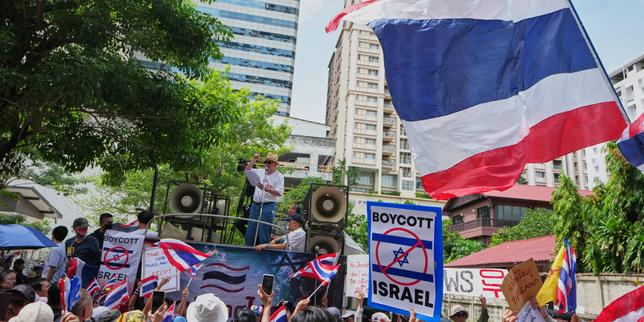
Bangkok streets recently witnessed a sharp and unexpected collision of international geopolitics and local domestic grievances. Ultranationalist groups gathered directly outside the Israeli Embassy to stage high-visibility demonstrations. Protesters carried sharp placards and chanted slogans demanding tighter controls on foreign property acquisition and visitor conduct. This wasn't merely a localized flash mob. It represents a coordinated effort by prominent Thai conservative figures to channel public frustration over real estate, tourism pressures, and broader Middle Eastern conflicts straight into the heart of Thai diplomatic channels.
Led by veteran political activist Sondhi Limthongkul and members of the "Take Thailand Back" network, the demonstration drew hundreds of participants to the Sukhumvit area. The crowd's demands focused heavily on economic sovereignty. Organizers voiced acute anger regarding alleged nominee structures. Under Thai law, foreign nationals face strict limits on land ownership. Critics claim that certain foreign buyers use local Thai proxies to bypass these restrictions, snapping up valuable parcels in tourism hubs like Phuket and Koh Phangan, as well as mainland provinces.
Beyond property concerns, the protesters targeted cultural friction points. Activists highlighted recent behavior from specific tourist cohorts that allegedly ignored local customs, laws, and community sensitivities. Placards at the site explicitly referenced broader geopolitical tensions, combining local economic anxiety with global political statements. The timing also coincided with local tensions surrounding upcoming cultural and religious observances, compounding the friction between foreign visitors and host communities.
The diplomatic fallout was swift. The Israeli Embassy temporarily locked its doors as the crowds swelled outside. In response to the escalating pressure, Israeli Deputy Ambassador Rami Teplitski published an unusual video message delivered entirely in Thai. He acknowledged the grievances, emphasized that the diplomatic mission takes community complaints seriously, and pointed to previously issued behavioral guidelines meant to urge visiting nationals to respect local traditions.
This street-level confrontation follows high-level warnings from Bangkok's government. Thai Deputy Prime Minister and Foreign Minister Sihasak Phuangketkeow summoned Israeli Ambassador Alona Fisher-Kamm to discuss mounting friction. While government officials stressed that enforcement applies universally to all foreign nationals rather than targeting any single nationality, they made it clear that illegal business fronts and cultural disrespect will face strict legal penalties.
As nationalist groups plan further rallies across provinces like Chonburi and Khon Kaen, the tension highlights a growing global pushback. Host nations are scrutinizing how foreign tourism and capital impact local housing markets and community standards. Expect Thai authorities to step up audits on proxy business structures over the coming months to appease domestic critics while managing vital international ties.