The air at thirty-five thousand feet is thin, cold, and deceptively peaceful. Inside the cabin of a long-haul passenger jet, the world shrinks to a collective hum. Passengers drift between fitful sleep and the glow of seatback screens. Ice clinks in plastic cups. A toddler whimpers three rows back, then goes quiet. It is a deeply engineered illusion of absolute safety, maintained by two professionals sitting in a small, windowed room at the front of the aircraft.
But safety in modern aviation depends entirely on an invisible thread. That thread is radio frequency. When it breaks, the silence that follows is not peaceful. It is terrifying.
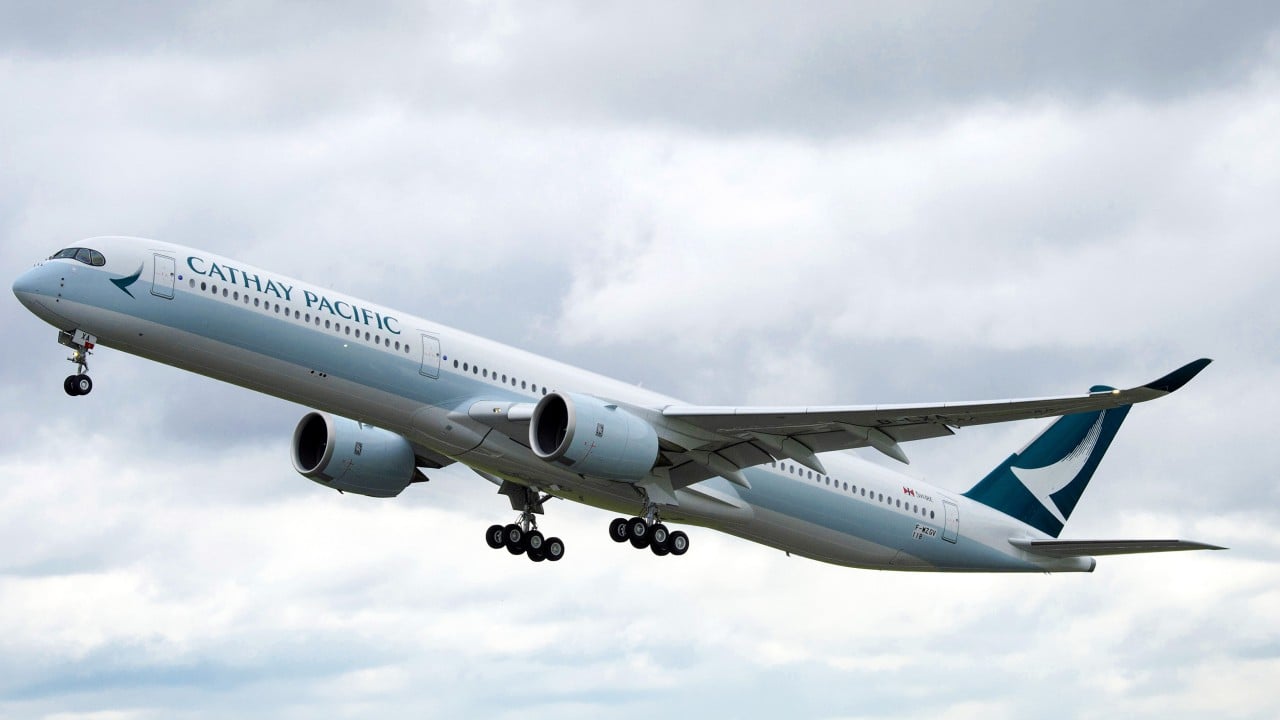
A Cathay Pacific flight, moving through the densely crowded airspace of eastern Europe, recently experienced exactly what happens when that thread snaps. To the people in the back, it was just another hour of a long journey home. To the military commanders on the ground, the silent wide-body jet suddenly looked like a rogue missile. What followed was a high-stakes scramble of NATO fighter jets, a tense mid-air interception, and an unfolding regulatory investigation that reveals just how fragile our skyways truly are.
The Day the Cockpit Went Cold
To understand how a routine flight turns into an international security incident, you have to understand the sheer speed of European airspace. Control of your flight is handed off like a baton in a relay race. Air traffic controllers in one country track your progress, guide you to the edge of their sector, and then instruct the pilots to switch to a new frequency for the next country.
It takes seconds. You punch in the new numbers, you check in, and the journey continues.
Imagine the pilots on this specific afternoon. They are tired. They have been flying for hours across continents. The radio crackles with German, Polish, or Romanian accents, a steady stream of coordinates and barometric pressures. Then, a digit is misheard. Or perhaps a dial is turned just one click too far. A frequency is entered incorrectly.
The pilots think they are on the right channel. They wait for a call. None comes.
On the ground, an air traffic controller watches a glowing green dot on a radar screen. The dot is moving at five hundred miles per hour toward a border. The controller calls the flight. No response. They try the emergency frequency. Nothing. They try a secondary system. The dot keeps moving, silent and unresponsive.
In the post-2001 world, a silent airliner is an immediate crisis. Minutes feel like hours. Air defense networks wake up. Deep inside underground command centers, lights flash red. A decision is made.
Shadows on the Wing
Consider the perspective of a hypothetical passenger sitting in seat 22A. Let us call her Sarah. She is reading a book, occasionally looking out at the thick blanket of white clouds below. The flight has been smooth.
Then, a shape appears.
It does not approach like a normal airplane. It rises from beneath the clouds with predatory speed, stabilizing just yards from the wingtip of the passenger jet. It is gray, sharp, and angular. A NATO fighter jet.
Sarah presses her face against the thick acrylic window. She can see the pilot of the fighter jet. He is so close that she can distinguish the color of his helmet visor. The fighter pilot is looking directly into the cabin of the airliner, scanning the rows, looking for signs of a struggle, a broken window, or a hijacked cockpit.
Inside the cockpit of the Cathay Pacific jet, the atmosphere shatters. The pilots look to their left and right. They see the military escorts. The realization hits them with a physical jolt. They are being intercepted.
The military pilots use visual hand signals. They rock their wings. It is the international language of aviation for you have been intercepted, follow me. The civilian pilots immediately check their radios, realize the error, flip to the correct frequency, and the sky suddenly fills with frantic, relieved voices.
The crisis ends. The fighter jets peel away, diving back into the cloud layer as quickly as they arrived. The passenger jet continues to its destination.
But the story does not end when the tires touch the runway.
The Paper Trail of Panic
When an airliner gets intercepted by military aircraft, it triggers an automatic cascade of bureaucratic machinery. Regulators do not look at this as a simple misunderstanding. They look at it as a systemic failure.
The Air Accident Investigation Authority has stepped in. They have launched a formal review into why this Cathay Pacific flight lost communication. The investigation will examine every second of audio, every line of maintenance data, and the exact sequence of events that led to the radio silence.
This is not about assigning blame to a single tired pilot. It is about understanding the human interface with technology.
Modern cockpits are marvels of automation. They can fly themselves across oceans. Yet, they still rely on human beings to listen to a voice through a headset and manually input numbers. When an error occurs, the systems do not always catch it. The investigation will look into whether the aircraft’s onboard alerting systems functioned correctly, or if the sheer volume of air traffic contributed to the communication breakdown.
The stakes are incredibly high. Every time a military jet scrambles to intercept a civilian airliner, the risk of a catastrophic mistake rises exponentially. A sudden movement by the passenger plane, a misunderstood signal, or a nervous finger on a weapon release switch could result in a tragedy that shakes the global aviation industry to its core.
The Cost of the Open Sky
We take the safety of air travel for granted because the mechanisms that protect us are largely invisible. We do not think about the military radar stations scanning the skies twenty-four hours a day. We do not think about the Quick Reaction Alert fighter pilots sitting in their flight suits, waiting for the alarm to sound.
This incident is a stark reminder that the sky is not a lawless void. It is a highly policed, heavily defended territory.
When you board a flight, you are trusting a chain of thousands of individuals. You trust the mechanic who checked the wiring, the controller who adjusted your path, and the pilots who manage the controls. This recent interception shows that even the most prestigious airlines are vulnerable to the simplest human vulnerabilities.
The regulatory review will take months. They will produce a long, detailed report filled with technical jargon and dry statistics. They will recommend changes to training protocols and communication habits.
But beneath all that paperwork lies a truth that every traveler should remember. We fly through a world that requires constant, unbroken vigilance. The moment we stop talking to each other, the illusion of safety vanishes, leaving only the cold reality of the clouds and the gray wings of the jets waiting in the mist.



