The shoreline smells of decaying kelp, sun-warmed plastic, and the sharp, ancient bite of salt. Most people walk past it with their eyes fixed on the horizon, hypnotized by the whitecaps or the wheeling gulls, stepping over the bright blue bottle caps and tangled monofilament like they are just another kind of driftwood. We have trained ourselves not to see the garbage. It is the great, invisible compromise of modern life: we inhabit a world of single-use convenience, and our oceans quietly swallow the consequences.
Ten-year-old hands do not usually hold heavy burdens. At that age, fingers are meant for scraping knees, clutching video game controllers, or building lopsided forts out of couch cushions. But ten years ago, a child looked down at a stretch of sand and saw something else.
She saw a ticking clock.
The First Bucket
Her name was not yet in headlines. There were no microphones, no flashing cameras, no glossy invitations to corporate galas. There was only a child, a pair of oversized garden gloves that kept slipping off her wrists, and a red plastic bucket.
The first day, the bucket filled up in twenty minutes. It was not filled with seashells or sea glass, but with the discarded debris of an invisible society: cigarette butts like small white teeth, shredded polyethylene bags clinging to the rocks like jellyfish skin, and the jagged, multi-colored shards of plastic containers that had been ground down by the surf into micro-particles.
She did not analyze the macro-economics of global pollution. She did not draft a white paper on supply chain waste. She simply experienced a visceral, unmistakable wrongness. The beach was her backyard, her sanctuary, the place where she went to think, and it was being suffocated.
So she came back the next day. And the next.
By the time most children are worried about middle school social hierarchies and algebra quizzes, she was organizing neighborhoods. She was standing on milk crates, her voice small but piercingly clear, convincing adults twice her age to spend their Saturday mornings bent double over the tide line.
The Machinery of Indifference
To understand what makes a child spend a decade picking up other people’s trash, you have to understand the sheer scale of what she was fighting.
Every minute, the equivalent of a garbage truck full of plastic is dumped into the oceans. It floats on gyres, swirling into vast, toxic soup bowls thousands of miles wide. It breaks down, but it never truly disappears. It becomes dust. It enters the food chain. It settles into the tissue of the fish on our plates and the water in our glasses.
We live downstream from our own choices.
Adults know this. We read the statistics over our morning coffee, feel a brief, sharp pang of guilt, and then click over to a sports score or a spreadsheet. We are paralyzed by the magnitude. The problem is too big. The systems are too entrenched. What can one person do against the crushing weight of global manufacturing and consumer apathy?
That is the question of our age. What can one person do?
Her answer was absurdly simple, almost offensive in its lack of sophistication. You pick up one piece. Then you pick up another.
The Weight of Recognition
Years passed. The child grew into a teenager. The red plastic bucket gave way to heavy-duty industrial trash bags, then to organized community networks, then to municipal partnerships.
When you do something for ten years—consistently, stubbornly, without waiting for permission or a paycheck—the world eventually has to turn around and look.
That looking culminated in the 2026 Barron Prize.
The award is designed to honor young people who have made a significant positive difference to people and the planet. When her name was announced, the commentators used all the standard, comfortable words: inspirational, visionary, grassroots leader.
They wanted to frame her as an anomaly. A generational prodigy. A unicorn born with a rare gene for civic duty.
That framing is a trap. It is a way for the rest of us to offload responsibility. If she is special, then we are excused from being remarkable. If she is a prodigy, then our continued apathy is just part of the natural order.
She is not a prodigy. She is simply someone who refused to unlearn what every ten-year-old instinctively knows: that destroying your own home is an act of profound madness.
The Unfinished Shoreline
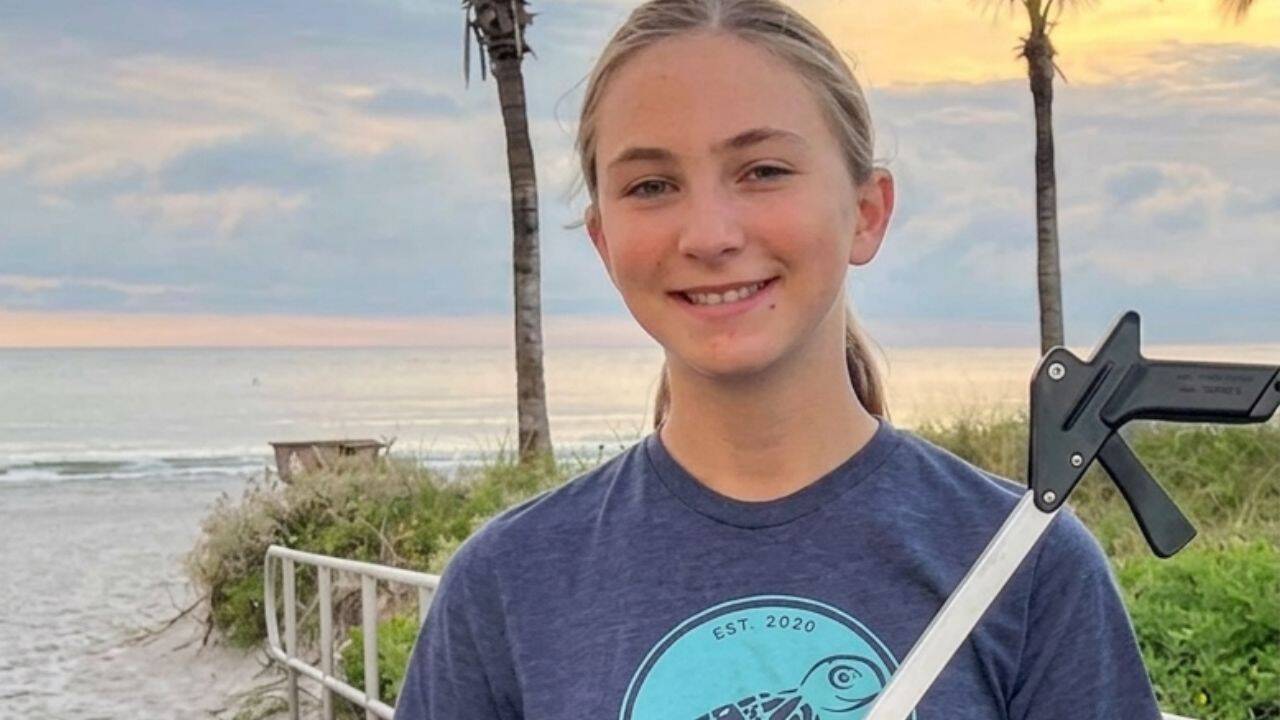
Picture her now, standing on that same stretch of sand. She is older now, with calloused palms and a sharp, discerning eye that tracks the drift line with the precision of a marine biologist. The wind off the water is cold, stinging her cheeks.
The buckets are heavier now. The organization is larger. The media requests keep coming in.
Yet, the tide keeps rolling in, bringing more plastic with it. The work is infinite. There is no final victory lap, no moment where the oceans are clean and the cleanup groups can disband and go home. Every single morning, the beach resets. Every single morning, the trash returns.
That is the hidden truth of stewardship. It is not
The Ten Year Old Who Looked Down and Decided to Clean the Ocean
news, lifestyle
The plastic does not care who picks it up. It does not look at your age, your driver’s license, or your bank balance. It only waits. It wraps itself around the roots of sea oats, jams the hinges of crab shells, and rides the foam onto the sand like a silent, indifferent invader. Most of us walk past it. We look at the horizon, at the wheeling gulls, at the brilliant blue arch of the sky, and we train our eyes to blur out the neon fragments of bottle caps and broken fishing line choking the wrack line.
We learn how not to see it.
Ten-year-olds have not learned that yet. Their eyes are still too close to the ground, attuned to the miraculous and the discarded. They still look down.
Ten years old. Let that number settle against your ribs for a second. At ten, most children are busy figuring out fractions, trading Pokémon cards, or skinning their knees on bicycles. When Ryan Hickman was ten, he was already drowning in high-density polyethylene. Not metaphorically. Literally surrounded by it. He wasn't sitting in a air-conditioned boardroom staring at a corporate sustainability slide deck. He was standing on a California beach with his father, staring at a tide line littered with the debris of modern convenience, and he felt a knot tighten in his stomach.
It was simple math, really. Or rather, a simple heartbreak.
He didn't want to play in a trash heap. So he picked up a bag. Then another. Then he told his parents that he wanted to recycle everything he could find.
That was the spark. But sparks usually die out against the wet sand of reality. Kids get distracted. Parents say it's too much work, too much mess, too cold outside, too late in the evening. Life intervenes with soccer practices and homework and the sheer, exhausting gravity of day-to-day survival.
Except Ryan didn't stop.
Years bled into one another. The boy who could barely heft a heavy trash bag grew taller. His hands grew calloused. He learned how the municipal recycling plants worked, how balers compressed aluminum cans into tight, metallic cubes, and how the international shipping of waste actually functioned behind the corporate curtains. He became a fixture of the coastline, trading the carefree anonymity of childhood for an alarm clock that rang before sunrise, driven by an unshakeable, quiet obsession.
By the time the news cycle caught up to him—proclaiming him as the newest recipient of the prestigious 2026 Barron Prize—he wasn't just a local kid picking up trash anymore. He was an institution. He was a living indictment of every adult who ever looked at a plastic bottle floating in the surf and thought, Someone else will get that.
We talk about environmentalism in grand, sweeping terms. We talk about carbon offsets and Paris accords and international treaties signed in marble halls by people wearing expensive suits. We treat the crisis of the Anthropocene as a theoretical puzzle to be solved by algorithms and policy papers.
That is our mistake.
The crisis is physical. It smells of rotting kelp and sun-baked petroleum. It has weight. It has texture. And it can only be undone one piece of plastic at a time, by someone willing to bend their knees and hurt their lower back.
Consider what happens when a child decides to care. Adults tend to patronize that care. We smile indulgently, pat them on the head, and say how sweet it is that the little ones are playing conservationist. We turn them into cute human-interest anecdotes for the evening news, a brief, heartwarming palette cleanser between reports of war and economic collapse.
We do this because the alternative is terrifying.
If a ten-year-old can mobilize a movement, if a kid with a bucket and a wagon can divert hundreds of thousands of pounds of waste from the ocean, then what is our excuse? What are the rest of us doing with our afternoons? Why are we scrolling through glowing rectangles while the tide washes another million microplastics into the food chain?
Ryan’s journey wasn't born out of a desire for an award. Recognition is a latecomer to the party; it arrives long after the blisters have healed and the initial enthusiasm has curdled into routine. The Barron Prize, which honors remarkable young people who have made a significant positive impact on their communities and the world, didn't create Ryan Hickman. It merely acknowledged what the seagulls and the tide crabs already knew. He was the one who stayed.
When you look at the trajectory of his life—from a boy standing on the shore with a single plastic bag to a recognized leader driving systemic change—you realize how badly we have misjudged the nature of heroism. We look for generals, for charismatic politicians, for tech billionaires launching rockets into the dark. We forget that true power often looks like a teenager spending his Saturday sorting glass by color because he cannot bear the thought of it resting another night in the dark, salt-scented sand.
The sun sets over the Pacific with the same blinding, indifferent beauty it has possessed for millennia. The waves roll in, relentless and rhythmic, carrying their cargo of human forgetfulness.
Somewhere out there, the tide is turning. And the plastic is still waiting to see who bends down next.