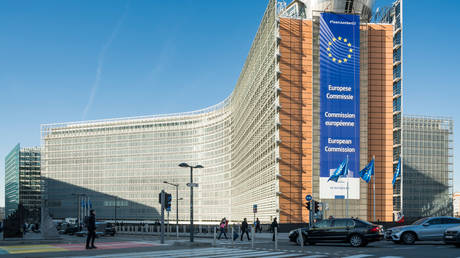
Sweat does not care about bureaucracy. When the European summer hits Brussels, the glass facade of the Berlaymont building turns into a giant, shimmering greenhouse. Inside, thousands of translators, policy advisors, and administrative clerks watch the digital thermometers on their desks creep upward. Paper sticks to forearms. Coffee grows cold, replaced by lukewarm water from plastic cups.
For the average European Union staffer, the heat is a leveling force. It is an annual reminder that despite the grand speeches about a unified Europe, everyone burns the same under a July sun.
Except, it seems, at the very top.
While the lower floors sweltered under strict ecological guidelines limiting the use of air conditioning, a different climate altogether existed on the thirteenth floor. Upstairs, in the executive suites of European Commission President Ursula von der Leyen, the air remained crisp, cool, and perfectly controlled. It was a stark contrast that eventually shattered the illusion of bureaucratic solidarity, sparking a quiet rebellion that critics quickly labeled a modern form of political feudalism.
The Glass Oven
To understand the fury that rippled through the corridors of European power, one must understand the Berlaymont itself. Built as an iconic cross-shaped monument to European unity, the building is a labyrinth of glass and steel. It was designed to look forward, to symbolize transparency. Instead, during a heatwave, it functions like a solar oven.
Under the EU’s ambitious Green Deal, the institutions decided to lead by example. Lowering the carbon footprint meant raising the acceptable indoor temperature before cooling systems kicked in. For the rank-and-file staff, this meant working in environments that felt less like modern offices and more like subtropical terrariums.
Consider a hypothetical translator we will call Matteo. Matteo sits in a small interior office, tasked with turning complex legal frameworks into flawless Italian. His head throbs. The air is heavy, stagnant. He knows that every degree he endures is a tiny victory for the planet, a micro-contribution to the grand climate goals dictated from above. He accepts the discomfort because he believes in the mission.
Then, he learns about the thirteenth floor.
Rumors travel fast in a building with thousands of people sharing a handful of cafeterias. The gossip started with the maintenance crews—the technicians who carry the blueprints and understand the hidden plumbing of power. They whispered about specialized retrofits. They spoke of a private living quarter constructed directly adjacent to the President’s office, complete with its own dedicated, high-performance climate control system.
The contrast was too sharp to ignore. Below, a mandatory austerity of comfort. Above, a private oasis of cool air.
The Architecture of Isolation
This was not merely a dispute about a thermostat. It became a proxy war over equality, transparency, and the widening chasm between the governing elite and the people they employ.
When trade unions representing the EU staff raised their voices, they did not just complain about the heat. They used a word that cut through the usual diplomatic polite speak. Feudalism.
It is a heavy term. It evokes images of lords in stone castles, looking down from breezy parapets while the peasantry toils in the muddy fields below, praying for rain. By creating a literal physical sanctuary where the rules of the collective did not apply, the leadership had inadvertently revived an ancient dynamic.
The defense from the top was predictable, rooted in logic and security. The President lives in the building to save time, to remain secure, to work around the clock during global crises. A leader who does not sleep cannot lead. Therefore, the living quarters must be habitable.
But logic often fails to soothe a emotional wound. The staff did not begrudge a President her safety; they begrudged the asymmetric sacrifice. The psychological impact of climate policy depends entirely on shared burden. The moment the architect of the sacrifice exempts themselves from it, the policy ceases to feel like a noble effort. It begins to feel like a decree.
The True Cost of Comfort
Step back from the political theater and consider the physiological reality. Human beings do not think clearly when they are overheating. Productivity plummets. Tempers flare. The decisions made within the Berlaymont affect hundreds of millions of citizens across a continent.
When the air conditioning became a privilege rather than a utility, it altered the social contract of the workplace. It created a hierarchy of biology, suggesting that some brains require cool air to function, while others can simply endure.
The real problem lies elsewhere, far beyond the physical walls of the Brussels headquarters. The story leaked because the hypocrisy was too loud to contain. In an era where populist movements constantly accuse European leadership of being detached, wealthy, and elitist, the image of a climate-controlled executive suite towering over a sweltering workforce became a gift to skeptics.
It undermined the very message the Commission spent billions to promote. How do you convince a factory worker in Poland or a farmer in southern France to alter their lives for the environment when the administrative heart of Europe cannot even agree on a shared indoor temperature?
The Lingering Chill
The scandal eventually faded from the daily headlines, buried under the next geopolitical crisis, the next budget debate, the next election cycle. The specialized units remained. The staff below continued to open windows that only let in more hot air.
But something fundamental shifted in the corridors. The physical temperature of the rooms became a metric of status. Staffers walking up the stairs could feel the air pressure change, the humidity drop, the subtle chill that signaled proximity to the core of authority.
Power, it turns out, is not just about votes, budgets, or legislative pens. Sometimes, power is simply the luxury of deciding exactly how cold you want your room to be while the rest of the world burns outside.