The air conditioning in the Rayburn House Office Building hums at a low, mechanical frequency that feels less like climate control and more like a warning. Outside, Washington is a blur of gray stone, hurried footsteps, and the relentless ticking of political clocks. Inside, under the glare of multi-directional television lights, the temperature is rising.
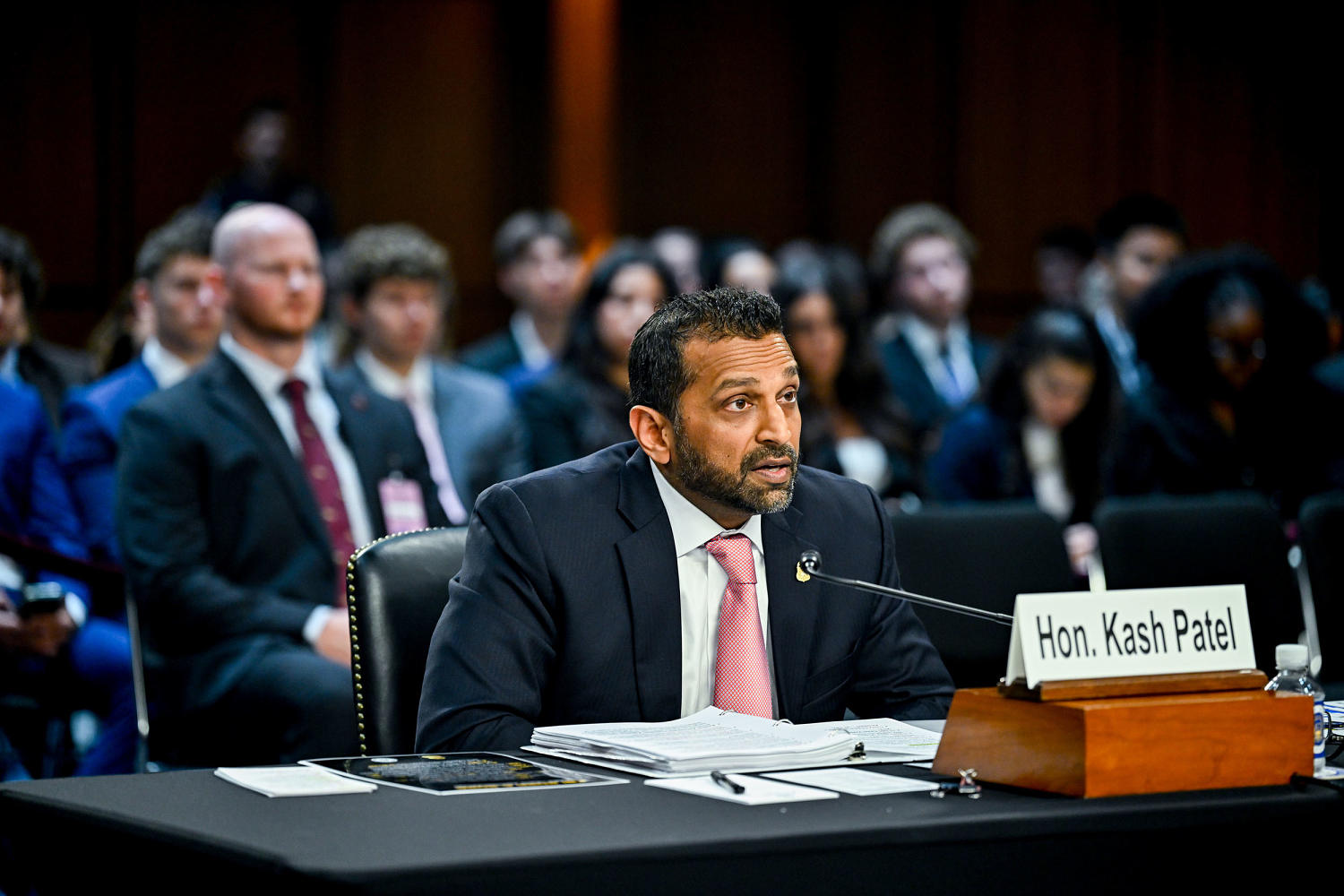
It is an oversight hearing. To the casual observer watching from a flat-screen television in a suburban kitchen or scrolling through a muted feed on a crowded commuter train, it looks like theater. Men and women in dark suits sit behind elevated mahogany risers, shuffling papers, adjusting microphones, and leaning into their allotted five minutes of questioning with the practiced theatricality of trial lawyers who know the jury is already deadlocked.
At the center of it sits Kash Patel.
The name itself carries weight in rooms like this. To his defenders, he is an insurgent disinfectant, a man willing to tear open the machinery of federal law enforcement and expose its rust. To his critics, he is a wrecking ball, swinging indiscriminately at the pillars of institutional integrity that keep the republic from sliding into raw partisanship.
When Patel speaks, he doesn't offer the smooth, bureaucratic cadence of the career civil servant. He speaks with the flat, unhurried clipped delivery of someone who has spent years picking through classified document boxes and red-inked memos, untangling wires that others preferred to leave hidden in the dark.
"Mr. Director," a Democratic lawmaker begins, leaning forward until the microphone catches the sharp click of the desk. The tone is measured, coated in polite steel. "Let's talk about accountability."
It is a word that rings through modern Washington like an empty bell. Everyone uses it. No one means the same thing by it.
To the committee members across the aisle, accountability means adherence to protocol, deference to historical precedent, and a quiet respect for the invisible boundaries that have governed the Federal Bureau of Investigation for generations. To Patel, accountability means tearing down the velvet ropes. It means asking why certain investigations stalled, why documents were redacted into illegibility, and why the public trust in federal institutions has plummeted to depths that should terrify anyone who cares about the stability of the state.
Consider what happens when the two philosophies collide. It is not a debate over policy. It is a collision of realities.
In one reality, the FBI is a sacred trust—a shield forged in the fires of the mid-20th century to protect citizens from foreign spies and domestic terror while maintaining a strict, almost monastic separation from partisan politics. In this reality, institutional norms are the mortar holding the democratic wall together. When a director questions those norms, or when politicians attack the integrity of the investigators, the wall cracks.
In the other reality, that wall is a facade. It is a painted screen behind which unelected bureaucrats have spent decades expanding their footprint, operating with impunity, and treating congressional oversight as an annoying procedural speed bump rather than a constitutional mandate. In this view, protecting the institution by covering its flaws is the ultimate betrayal of the public.
Patel represents the friction of that second reality crashing headfirst into the first.
As the hearing presses past the second hour, the questions sharpen. Tempers fray, though they are kept tightly reined beneath the surface of parliamentary courtesy. You can hear it in the cadence of the voices. A sharp intake of breath before a pointed accusation. A long, deliberate pause before a defensive answer.
The cameras zoom in on Patel’s hands. They are folded flat on the table. He doesn't fidget. He listens with a stillness that borders on unnerving, absorbing the verbal cross-examinations like a sponge soaked in acid. When he leans into the microphone to push back, his defense is aggressive. He counters accusations of weaponization by pointing fingers right back at the structural machinery of the agency he is tasked to navigate and reshape.
This is the invisible stakes of the moment. We are watching a live demolition of the postwar consensus on how federal power should be wielded and scrutinized.
For decades, the executive branch and the legislative branch maintained an uneasy dance. Congress held the purse strings; the agencies held the keys to the kingdom of state secrets. There was an unspoken agreement that some doors shouldn't be opened too wide, that the public couldn't always handle the messy plumbing of national security.
That agreement is dead.
Patel’s presence at the witness table is the symptom of its demise, not the cause. The public is exhausted. They have watched investigations turn into political weapons, intelligence agencies drift into domestic policy debates, and accountability become a partisan cudgel swung exclusively at political opponents. When a director sits before Congress and refuses to play the traditional game of deferential theater, the public tunes in—not because they understand the intricacies of federal oversight rules, but because they can smell the sulfur. They know the ground beneath them is shifting.
Across the aisle, the frustration is palpable. Lawmakers are not merely trying to score clips for evening news broadcasts or social media feeds, though that engine hums relentlessly in the background. They are genuinely terrified. They see an agency that was designed to be an apolitical referee being dragged directly into the partisan arena, stripped of its mystique, and remade in the image of modern political warfare.
Yet, as the gavel finally falls and the room empties into the fluorescent-lit corridors of the Rayburn building, the fundamental question remains entirely unresolved.
The papers will be gathered. The transcripts will be filed away in congressional binders that few will ever read. The cable news pundits will dissect every micro-expression, declaring winners and losers in a game with no final score.
But the dust in the room does not settle. It hangs in the air, catching the pale afternoon light filtering through the high windows—a silent, restless reminder that the machinery of government is being rewritten in real time, and no one in power has yet figured out how to stop the gears from grinding against each other.