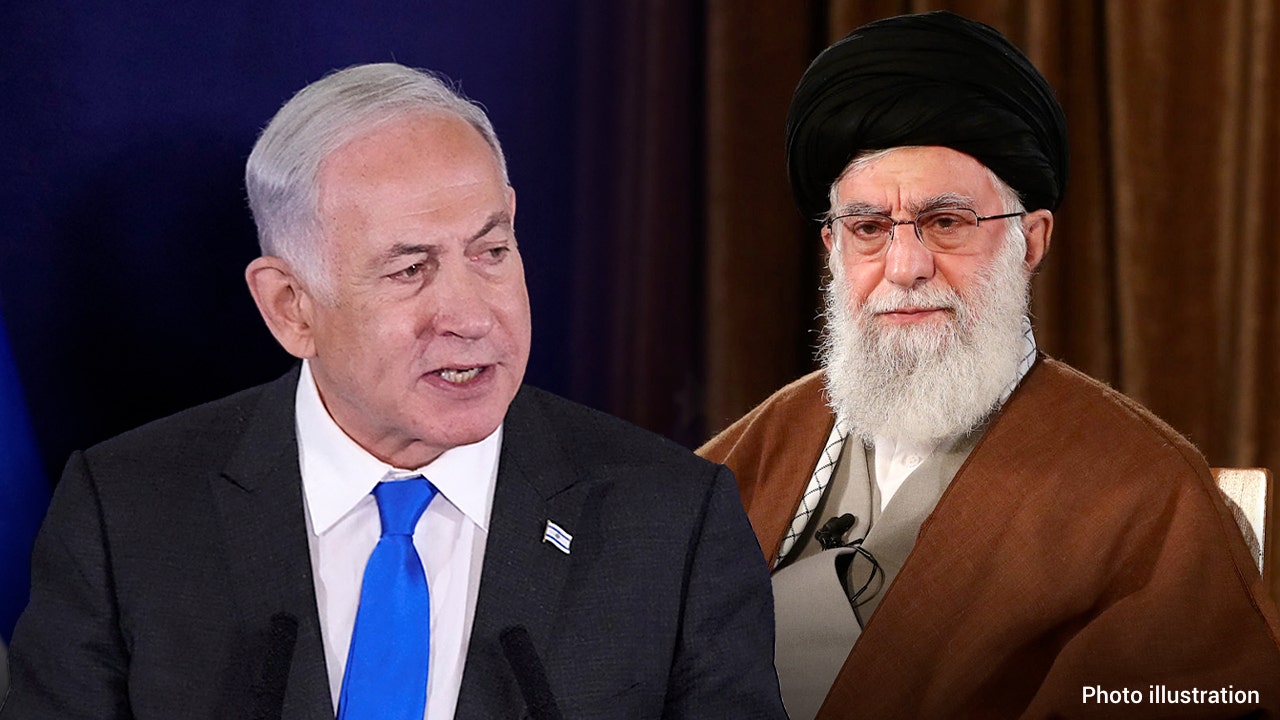
The recent pronouncements from Iran’s military establishment regarding the safety of "tourist destinations" for its enemies mark a departure from traditional brinkmanship. While the world remains fixated on missile trajectories and uranium enrichment percentages, a far more insidious doctrine is taking shape in the halls of the Islamic Revolutionary Guard Corps (IRGC). This isn't just a threat of localized retaliation. It is an admission that the battlefield has shifted from the scorched deserts of the Levant to the lobbies of luxury hotels and the crowded streets of global capitals.
The core of this strategy rests on a chillingly simple premise: if Tehran’s security is compromised at home, no Western or allied citizen is safe abroad. By specifically mentioning tourist hubs, the IRGC is signaling that it no longer views the "civilian" and "military" divide with the same lens as international law. This is the weaponization of the leisure class. It is a calculated move designed to force Western governments into a defensive crouch, worrying less about geopolitical maneuvers and more about the optics of a bus full of citizens being targeted in a "safe" third-party country.
The Architecture of the Proxy Threat
Tehran has spent decades building a network of influence that functions like a sleeper cell system on a continental scale. This is not a disorganized group of radicals. It is a sophisticated, state-sponsored apparatus. The IRGC’s Quds Force operates with a degree of autonomy that allows it to cultivate local assets in Europe, South America, and Southeast Asia. These assets are often not Iranian nationals; they are recruited from local populations, making them nearly impossible to track via traditional border security measures.
When a high-ranking military spokesman warns that "tourist destinations" are no longer safe, he is not necessarily talking about a direct Iranian missile strike. He is talking about the activation of these local nodes. History provides a roadmap for this. We saw it in the 1994 bombing of the AMIA building in Buenos Aires. We saw it in the 2012 Burgas bus bombing in Bulgaria. These were operations carried out thousands of miles from the Persian Gulf, aimed at soft targets to send a hard message.
The "why" behind this escalation is tied to the perceived failure of traditional deterrence. For years, Iran relied on its "axis of resistance" to keep conflict at arm's length. However, as precision strikes and cyber-operations have increasingly penetrated Iranian soil—targeting scientists and sensitive infrastructure—the IRGC has felt the need to expand the strike zone. They are moving the goalposts. If the sanctity of Tehran is breached, the sanctity of Paris, Dubai, or Bangkok is on the table.
The Economic Impact as a Weapon of War
Security is the bedrock of the global travel industry. By casting doubt on the safety of international hubs, Iran is engaging in a form of economic psychological warfare. The goal is to drive up the "cost" of opposing Iranian interests. This isn't just about the tragic loss of life; it’s about the massive shifts in insurance premiums, the deployment of expensive counter-terrorism resources, and the eventual cooling of international trade and travel.
Imagine the ripple effect of a single credible threat against a major European holiday destination. The immediate response is a massive intelligence surge. Governments are forced to divert billions from other programs to secure transit hubs. Tourism-dependent economies, many of which are already fragile, face a sudden exodus of capital. This is a "asymmetric" victory for a state under heavy sanctions. Tehran knows it cannot win a conventional war against a NATO-led coalition. It can, however, make the status quo so expensive and anxiety-ridden that the coalition’s resolve begins to fray.
Identifying the Weak Links in Global Security
Modern border security is built to catch the "known-unknowns"—individuals already on watchlists or those behaving suspiciously. It is remarkably poorly equipped to handle the "unknown-unknowns" that Iran’s proxy network utilizes. These are individuals with clean passports, deep roots in their communities, and no obvious ties to extremist ideologies. They are the "gray zone" operators who can move through an airport or check into a resort without raising a single red flag.
The intelligence community refers to this as "signature reduction." It is the art of disappearing into the mundane. When a military spokesman highlights tourism, he is essentially pointing out that the world’s most vulnerable point is its openness. You cannot secure every hotel lobby in the world. You cannot vet every person sitting at a cafe in a major city. The sheer scale of global human movement provides the perfect camouflage for state-sponsored actors.
Beyond the Rhetoric of the Spokesman
We must look at the timing of these statements. They rarely happen in a vacuum. Usually, such threats follow a specific setback for the Iranian regime or coincide with a period of internal pressure. By projecting strength and global reach, the IRGC seeks to consolidate its domestic power. It tells its own people—and its detractors—that despite the sanctions and the isolation, the Islamic Republic remains a global power capable of reaching anyone, anywhere.
This is a classic "defense through offense" posture. It seeks to create a "balance of terror" where the risk of an Israeli or American strike on Iranian soil is weighed against the risk of a retaliatory strike on a shopping mall in a neutral country. It is a grim calculation that forces policymakers to consider the "collateral damage" of their own defensive actions in a much broader, global context.
The Failure of Current Deterrence Models
The traditional Western approach to Iranian threats has been a mix of economic sanctions and targeted military responses. These have clearly not stopped the expansion of the "tourist destination" doctrine. Sanctions, while devastating to the Iranian middle class, have done little to slow the funding of the Quds Force. In fact, by pushing the Iranian economy into the shadows, sanctions have made it easier for the IRGC to engage in illicit smuggling and money laundering to fund their overseas operations.
Military responses have been equally lopsided. A drone strike on a commander in Iraq may be a tactical success, but if the response is a localized terror cell attacking a vacation spot in Greece, who truly "won" that exchange? The asymmetry is the point. The West values individual life and economic stability above all else. Tehran knows this. They are betting that the West’s "pain threshold" for civilian casualties in non-combat zones is much lower than Iran’s threshold for military losses.
Global Alliances and the Shifting Shadow War
Countries that have traditionally tried to remain neutral in the standoff between Iran and the West are now being dragged into the fray. If you are a nation that relies heavily on tourism, a threat like this is a direct attack on your national interest. We are seeing a quiet realignment of intelligence sharing. Countries in Southeast Asia and the Mediterranean are being forced to choose: do they increase cooperation with Western intelligence agencies to protect their borders, or do they try to appease Tehran to avoid becoming a target?
Neither option is particularly attractive. Increased cooperation can lead to accusations of being a "puppet" of the West, while appease-ment rarely works with a regime that views everything through the lens of a zero-sum game. The shadow war is no longer a bilateral conflict. It is a multi-polar mess where the safety of a traveler from Australia or Brazil is now contingent on the political climate in the Persian Gulf.
Technical Realities of the New Threat Landscape
The weapons of this new era are not just bombs and bullets. They are digital and social. The IRGC has become adept at using social media and encrypted messaging apps to coordinate with distant cells. They use these platforms for reconnaissance, identifying which destinations are "soft" and which have high concentrations of "enemy" citizens. They monitor flight patterns, hotel booking trends, and local news to find the perfect window for an operation.
Furthermore, the rise of "lone wolf" style operations—where an individual is "inspired" rather than "directed"—gives Tehran a layer of plausible deniability. They can provide the ideological framework and the target list through public pronouncements, then wait for a radicalized individual to take action. When it happens, the regime can claim they had no direct hand in the event, even though their rhetoric was the catalyst. This is the ultimate evolution of the proxy war: the democratization of terror.
Countering the Narrative of Inevitability
The most dangerous aspect of these threats is the sense of inevitability they create. They want the world to believe that an attack is coming and there is nothing that can be done to stop it. This psychological pressure is designed to make the public demand that their governments "de-escalate" at any cost.
Breaking this cycle requires a fundamental shift in how we view security. It’s not just about more cameras or more guards. It’s about dismantling the financial and logistical networks that allow these proxies to function. It involves a "follow the money" approach that goes beyond state-to-state sanctions and targets the shell companies and front organizations that the IRGC uses to move assets around the globe.
It also requires a level of public transparency that most governments are uncomfortable with. Instead of vague travel warnings, citizens need to understand the nature of the threat. They need to know that the "tourist destination" threat is a specific tactic used by a specific actor for a specific purpose. Knowledge is the only effective antidote to the "culture of fear" that the Iranian military spokesman is trying to cultivate.
The New Norm of Global Travel
We are entering a period where the concept of a "safe" destination is becoming a relic of the past. The IRGC’s statements are a blunt reminder that in a globalized world, there are no sidelines. Every luxury resort, every historical landmark, and every international airport is now a potential piece on the geopolitical chessboard.
This doesn't mean we stop traveling. It means we stop pretending that the conflicts of the Middle East are "over there." They are here. They are everywhere. The warning from Tehran isn't just a threat; it’s a mission statement for the 21st century. The shadow war has come out of the shadows and into the sunlight of the world’s most popular vacation spots.
The challenge for the international community is to move beyond the reactive cycle of "threat and response." If we only react when a spokesman makes a statement, we have already lost the initiative. The goal must be to make the "tourist destination" strategy so costly for the regime—both politically and operationally—that it becomes a liability rather than an asset. This requires a level of global cooperation that we haven't seen since the height of the Cold War.
Strategic Realignment in the Middle East
The shift in rhetoric also reflects a changing regional landscape. As some Arab nations move toward normalization with Israel, Iran feels increasingly encircled. This "tourist" threat is a way of lashing out at this new regional order. It is a message to its neighbors: "You may sign peace deals, but we can still make your streets run red."
This puts countries like the UAE and Bahrain in a precarious position. They have built their modern identities on being global hubs for business and tourism. For them, the IRGC’s threats are an existential concern. They are forced to invest heavily in top-tier surveillance and intelligence, creating a "fortress state" mentality that can eventually stifle the very openness that made them successful.
The IRGC is betting that the world's collective memory is short. They are counting on the fact that after a few months of quiet, the "tourist destination" threat will fade into the background noise of the news cycle. We cannot allow that to happen. These statements must be viewed as what they are: a calculated expansion of the theater of war.
Governments must now decide if they will continue to treat these threats as mere "rhetoric" or if they will begin the difficult work of hardening the global civilian infrastructure. This isn't just a task for the military. It’s a task for the travel industry, the financial sector, and the everyday citizen. The era of the "safe" bystander is officially over. The world is the front line.
Ensure your regional intelligence bureaus are prioritizing the "civilian-proxy" nexus over traditional military hardware tracking.