The escalating economic strangulation of Iran has moved beyond simple sanctions into a high-stakes maritime standoff that threatens the global energy supply. While political rhetoric suggests a total collapse of the Iranian economy is imminent, the reality on the water reveals a much more complex and dangerous game of cat and mouse. The primary objective is no longer just cutting off oil revenue but forcing a fundamental shift in regional power dynamics through a total naval blockade of the Strait of Hormuz. This strategy carries the risk of an uncontainable military escalation that neither side can truly afford.
Economic pressure is a blunt instrument. In the case of the Islamic Republic, that instrument has been sharpened into a razor. The Iranian Rial has plummeted to historic lows, and inflation is hollowing out the middle class. Yet, the assumption that economic misery translates directly into regime change or diplomatic surrender ignores forty years of Iranian institutional resilience and a sophisticated network of illicit trade.
The Geography of Global Choke Points
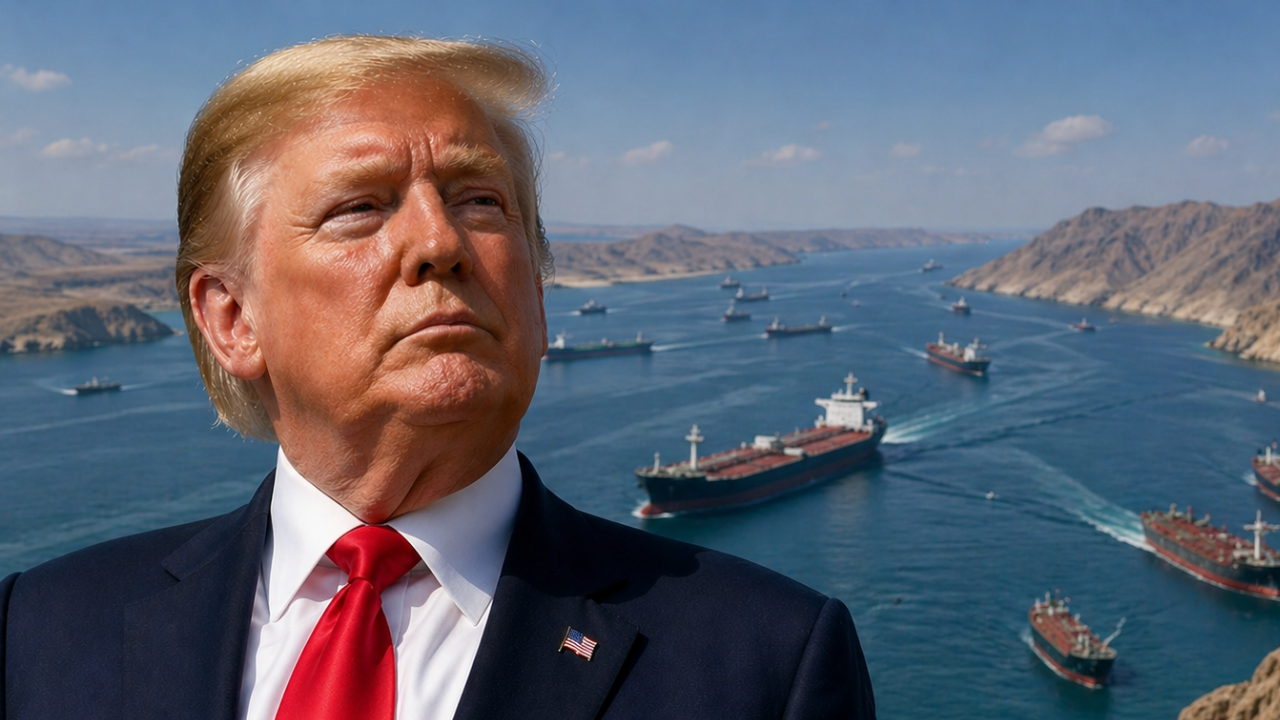
The Strait of Hormuz is a narrow strip of water that handles roughly 20 percent of the world’s liquid petroleum. It is the jugular vein of the global economy. If that vein is severed, the resulting shockwaves would trigger an immediate spike in crude prices, potentially pushing Brent well over 100 dollars per barrel within hours.
Geography favors the defender. Iran’s coastline along the Strait is dotted with jagged cliffs, hidden coves, and mountain-shielded missile batteries. They do not need a blue-water navy to make the passage impassable. They only need a swarm of fast-attack craft, sea mines, and shore-based anti-ship missiles. This asymmetric advantage is why the threat of an "unprecedented action" is taken with such gravity by naval commanders in the Fifth Fleet. A blockade is rarely a one-way street. It is an invitation to a brawl in a very small, very crowded room.
The Architecture of the Shadow Fleet
Sanctions only work if you can see what you are hitting. For years, Iran has perfected the art of the "shadow fleet"—a ghost navy of aging tankers with obscured ownership, frequently changing flags, and disabled AIS transponders. These vessels engage in ship-to-ship transfers in the middle of the night, often in international waters where jurisdiction is murky.
The crude eventually finds its way to refineries in Asia, rebranded as "Malaysian" or "Omani" oil. This black-market revenue stream is the oxygen that keeps Tehran breathing. To truly "choke" the economy, a blockade would have to involve the physical boarding and inspection of every suspicious hull in the region. That is not a diplomatic maneuver. It is an act of war.
The Logistics of a Modern Siege
Modern blockades are digital as much as they are physical. The financial system is the first line of offense. By cutting Iranian banks off from the SWIFT network and targeting third-party facilitators in Dubai and Istanbul, the West has created a vacuum. This vacuum is being filled by barter systems and gold-for-oil schemes that bypass the US dollar entirely.
When the dollar is removed from the equation, the efficacy of traditional sanctions begins to erode. We are seeing a move toward a multipolar financial world where Beijing and Moscow provide the back-channel support necessary for Tehran to survive. This isn't just about Iran anymore. It is about the viability of the American financial system as a global policing tool.
Domestic Pressure and the Breaking Point
Inside Iran, the atmosphere is heavy with the scent of stagnation. Small business owners are watching their life savings evaporate. Basic commodities like poultry and medicine are becoming luxuries. This is the "stuffed pig" scenario—an economy bloated with debt and inefficiency, unable to breathe under the weight of external pressure.
However, the internal security apparatus remains funded and loyal. The Islamic Revolutionary Guard Corps (IRGC) controls vast swaths of the legitimate and illegitimate economy. In many ways, sanctions have actually strengthened the IRGC's grip. When legal trade dies, the smugglers become the kings. The very people the sanctions are meant to target are often the ones best positioned to profit from the resulting black market.
The Miscalculation of Asymmetric Response
Tehran has long relied on a policy of "strategic patience," but that patience has a floor. If the regime feels its survival is at stake, the shift to "unprecedented action" will not be a slow escalation. It will be a sudden, violent attempt to reset the status quo.
This could take the form of sophisticated cyberattacks on regional desalination plants or energy infrastructure in neighboring Gulf states. It could involve the deployment of advanced drone technology against shipping lanes far outside the Strait of Hormuz, stretching Western naval resources to the breaking point. The goal would be to make the cost of the blockade higher for the world than it is for Iran.
The Myth of Total Isolation
It is a mistake to think Iran is alone. While European powers remain cautious, they are also desperate to avoid another refugee crisis or a massive energy shock. There is a widening gap between the aggressive posture of Washington and the more pragmatic, fear-driven approach of Brussels.
China remains the ultimate wild card. As the primary buyer of Iranian "ghost oil," Beijing holds the keys to the pressure cooker. If China decides that a stable energy market is more important than their strategic partnership with Tehran, the regime collapses. If Beijing continues to provide a financial lifeline, the siege could drag on for years, resulting in a failed state rather than a reformed one.
Tactical Realities on the Water
Naval warfare in the 21st century has been transformed by the proliferation of cheap, lethal technology. A billion-dollar destroyer can be threatened by a ten-thousand-dollar suicide drone. This cost-imbalance defines the current standoff. The US and its allies have the most powerful navy in history, but they are playing defense in a theater designed for the offender.
- Sea Mines: Low-tech but terrifyingly effective. Clearing a minefield in the Strait would take weeks, during which time global trade would halt.
- Swarm Tactics: Dozens of small boats attacking from different angles can overwhelm the targeting systems of larger vessels.
- Subsurface Threats: Iran’s fleet of midget submarines is designed for the shallow, noisy waters of the Gulf, making them difficult to track.
Every time a tanker is seized or a drone is shot down, the margin for error shrinks. The "blockade" is currently a psychological one, enforced by the threat of force. Once the first shot is fired in earnest, the psychological barrier breaks, and the global economy enters uncharted territory.
The Price of Misjudging the Brink
The rhetoric of "choking" an adversary assumes that the adversary will eventually gasping for air and sue for peace. But history shows that when nations are backed into a corner with no clear exit, they don't surrender. They lash out. The current strategy relies on the assumption that the Iranian leadership is rational in the Western sense—that they value economic prosperity over ideological survival.
If that assumption is wrong, the "unprecedented action" Tehran warns of won't be a diplomatic protest. It will be a systematic attempt to burn the house down with everyone inside. The blockade of Hormuz isn't just a maneuver to stop oil. It is a gamble that the world can withstand the fallout of a cornered power with nothing left to lose.
The shipping insurance rates are already climbing. The carriers are rerouting. The shadow fleet is moving faster. We are no longer waiting for a crisis. We are living in the middle of one, watching to see who blinks first in a corridor of water that is only twenty-one miles wide at its narrowest point.
Western planners must realize that a blockade is an end-state, not a beginning. Once the flow of oil stops, the leverage is gone. You cannot threaten to take away what is already lost. The ultimate irony of the "stuffed pig" strategy is that it might eventually produce a predator that is leaner, hungrier, and far more dangerous than the one it replaced.
True leverage is found in the space between total trade and total war. By closing that space, the options for a peaceful resolution vanish, leaving only the cold logic of kinetic engagement.