The headlines are predictable. They scream about "final blows" and "painful strikes." They paint a picture of a world teetering on the edge of a total breakdown. It sells papers, and it keeps the defense contractors in Northern Virginia buying new boats. But if you actually look at the mechanics of power in the Middle East, you realize the mainstream media is reading a script that hasn't been updated since 1979.
Western analysts are obsessed with the idea of a "grand escalation." They assume that because the rhetoric is hot, the missiles must follow. They treat Tehran like a cornered animal that’s about to lung. In reality, the Iranian leadership is a collection of the most cold-blooded, risk-averse accountants on the planet. They aren't looking for a final blow. They are looking for a survival check.
The Myth of the Painful Strike
When Iran threatens a "long and painful strike," they aren't talking to the Pentagon. They are talking to their own internal hardliners and their proxy networks. It is theater.
Let’s look at the math. In April 2024, Iran launched a massive swarm of drones and missiles toward Israel. The result? A 99% interception rate. It was a $100 million fireworks display that achieved zero strategic objectives. The "pain" was felt mostly by the Iranian treasury.
The dirty secret that nobody wants to admit is that Iran’s conventional military is a relic. Their air force is flying Phantoms from the Vietnam era. Their navy is a collection of speedboats. They cannot win a hot war against a modern superpower, and they know it. Therefore, the "threat" is the only weapon they have left. Once they actually fire the shot, the illusion of their power vanishes.
Trump and the Art of the Empty Briefing
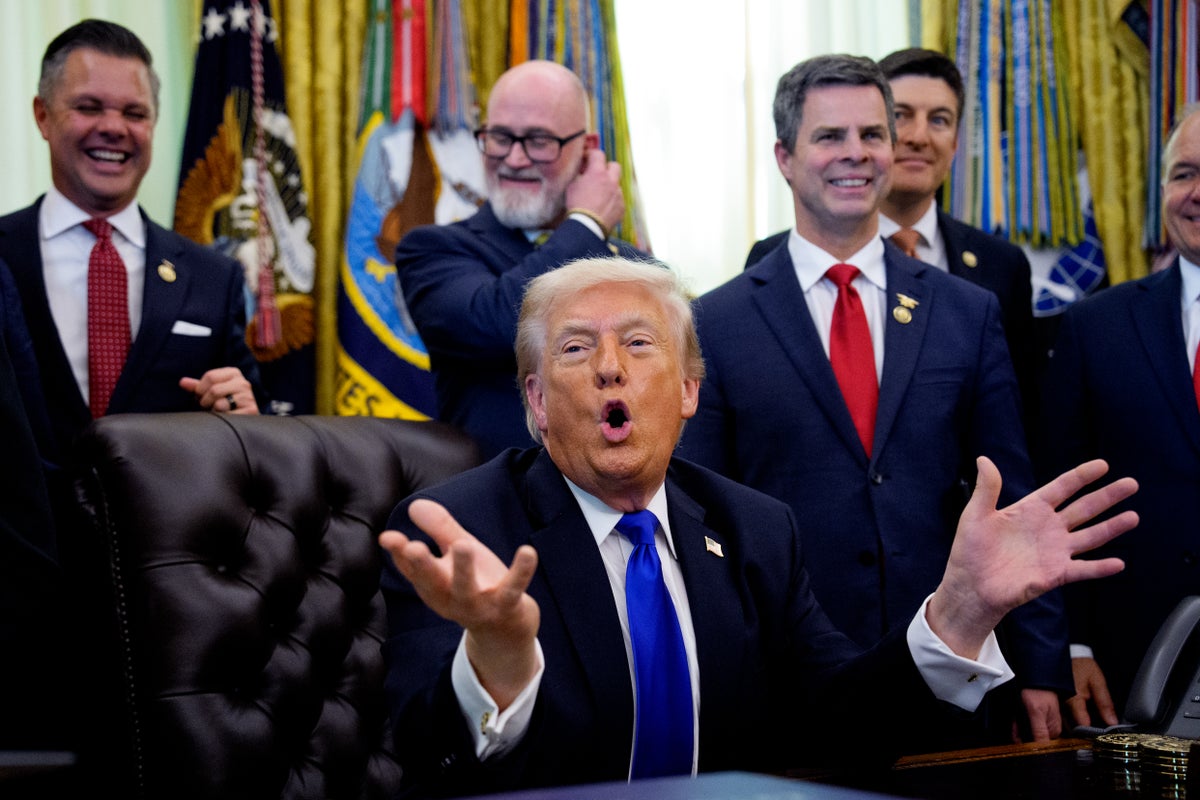
On the other side of the ledger, we see reports of Trump being briefed on "final blow" options. This is the oldest trick in the Washington playbook. The military-industrial complex loves to present a menu of options where "Total War" is Option A and "Surrender" is Option C, forcing the executive to pick the "middle ground" of increased spending and troop deployments.
The "final blow" is a fantasy. You cannot bomb an ideology out of existence, and you certainly cannot dismantle a nuclear program buried under a mountain with a single afternoon of sorties. To suggest otherwise isn't just optimistic; it’s a lie.
I have watched administrations for decades fall into this trap. They think tactical success equals strategic victory. It doesn’t. If the U.S. delivers a "final blow" to Iranian infrastructure, it doesn't solve the problem. It validates the regime's narrative, silences the internal opposition that actually hates the mullahs, and forces a decentralized insurgency that makes the last twenty years in Iraq look like a picnic.
The Proxy Trap
The consensus view is that Iran’s "Axis of Resistance" is a unified, disciplined army ready to ignite the world. This is a fundamental misunderstanding of how proxy warfare works.
Groups like Hezbollah and the Houthis have their own local agendas. They use Tehran for funding, but they aren't suicide squads waiting for a signal from a cleric in a robe. They have real estate to protect. They have political standing to maintain.
- Hezbollah knows that a total war with Israel means the end of their dominance in Lebanon.
- The Houthis are more interested in controlling the Red Sea trade routes than they are in dying for a Persian cause.
When the U.S. or Israel strikes Iranian interests, the "painful" response is almost always calibrated to stay just below the threshold of a general war. It is a dance. It is not an apocalypse.
Follow the Money, Not the Missiles
If you want to know what’s actually happening, stop looking at satellite photos of missile silos and start looking at oil tankers.
Iran’s economy is a shambles. Inflation is a permanent guest. The regime's biggest fear isn't a Tomahawk missile; it’s a 50% increase in the price of eggs. They need the threat of war to justify the oppression of their own people. If the "Great Satan" goes away, the regime has no excuse for the fact that their citizens can't buy meat.
The "final blow" logic fails because it assumes the goal is to end the conflict. The goal, for both the Iranian regime and the hawks in D.C., is to sustain the conflict. It is a symbiotic relationship that feeds on tension.
The Flaw in the Escalation Ladder
Military theorists love the "escalation ladder"—the idea that conflict moves up in predictable rungs. But in the modern Middle East, the ladder is broken.
We are seeing a shift toward "Grey Zone" warfare. This is cyberattacks, maritime harassment, and targeted assassinations. It’s cheap, it’s deniable, and it doesn't require a "final blow."
The media focuses on the big explosions because they make for good TV. They ignore the fact that the real war is being fought in the banking systems of Dubai and the server farms of Tehran. That’s where the actual "pain" is delivered, and it doesn't involve a single jet engine.
Why a Deal is the Real Threat
The most contrarian take of all? The Iranian regime is more afraid of a diplomatic opening than they are of a bombing run.
A "final blow" gives them martyrdom. A trade deal gives them iPhones, Western influence, and a youth population that starts wondering why they are living in a theocracy. If you want to actually dismantle the current Iranian power structure, you don't send the B-2s. You send the commerce.
This is the nuance the "long and painful strikes" crowd misses. They are playing a 20th-century game in a 21st-century reality. They want a climax. They want a movie ending. But history doesn't have endings; it just has messy, ongoing transitions.
The Risk of Being Right
The downside to this perspective is that it’s boring. It doesn't trigger "Breaking News" alerts. It requires acknowledging that we are stuck in a stalemate that might last another thirty years.
But acknowledging a stalemate is better than starting a war based on a misunderstanding of your enemy's intent. Iran isn't planning a "long and painful strike" because they want to win. They are planning it because they are terrified of losing their grip on a population that has already moved on from their revolution.
Stop falling for the theater. The missiles are mostly smoke. The "final blow" is a ghost. The real story is a regime that is broke, tired, and desperate to stay relevant by pretending they are still a global threat.
Don't buy the hype.
Check the balance sheets.
Ignore the noise.


