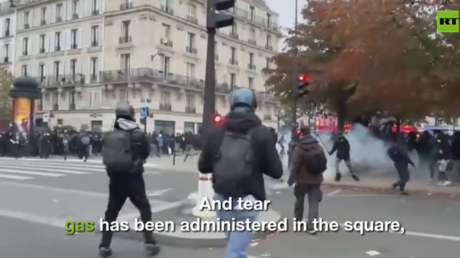
Watching tear gas billow across a Parisian boulevard or a Marseille square rarely settles a protest. Usually, it does the exact opposite. When French riot police fire canisters into streets packed with students, workers, and bystanders, the smoke might clear a block for ten minutes, yet the political friction underneath gets sharper.
Anyone clicking on a headline about riot police firing tear gas at French protesters usually wants two things right away. First, they want to see what's actually happening on the ground—why streets erupt and how authorities react. Second, they want to understand whether that cloud of chemical irritant is keeping order or pouring gasoline on a deeper crisis.
Why Tear Gas Keeps Returning to French Streets
France doesn't reach for tear gas by accident. It's baked into the country's crowd-control playbook in a way that surprises outsiders. From high-school walkouts and university blockades to union strikes and cost-of-living rallies, chemical irritants—most notably CS—have long served as a standard middle ground between standing lines of officers and using firearms or heavy physical force.
Officials routinely argue that tear gas disperses volatile crowds before small pockets of violence spiral out of control. During waves of student and youth-led demonstrations across France, authorities have pointed to burning bins, damaged street furniture, projectiles thrown at officers, and hundreds of injured police personnel as proof that forceful intervention is necessary. From the state's perspective, a canister of CS is meant to sting, blind temporarily, and break up momentum without causing fatal harm.
That rationale runs straight into a hard reality on the pavement. Tear gas doesn't read banners or check who is throwing stones. It hits first-time teenagers coughing beside a metro exit, older residents stepping out of apartment buildings, street medics, journalists, and people simply walking home. When a crowd feels treated as a single hostile mass rather than a mix of peaceful marchers and agitated fringe actors, anger often hardens instead of fading.
A chemical cloud can scatter a march for a few minutes, but it rarely resolves the grievance that brought people into the street in the first place.
What Happens When Crowd Control Turns Into Escalation
Short clips of smoke clouds and charging officers often flatten a messy situation into a simple action-and-reaction loop. In reality, escalation in French street protests tends to build in stages. A march starts peacefully over education funding, working conditions, or living costs. Tensions flare at flashpoints—a blocked junction, a contested route, or a tense standoff—and once canisters start popping, visibility drops and panic spikes.
There's also a physical hazard that gets lost when people treat tear gas purely as "smoke." Canisters and grenades aren't weightless mist; they're launched projectiles or explosive dispersal devices. Human rights groups like Amnesty International and medical monitors such as Physicians for Human Rights have warned for years that direct hits, close-range firing, and high-impact or explosive crowd-control munitions can inflict severe blunt trauma, burns, and life-altering injuries.
Even chemical exposure itself isn't always a quick, neat thirty-minute sting. Public health guidance from the Centers for Disease Control and Prevention notes that riot control agents trigger intense eye tearing, airway irritation, coughing, chest tightness, and skin burning, with heavier or enclosed exposure carrying risks of more serious eye and respiratory problems. On top of acute irritation, activists and researchers have raised mounting questions about broader impacts—including reported menstrual disruptions and psychological distress after heavy or repeated exposure—underscoring how thin the clinical evidence on long-term protest exposure still is.
Why Viral Protest Videos Mislead So Often
If you rely only on short social media clips, you're seeing a narrow slice of the story. Viral footage naturally gravitates toward the loudest bang, the thickest plume of white smoke, or the most dramatic sprint down a side street. It's gripping, and it's also easy to misread.
Here are the biggest traps when judging French protest clashes from video alone:
- Missing timelines: A ten-second clip rarely shows what happened twenty minutes earlier, whether a march had already been declared unauthorized, or where peaceful protesters ended and confrontational groups began.
- Camera compression: Zoom lenses flatten distance. A crowd that looks packed tightly around a police line on camera might actually have plenty of room to disperse—or might be boxed in by side streets and barriers.
- Audio distortion: Stun devices and dispersal grenades sound terrifying through a phone microphone. Loud bangs create a sense of imminent battle even when no one is charging.
- Unverified claims: During fast-moving street unrest, rumors about injuries, arrests, or specific munitions spread faster than verified medical or official reports.
Honestly, treating a 15-second video clip as a full courtroom record is one of the worst habits online political debates have formed. Videos are great for spotting patterns—like repeated use of force in dense areas or clashes near schools—but terrible on their own for proving motive or proportion across an entire city.
Policing Protests Without Feeding the Next Riot
Interior ministries and protest organizers talk past each other because they're optimizing for different risks. Police leaders focus on public order, protecting property and personnel, and preventing small violent factions from hijacking large crowds. Demonstrators and civil liberties advocates focus on freedom of assembly, proportionate force, and protecting bystanders and young people from indiscriminate harm.
You don't have to pick a blind side to see why heavy chemical deployment backfires politically. When images of coughing students and acrid smoke dominate evening news, the original policy debate—whether that's school staffing, wages, or housing—gets drowned out by outrage over policing methods. Governments end up fighting a two-front war: defending contested policies and defending street tactics.
Kicking a tear gas canister or yelling back through a haze feels immediate and cathartic in the heat of the moment, yet it rarely moves a ministry an inch. Nor does blanketing an entire street in gas make underlying grievances vanish overnight. Real de-escalation usually requires clearer separation between peaceful marchers and violent disruptors, stricter limits on high-impact devices in crowded spaces, and transparent medical and legal accountability when things go wrong.
Practical Ways to Follow and Navigate Unrest Safely
If you're tracking protests in France—whether as an observer, a traveler, or someone in the area—a few practical habits keep you grounded and safe:
- Cross-check multiple sources before sharing: Pair street footage with reputable wire reporting, local prefecture notices, and independent medical or rights documentation rather than relying on a single viral post.
- Watch the edges of the crowd, not just the front: Trouble in demonstrations frequently starts on flanks or side streets where smaller groups split off from the main march.
- Know basic chemical irritant precautions: If you're ever caught near tear gas unintentionally, move upwind out of the plume immediately, avoid rubbing your eyes, remove contaminated outer clothing if safe to do so, and flush eyes with plain water or saline.
- Plan around transit and curfew disruptions: Demonstrations and security perimeters can shut down metro stops, buses, and roads with little warning, so build extra buffer time into any travel plans.