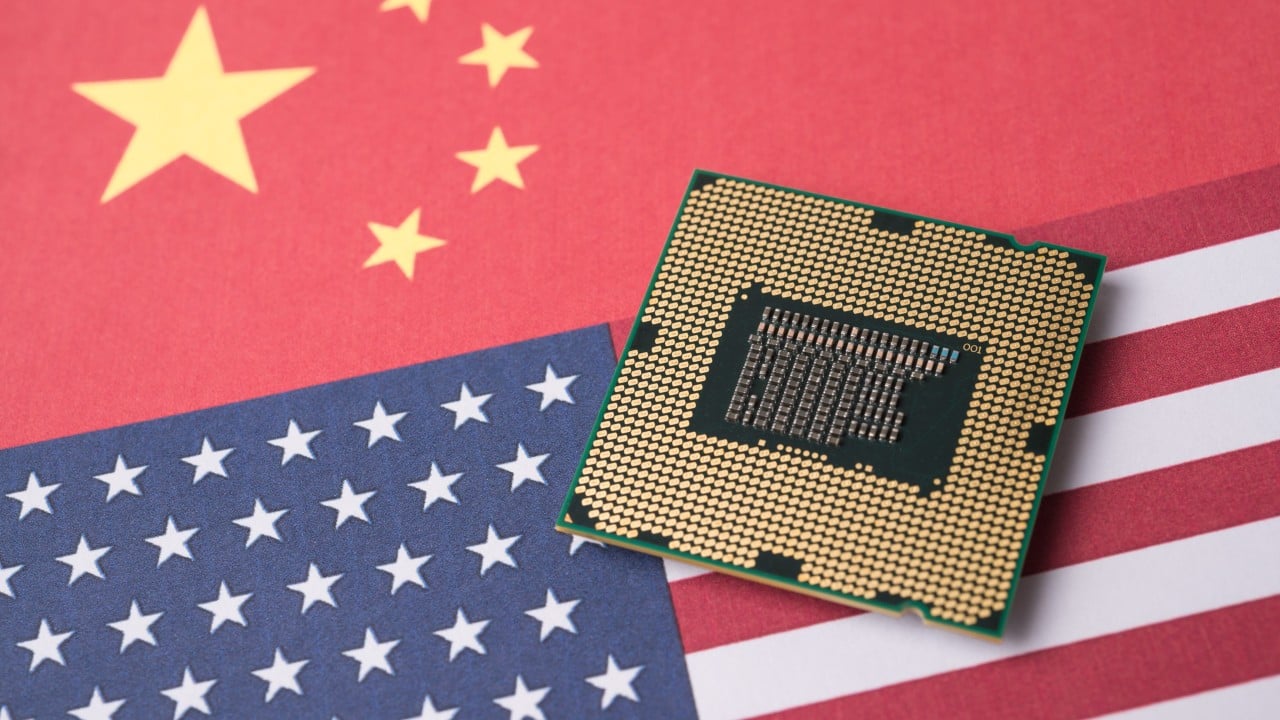
Washington has found its latest scapegoat, and it comes wrapped in the flag of tax reform.
The current consensus among lawmakers is deceptively simple: strip tax breaks from companies reliant on Chinese technology, force them to repatriate their supply chains, and watch American innovation thrive in a self-sustaining ecosystem. It sounds patriotic. It sounds orderly.
It is completely decoupled from the reality of global manufacturing.
Pulling tax incentives to punish Chinese component integration is not a strategic masterstroke. It is a blunt instrument that misunderstands how modern hardware is built. I have spent nearly two decades auditing hardware supply chains and advising venture funds on manufacturing logistics. I have seen companies torch tens of millions of dollars attempting to "de-risk" their operations, only to realize that the global electronics ecosystem cannot be legislated out of existence.
The premise that you can isolate American technology by tweaking the tax code is a fantasy. Here is why the current legislative push will backfire, crippling the exact domestic industries it claims to protect.
The Myth of the "Clean" Supply Chain
Lawmakers look at a smartphone or a server rack and see a collection of parts that can be swapped out like LEGO bricks. They assume that if you penalize a company for using a Chinese-made printed circuit board (PCB), that company will simply buy an American or Taiwanese alternative.
They are missing the nuance of foundational manufacturing.
Consider the raw dependency stack. China does not just assemble components; it controls the refining of the critical inputs that make those components function. According to data from the U.S. Geological Survey, China handles roughly 60% of worldwide rare earth element mining and a staggering 85% of the processing. If a U.S. manufacturer sources a neodymium magnet from a factory in Germany or Texas, the underlying raw material still routinely traces its lineage back to a Chinese refinery.
[Raw Materials: China Refineries] ➔ [Component Manufacturing: Global Subcontractors] ➔ [Final Assembly: US Tech Firms]
By stripping tax breaks from companies utilizing Chinese tech, the government creates a system of accidental penalties. A domestic hardware startup utilizing domestic fabrication facilities can still lose its tax status because a secondary capacitor or a specific voltage regulator in their power supply relies on Chinese-processed lithium or cobalt.
We are not forcing companies to source locally. We are forcing them to play a game of supply chain theater, spending millions on forensic accounting to mask dependencies rather than fixing them.
The Capital Expenditure Trap
The lazy assumption governing this legislative push is that tax penalties create a financial incentive strong enough to offset the cost of moving production facilities. This ignores the staggering scale of hardware Capital Expenditure (CapEx).
Imagine a scenario where a mid-tier networking equipment manufacturer loses a 10% research and development tax credit because they utilize Chinese contract manufacturers for their baseboards. The tax penalty might cost them $5 million annually.
To avoid that penalty, lawmakers expect them to build or contract a domestic alternative. But establishing a localized, fully automated surface-mount technology (SMT) production line in Ohio or Arizona requires an upfront investment that easily clears $40 million, before factoring in the acute shortage of specialized manufacturing labor in the domestic market.
The math does not work.
Faced with this choice, executives will not relocate their factories. They will accept the higher tax burden, absorb the margin hit, and pass the increased costs directly down to the consumer. The policy does not degrade China's market share; it simply acts as a functional tariff on American buyers of enterprise technology.
Disincentivizing the Next Generation of Hardware
If you penalize hardware companies for using the most cost-effective global infrastructure available, you do not spur domestic alternatives. You strangle early-stage innovation.
Software startups thrive because the cost of entry is virtually zero. A couple of developers with an AWS account can build a global platform. Hardware startups, conversely, are brutal cash-burning operations. They survive by utilizing the hyper-dense manufacturing ecosystems of Shenzhen, where prototyping cycles take days instead of months, and small-batch production runs are economically viable.
When you restrict tax breaks based on geographic sourcing, you create an existential barrier for companies that lack the scale to negotiate bespoke supply chains. Apple can afford to spend billions moving a fraction of its iPad production to Vietnam or India. A robotics company raising its Series A cannot.
By tying tax incentives to nationalistic sourcing metrics, the government is effectively locking out the next generation of hardware disruptors. We are protecting legacy defense contractors and massive tech conglomerates that have the regulatory capture to navigate these rules, while starving the actual innovators who need those tax credits to survive their first production run.
What Washington Should Do Instead
If the goal is genuine resilience, the current strategy must be flipped entirely. Stop trying to punish companies out of China; start making it structurally impossible to ignore American infrastructure.
- Subsidize the Baseline, Not the Finished Good: Instead of tracking where a microchip is packaged, throw massive, unrestricted tax incentives at domestic chemical processing and silicon ingot growth. If you control the foundational materials, the assembly location matters significantly less.
- Amortize Automation Instantly: Allow hardware companies to write off 100% of the cost of advanced robotics and automated assembly equipment in year one. The only way to compete with overseas labor pools is to eliminate human labor from the assembly equation entirely.
- Decouple R&D from Sourcing: Keep research and development tax credits entirely pure. If an engineer in Austin designs a breakthrough medical device, they should receive the full weight of federal tax support, regardless of where the initial prototype alpha-unit is soldered.
The current legislative push is a dangerous distraction. It treats a deep, structural engineering reality as a simple accounting problem. If we continue down this path of weaponizing tax breaks against our own tech sector, we will not achieve independence. We will simply ensure that American hardware becomes slower to market, more expensive to produce, and utterly incapable of competing on the global stage.
Stop trying to tax your way out of a manufacturing deficit. Build the infrastructure, or accept the reality of the global grid.