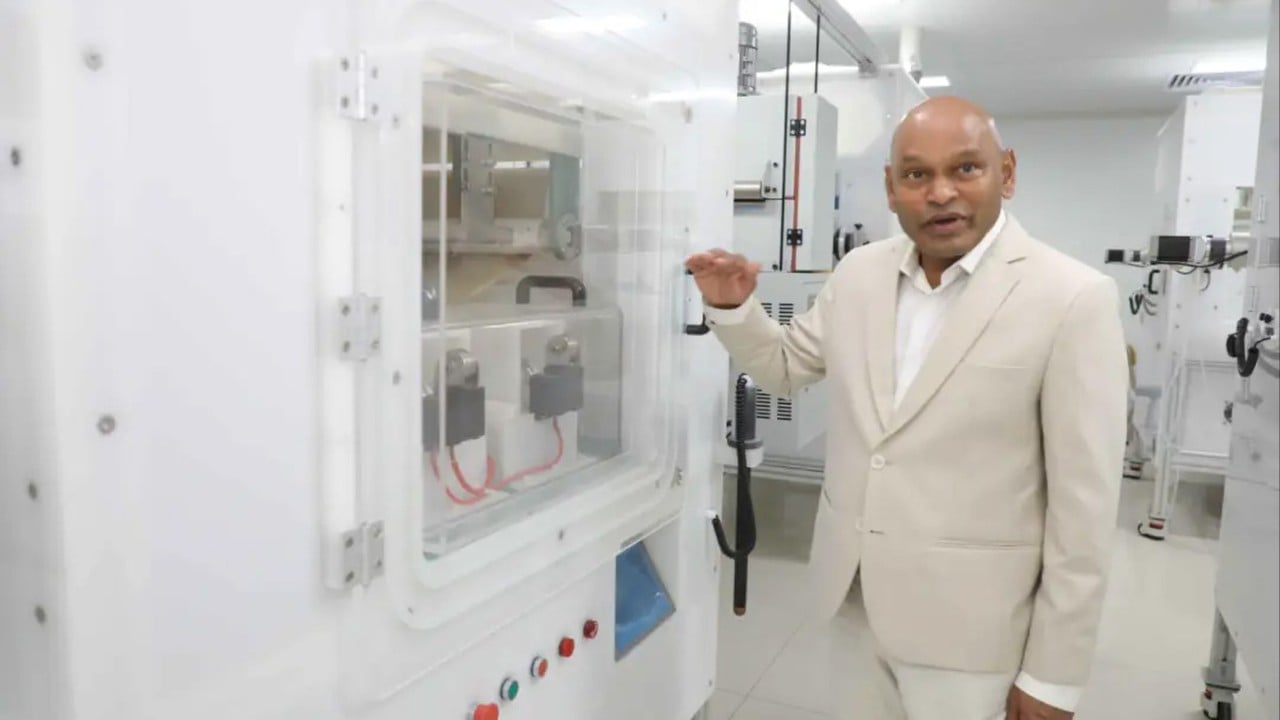
The media narrative surrounding Seeram Ramakrishna’s move from the National University of Singapore (NUS) to Tsinghua University is predictably frantic. "Brain drain." "Loss of a titan." "Geopolitical shift." These are the lazy tags used by observers who equate human capital with a static inventory list. They see a world-renowned materials scientist packing his bags for Beijing and assume Singapore’s circular economy ambitions just hit a brick wall.
They are wrong.
This isn't a loss; it’s an overdue liquidation of intellectual overhead. The obsession with hoarding "star" academics is a relic of 20th-century institutional branding that ignores how modern innovation actually functions. If you think one man—even one with 160,000 citations—moving to China signals the decline of a city-state’s scientific relevance, you don't understand the physics of global R&D.
The Myth of the Irreplaceable Academic
We treat high-impact researchers like professional athletes. We track their transfers as if they carry the entire "team's" capability in their briefcase. But academia isn't the English Premier League. In materials science, breakthroughs are rarely the result of a lone genius shouting "Eureka!" in a vacuum.
Success is a product of infrastructure, funding density, and regulatory flexibility. Singapore provides these in spades. When a senior figure like Ramakrishna moves, he isn't taking the cleanrooms with him. He isn't taking the $19 billion committed to the Research, Innovation and Enterprise (RIE) 2025 plan. He is vacating a very expensive seat at the top of a hierarchy, finally allowing the "squeezed middle" of younger, more aggressive researchers to breathe.
I have seen institutions spend decades and millions protected by the halo of a single famous name, only to realize that the "star" has become a bottleneck. They command the lion's share of grants based on past glory while the post-docs doing the actual heavy lifting burn out. Tsinghua isn't "stealing" talent; they are buying a legacy. Singapore, meanwhile, gets an opportunity to pivot.
China is Buying Yesterday’s Influence
Tsinghua is a phenomenal institution, but let’s be brutally honest about why they recruit from the West and its allies. They are buying connectivity.
By bringing in a former Chair of the Circular Economy Taskforce at NUS, China is attempting to import the social proof and global standards that Singapore helped define. It’s a move of catch-up, not a move of dominance. The "Global South" scientific axis is real, but it is currently built on the backs of established methodologies perfected in places like Singapore, Zurich, and Stanford.
The Citations Trap
Everyone loves to point at Ramakrishna’s H-index. It’s a massive number. But citations are a lagging indicator. They tell you what was relevant five to ten years ago.
$$H-index = f(Time, Volume, Networking)$$
In the hyper-accelerated world of nanotechnology and carbon-neutral materials, the most "cited" work is often the most "settled" work. The frontier is elsewhere. By the time a scientist becomes a "top global talent" in the eyes of the mainstream press, their primary value is administrative and political, not experimental.
Tsinghua gets a diplomat and a figurehead. Singapore gets a chance to fund a 32-year-old with a "crazy" idea about polymer upcycling that doesn't fit into a senior professor's established research program. I’d take the 32-year-old every single time.
Why Brain Drain is a Useful Fiction
The phrase "brain drain" is used by bureaucrats to justify bloated retention budgets. It suggests that talent is a finite liquid that once poured out, leaves the vessel empty.
In reality, the movement of elite scientists creates a knowledge orbit. Ramakrishna isn't entering a black hole. He is moving to a primary trade partner. He will likely facilitate collaborations, mentor students who will eventually return to Singapore, and act as a bridge for Singaporean firms looking to navigate the Chinese industrial complex.
- Scenario A: He stays at NUS. He occupies a senior post for another decade. The hierarchy remains static.
- Scenario B: He moves to Tsinghua. He builds a bridge between the two most important tech hubs in Asia. New leadership emerges at NUS.
If you can't see why Scenario B is objectively better for the ecosystem, you’re blinded by institutional ego.
The Misguided "People Also Ask" Obsession
If you look at the common questions regarding this move, they all center on one flawed premise: How can Singapore stop its best people from leaving?
The answer is: You shouldn't.
A closed system is a dying system. Singapore’s strength has never been its size; it has been its status as a high-velocity transit point for capital and ideas. The moment Singapore starts trying to "trap" talent through restrictive grants or nationalistic guilt, it loses the very thing that makes it attractive.
We should be celebrating the fact that a Singapore-trained, Singapore-embedded scientist is now influential enough to be headhunted by the top university in the world's second-largest economy. It is a validation of the "Singapore Brand" of education. It’s a marketing win, not a strategic loss.
The Real Crisis Isn't Who Leaves, It's Who Stays
The danger for Singapore isn't that its stars go to China or the US. The danger is the "Zombie Academic"—the tenured researcher who stays in the same office for 40 years, churning out incremental papers that satisfy KPIs but move zero needles in the real world.
These are the people who stay because they can't get an offer from Tsinghua. They are the ones who clutter the R&D landscape with safe, boring projects that provide a 2% improvement on a process no one uses.
If we want to talk about "sovereignty" in science, let’s talk about the sovereignty of the budget. Every time a high-cost senior academic departs, it frees up capital to bet on high-risk, high-reward ventures.
The Cost of Seniority
Let’s look at the math. A senior professor of this caliber doesn't just cost a salary. They cost:
- Dedicated lab space (prime real estate in Kent Ridge).
- Administrative support staff.
- Guaranteed PhD slots.
- Priority access to internal funding.
When that overhead clears, the ROI on the remaining faculty actually spikes. It’s a "portfolio rebalancing" for the national research strategy.
Stop Mourning, Start Investing
The competitor articles will tell you this is a blow to Singapore’s "Green Plan 2030." They’ll claim the circular economy goals are now at risk because the "father" of the movement has shifted his base of operations.
This is an insult to the hundreds of engineers and policy-makers in Singapore who are actually building the recycling plants and drafting the carbon taxes. Materials science is a field of collective action. Ramakrishna’s departure doesn't change the chemical properties of plastic waste in a Singaporean landfill. It doesn't stop the development of the Tuas Nexus.
We need to stop looking for "saviors" in lab coats. The era of the celebrity scientist as the sole driver of national progress is over.
Singapore is currently the most densified innovation hub on the planet. Its problem isn't a lack of "brains"; it's a lack of "room." By exporting our senior talent to the giants—China, the US, India—we are effectively colonizing their academic systems with our standards and our way of thinking.
The Actionable Pivot
If you are a stakeholder in the Singaporean tech or academic space, stop asking how to replace Seeram Ramakrishna. Start asking who was standing in his shadow.
- Identify the "Under-the-Radar" Researchers: Find the Associate Professors who have been doing the grunt work on his projects. Give them the keys to the lab.
- Double Down on Applied Tech: While China buys the prestige of fundamental research, Singapore should pivot harder toward the "last mile" of commercialization. We don't need more papers on nanofibers; we need the startups that turn those fibers into a global product.
- Exploit the Tsinghua Connection: Use this move. Don't be "offended" by it. Treat Ramakrishna as a high-level asset in a strategic location. If you need to understand the inner workings of Chinese industrial policy regarding the circular economy, you now have a direct line to someone who understands the Singaporean perspective.
This isn't a funeral. It’s a graduation.
The status quo is obsessed with "retention" because it fears the unknown. But in the world of high-stakes technology, the unknown is where the profit is. If Singapore keeps its doors swinging—both ways—it remains a hub. The moment the doors stop moving, it’s just a museum.
Let China build the museums. We’ll keep building the future with the space they just cleared for us.
Stop looking at the exit. Look at the vacancy. That’s where the next billion-dollar idea is currently being ignored.
Go find it.