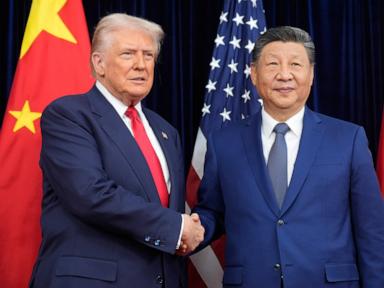
When Xi Jinping and Donald Trump sit down at an Asia-Pacific Economic Cooperation summit, Taiwan will almost certainly be pushed to the margins of the room. Both leaders arrive at multilateral summits carrying heavy domestic economic baggage, leaving little appetite for an intractable ideological standoff over Taipei. Instead of risking a public blowup over sovereignty, Washington and Beijing have strong incentives to treat Taiwan as a quiet checkbox item while pouring their political capital into tariffs, supply chains, and immediate economic concessions.
This dynamic frustrates defense hawks in Washington and rattles nerves in Taipei. Yet anyone who has watched bilateral diplomacy over the last decade knows how these high-stakes meetings actually function. Summits are not venues for solving generational territorial disputes. They are pressure valves designed to buy time and stabilize markets.
The Mechanics of Multilateral Diplomacy
APEC is, by design, an economic forum. Its entire institutional architecture exists to facilitate trade, investment, and regional market integration among 21 member economies. Even the terminology reflects this careful avoidance of statehood politics—participants are referred to as "member economies" rather than nations, which is the only reason Taiwan can participate under the name Chinese Taipei.
When the American president and the Chinese leader meet on the sidelines of an APEC gathering, the clock is their biggest enemy. Bilateral pull-aside meetings at these summits rarely last more than a couple of hours. Once you account for consecutive translation, opening pleasantries, and rigid talking points read from index cards, the actual window for substantive negotiation shrinks to maybe forty-five minutes.
You cannot resolve the status of 23 million people in forty-five minutes. You can, however, hammer out the framework for a tariff pause, agree to resume agricultural purchases, or establish a working group on fentanyl precursors.
Diplomatic sherpas spend months scripting these encounters before the planes ever touch down. Their primary directive is risk mitigation. Neither the White House nor Zhongnanhai wants an unscripted shouting match leaking to the press pool outside the conference room. Because Taiwan represents an absolute, non-negotiable red line for Beijing and a core credibility test for Washington, pushing it to the top of the agenda guarantees an immediate deadlock. Both sides know the script by heart. Xi will reiterate that Taiwan is the first red line that must not be crossed. Trump will restate the long-standing U.S. One China policy, emphasizing opposition to unilateral changes to the status quo. Once those obligatory sentences are spoken, both men can move on to the topics where actual deals are possible.
Follow the Domestic Pain Points
To understand why economics will crowd out security at the negotiating table, look at what keeps both leaders awake at night back home. Foreign policy is almost always an extension of domestic political survival.
In Beijing, the post-pandemic economic rebound never materialized the way state planners promised. A prolonged slump in the property sector has hollowed out household wealth, youth unemployment remains a persistent social headache, and local governments are drowning in hidden debt. Xi Jinping's legitimacy rests heavily on delivering steady material improvement and national rejuvenation. An all-out trade war with the United States, stacked on top of existing structural slowdowns, threatens to turn manageable economic friction into a systemic crisis. For Xi, securing relief from punitive American tariffs or easing restrictions on dual-use commercial technology is an urgent, tangible priority.
Across the Pacific, Trump operates under a completely different set of pressures, yet they point toward the exact same negotiating posture. His political brand is built on transactional wins that can be sold directly to voters in industrial swing states. Voters in Pennsylvania, Michigan, and Wisconsin do not go to the polls thinking about strategic ambiguity in the Taiwan Strait. They care about grocery prices, manufacturing jobs, interest rates, and whether American farmers can sell soybeans to Chinese buyers.
Tariffs are Trump's favorite blunt instrument, not because he wants permanent economic autarky, but because tariffs create instant leverage. By threatening massive across-the-board duties on Chinese imports, he forces Beijing to the table to offer concessions—whether that means massive purchasing agreements, currency adjustments, or Chinese corporate investments in American factories. Engaging in a protracted standoff over Taiwan yields zero immediate economic deliverables for a U.S. administration measured by stock market performance and trade deficit numbers.
The Transactional View of Alliances
There is also a deeper philosophical shift in how the White House views Taiwan itself. Traditional American foreign policy establishment figures view Taiwan through a prism of democratic solidarity and grand strategy—specifically, maintaining control of the First Island Chain to contain Chinese naval expansion in the Western Pacific.
Trump does not speak that language. He views international relations through the lens of balance sheets, burden-sharing, and return on investment. He has repeatedly argued that Taiwan took away America's semiconductor industry and should pay significantly more for its own defense. In his calculus, defending a wealthy, technologically advanced island 7,000 miles from California is an expensive liability unless Taipei drastically increases its defense spending and buys substantially more American weapons systems.
This transactional worldview creates a profound disconnect between Washington and Taipei. When Beijing hears the American president publicly question the economic fairness of the U.S.-Taiwan relationship, Chinese strategists see an opening. They realize they do not need to force a confrontation over Taiwan during a summit when Washington itself is already applying financial pressure on Taipei.
Let us look at a hypothetical example to see how this plays out in a closed-door negotiating room. Imagine Beijing offers a sweeping commitment to purchase $50 billion in American energy and agricultural goods over two years, paired with strict enforcement against chemical exports, in exchange for halting a new round of 60 percent tariffs. If the U.S. delegation simultaneously demands a joint statement condemning Chinese military drills around Taiwan, Beijing walks away from the table, and the $50 billion deal evaporates. Faced with a binary choice between a headline-grabbing trade victory and a symbolic diplomatic rebuke over the Taiwan Strait, a transactional White House will take the trade deal every single time.
Why Quiet Diplomacy Suits Beijing Too
It is easy to assume that Beijing wants to dominate every international meeting with aggressive rhetoric about reunification. In reality, Chinese diplomacy at multilateral summits is far more calibrated.
Xi Jinping understands that APEC is a stage where regional neighbors—from Southeast Asian nations to Australia, South Korea, and Japan—are watching closely to see which superpower acts as the responsible adult in the room. While Washington has leaned heavily into protectionism and bilateral tariffs, Beijing has spent years marketing itself as the champion of free trade, open markets, and regional economic connectivity.
Turning an APEC bilateral meeting into a fiery confrontation over Taiwan undermines that carefully cultivated image. Regional economies in ASEAN do not want to be forced to choose between Washington and Beijing, and they certainly do not want a military conflict disrupting shipping lanes in the South China Sea or the Taiwan Strait. By keeping the summit focused on supply chain stability, green energy cooperation, and trade facilitation, Xi projects calm authority while portraying American tariffs as the primary source of regional instability.
Furthermore, Beijing does not need concessions from Trump at APEC to maintain pressure on Taiwan. The People's Liberation Army conducts near-daily air and naval operations across the median line of the Taiwan Strait regardless of what happens at diplomatic summits. China's strategy of gray-zone coercion—using coast guard vessels, economic sanctions on Taiwanese agricultural products, and cyber operations to wear down Taipei's resolve—operates on a continuous, independent track. Xi can afford to let Taiwan take a backseat during a two-hour photo-op with Trump because his military and economic levers against the island never stop turning.
The Danger of the Unspoken Bargain
Just because Taiwan is sidelined from the main summit communiqué does not mean the island is unaffected by the outcome. In diplomacy, what is left unsaid often carries the heaviest consequences.
Critics of this summit dynamic worry about the emergence of an unspoken grand bargain. The fear in Taipei and Tokyo is that if Washington becomes overly eager to secure a sweeping trade agreement with Beijing, the White House might quietly dial back visible signs of support for Taiwan to keep the peace. That could mean delaying arms sales notifications, discouraging high-level congressional visits to Taipei, or toning down joint naval transits through the Taiwan Strait.
None of those moves require a formal treaty or a public announcement. They happen through quiet bureaucratic delays inside the executive branch. A weapons package sits unsigned on a desk for six months instead of six weeks. A scheduled transit by a U.S. Navy destroyer gets postponed due to routine maintenance. To the casual observer, nothing has changed. To strategists in Beijing and Taipei, the signal is unmistakable.
At the same time, there is a counter-argument that deserves serious weight. Proponents of stabilizing U.S.-China ties argue that reducing overall friction between the two superpowers actually makes Taiwan safer, not more vulnerable. When Washington and Beijing are locked in a spiral of total hostility, every minor incident in the Taiwan Strait carries the risk of rapid, uncontrollable escalation. Re-establishing predictable communication channels and giving Beijing an economic stake in maintaining stable relations with the United States raises the cost of any potential military adventure across the strait. If China's economy is intertwined with a fragile, newly negotiated trade truce, Xi Jinping has far more to lose by ordering a blockade or an amphibious assault.
The Semiconductor Reality Check
Beneath all the political posturing lies a hard physical reality that neither leader can wish away. The global economy runs on advanced microchips, and the overwhelming majority of the world's most sophisticated processors are fabricated in Taiwan by TSMC.
A military crisis in the Taiwan Strait would immediately sever the supply of logic chips that power everything from American data centers and smartphones to automotive plants and military hardware. Economists estimate that a full-scale blockade of Taiwan would wipe trillions of dollars off global GDP within the first year—an economic shock that would make the 2008 financial crisis look like a minor correction.
Both Xi and Trump understand this vulnerability, even if they react to it differently. Washington is pouring tens of billions of dollars into domestic fabrication plants in Arizona and Ohio to insulate American supply chains, while Beijing is racing to achieve semiconductor self-sufficiency despite crippling export controls on advanced lithography equipment. Yet neither country is anywhere close to independence. Until those alternative supply chains actually exist at scale, both Washington and Beijing share a quiet, overriding interest in preventing a kinetic war over Taiwan.
That shared vulnerability is the ultimate reason Taiwan takes a backseat at summits like APEC. Pushing the Taiwan question to a definitive resolution forces both superpowers into a corner where neither can back down without suffering catastrophic domestic or strategic losses. Talking about tariffs, soybeans, and industrial policy offers a safe off-ramp. Both leaders get to walk out of the meeting room, step in front of the cameras, and claim they stood firm for their country's workers while keeping the global economy from driving off a cliff.
For Taipei, watching the two largest powers on earth treat its fate as a secondary agenda item is a sobering reminder of geopolitical reality. Small democracies sitting on the fault lines of great power competition rarely get to write the agenda when empires sit down to negotiate. They simply have to prepare for whatever gets decided—or quietly traded away—behind closed doors.


