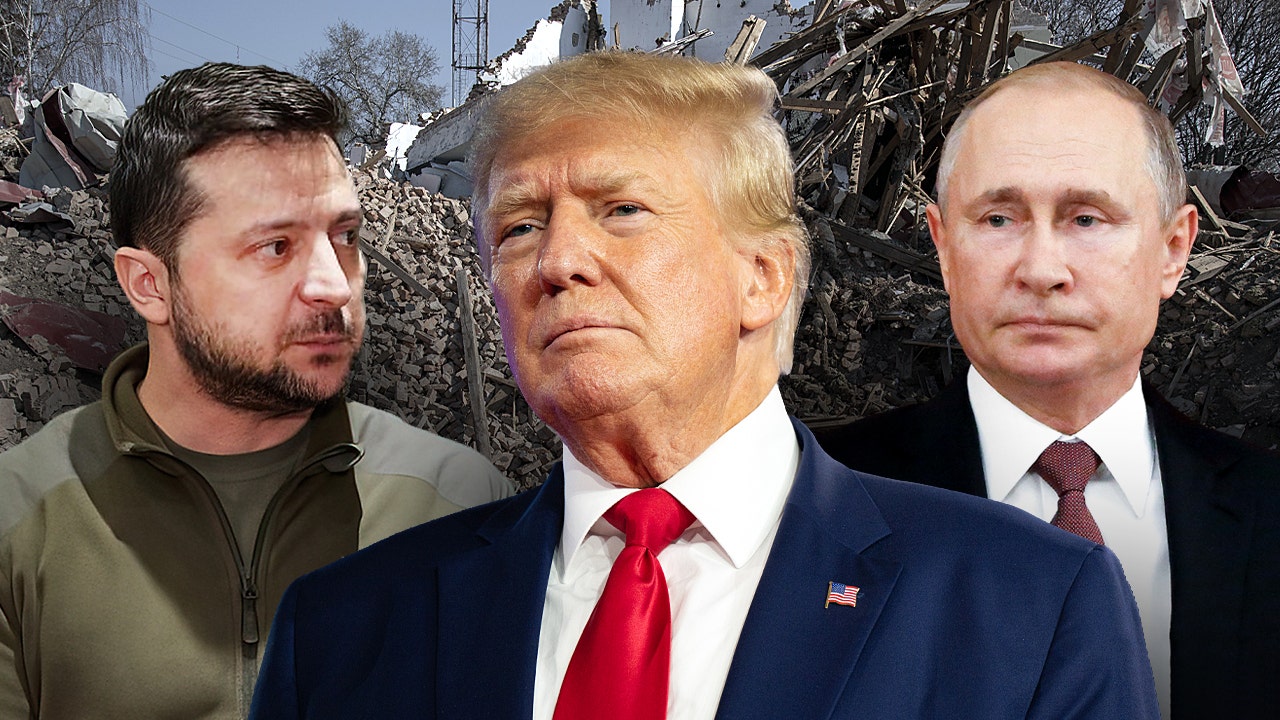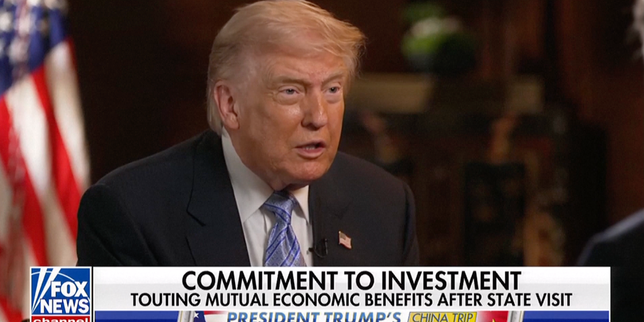
Mainstream media outlets love a predictable script. When a US president returns from Beijing and plays coy about weapon sales to Taiwan, the press immediately sounds the alarm on "dangerous ambiguity" and "weakened commitments." They analyze every paused sentence and shifted glance as if it represents a tectonic shift in geopolitical strategy.
It does not.
The lazy consensus ignores a glaring reality. The calculated hesitation regarding arms sales to Taipei isn't a sign of American indecision or fear of Chinese retaliation. It is a highly sophisticated, deliberate economic and diplomatic lever. The media focuses on the theater of the press conference. They completely miss the structural mechanics of global defense procurement and cross-strait deterrence.
We need to stop asking whether the US will sell weapons to Taiwan. We need to start asking who actually benefits from keeping the world guessing.
The Flawed Premise of the Clarity Argument
Defense analysts frequently demand absolute clarity from Washington. They argue that an explicit, unwavering commitment to supply Taipei with top-tier hardware is the only way to prevent conflict. This premise is fundamentally flawed. It misunderstands the core principle of deterrence.
True deterrence does not rely on a fixed shopping list of military hardware. It relies on cost imposition and operational unpredictability. If the US government explicitly lays out its 10-year arms transfer roadmap to Taiwan, it hands Beijing a blueprint for its own military modernization.
Imagine a scenario where Washington publishes a definitive, binding contract to supply Taiwan with specific naval assets and missile defense systems over the next decade. The People’s Liberation Army (PLA) wouldn't be deterred; they would simply optimize their R&D spending to neutralize those exact capabilities before they ever ship out of Norfolk or San Diego.
Ambiguity keeps the adversary’s intelligence apparatus chasing ghosts. It forces them to hedge their bets across multiple operational theaters, spending billions to counter weapons systems that Taiwan might never actually receive, while leaving them exposed to the ones they do.
The Defense Procurement Mirage
Let's look at the financial reality that the talking heads on cable news routinely ignore. I have spent years analyzing defense supply chains and corporate procurement cycles. If you think an announcement in Washington instantly translates to hardware on the ground in Kaohsiung, you are living in a fantasy world.
The United States currently faces a massive backlog in Foreign Military Sales (FMS). We are talking about tens of billions of dollars in approved hardware—ranging from F-16 block 70s to Harpoon anti-ship missiles—that have been signed off on but remain unproduced or undelivered.
- Production Bottlenecks: Industrial capacity cannot be turned on like a faucet. The defense industrial base is constrained by specialized labor shortages, microchip scarcities, and a lack of solid-rocket motor production capacity.
- The Queue Problem: Taiwan isn't the only buyer in the store. Washington is simultaneously trying to replenish its own stockpiles and fulfill commitments to NATO allies.
- The Upkeep Trap: Selling a weapons platform is only 20% of the cost. The remaining 80% goes toward lifetime maintenance, training, and spare parts integration.
When a politician maintains "the fog" over future sales, they aren't necessarily playing diplomatic chess with Beijing. Often, they are simply managing expectations because the American defense sector literally cannot build the weapons any faster. Announcing massive new sales packages when the current backlog stretches into the 2030s is bad business and worse strategy. It signals administrative incompetence, not geopolitical strength.
Washington's Hidden Economic Lever
Let’s talk about the leverage nobody wants to acknowledge. Arms sales are not charity. They are a massive instrument of macroeconomic compliance.
The United States utilizes the carrot and stick of advanced military hardware to influence Taiwan’s domestic policy, specifically its economic focus. Taiwan’s crown jewel is its semiconductor industry, anchored by Taiwan Semiconductor Manufacturing Company (TSMC). The global economy runs on advanced silicon forged in Hsinchu and Tainan.
By keeping arms sales conditional and perpetually "under review," Washington retains immense leverage over Taipei’s industrial decisions. Want continued access to American satellite intelligence and next-generation air-to-air missiles? Then you need to ensure that chip fabrication facilities are diversified globally, including multi-billion-dollar investments in Arizona and Europe.
It is a brutal, transactional reality. The moment the US grants permanent, unconditional military clarity to Taiwan, it surrenders its primary point of leverage over the single most critical supply chain on earth. The ambiguity isn't a failure of foreign policy; it is the glue holding American economic hegemony together.
The High Cost of the Contrarian Approach
To be absolutely fair, this strategy of calculated hesitation carries massive risks. It is not a perfect system, and pretending it has no downside is intellectually dishonest.
The biggest vulnerability is the psychological toll on the partner nation. When the United States equivocates publicly, it risks fueling "America skepticism" within Taiwan’s domestic political landscape. If the electorate believes Washington will use them as a geopolitical bargaining chip, political factions advocating for accommodation with Beijing gain traction.
Furthermore, this approach relies entirely on the assumption that the adversary views the ambiguity as a sign of strength rather than a symptom of domestic political paralysis. If Beijing miscalculates and reads Washington’s public hesitation as a lack of political will, the entire deterrent model collapses overnight.
Stop Asking for Clarity
The public, fueled by simplistic reporting, continuously asks: Will the US defend Taiwan, and what weapons will they sell them? This is the wrong question. It views international relations through the lens of a sports contract or a superhero movie. The right question is: How does the deliberate maintenance of strategic uncertainty serve American, Taiwanese, and regional stability simultaneously?
The hesitation observed after high-level bilateral summits isn't a bug in the system. It is the system. It allows Washington to de-escalate tensions with Beijing in the morning, reassure Taipei through quiet, unannounced transfers in the afternoon, and keep American defense contractors backlogged with profitable orders for the next two decades.
The next time a president steps to a podium, hesitates, and delivers a convoluted answer about regional security commitments, turn off the television. The real strategy isn't being spoken aloud. It is being executed silently in the procurement offices of the Pentagon and the boardroom meetings of Silicon Valley.