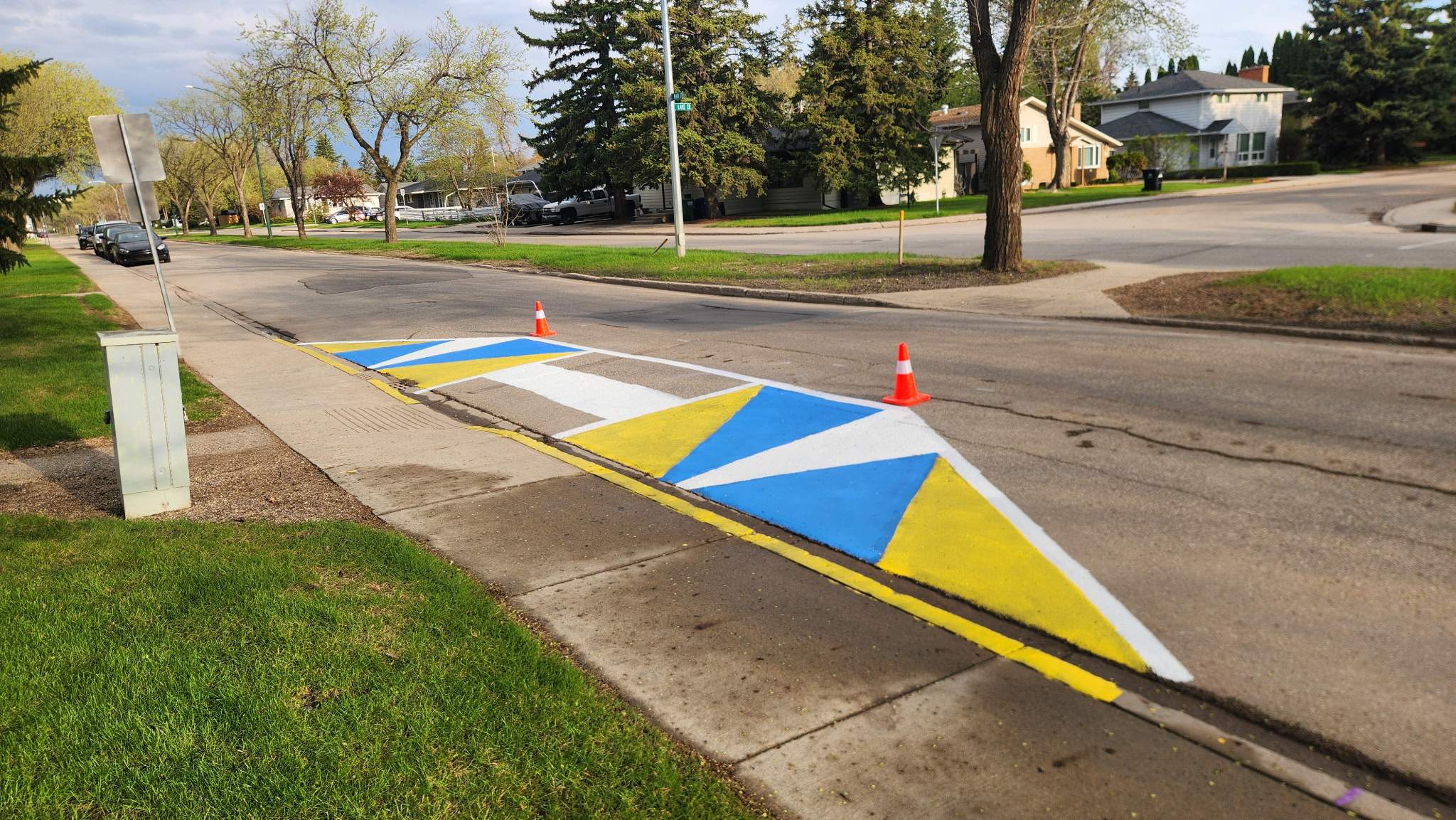
Municipal infrastructure backlogs create a specific class of civic friction where citizen risk tolerance drops below the bureaucratic velocity of local government. When a resident of Saskatoon paints an unauthorized crosswalk to force a pedestrian safety intervention, the act is not merely an expression of frustration; it is a rational, albeit illegal, optimization of localized risk. This behavior, known systematically as guerrilla urbanism, occurs when the perceived cost of regulatory non-compliance becomes lower than the projected cost of physical injury.
To evaluate this phenomenon requires moving past emotional narratives of community activism. Instead, the situation must be disassembled using infrastructure deployment frameworks, regulatory mechanics, and the economic principles of civic liability. Recently making waves lately: The Night the Indian Ocean Swallowed the Horizon.
The Tri-Component Framework of Municipal Infrastructure Failure
Guerrilla urbanism manifests when a municipal safety delivery system fails across three distinct vectors: velocity, alignment, and communication.
- The Velocity Deficit: Municipal traffic assessments typically operate on multi-year budgetary and data-collection cycles. Conversely, localized traffic hazards scale in real-time alongside shifts in commercial zoning or neighborhood demographics. The resulting lag leaves high-risk zones unmitigated for extended periods.
- Misalignment of Risk Metrics: Municipal engineers prioritize network-wide traffic flow and vehicular throughput based on macro-level data. Residents, however, measure risk by micro-level near-miss frequencies and daily exposure at specific intersections.
- The Feedback Bottleneck: Standard channels for civic requests—such as digital ticketing systems or community board meetings—often obscure the urgency of localized hazards through bureaucratic aggregation, prompting citizens to seek high-visibility, alternative mechanisms to force prioritization.
When these three components fail simultaneously, citizens transition from consumers of municipal services to unauthorized producers of physical infrastructure. Further insights into this topic are explored by NPR.
+-----------------------------------------------------------+
|               MUNICIPAL INFRASTRUCTURE GAP                |
|                                                           |
|  [Macro-Level Metrics]  --->  Slow Bureaucratic Velocity   |
|                                     vs.                   |
|  [Micro-Level Hazards]  --->  Rapid Citizen Risk Scaling   |
+-----------------------------------------------------------+
                              |
                              v
                [UNAUTHORIZED CIVIC INTERVENTION]
The Operational Mechanics of the Unauthorized Crosswalk
An unauthorized crosswalk functions as a direct hack of driver psychology and municipal liability structures. By altering the visual environment, the citizen attempts to artificially induce a shift in motorist behavior without the backing of legal enforcement mechanisms.
Motorist Cognitive Load and Visual Cues
Drivers navigate urban environments using a combination of focal and ambient vision, heavily relying on learned heuristics. A painted pattern on asphalt signals an official zone of pedestrian priority. The immediate result of an unauthorized crosswalk is a sharp reduction in motorist approach speeds, driven by the cognitive friction of recognizing a marked conflict point.
However, this intervention introduces a critical system vulnerability: asymmetry of information. While the driver responds to the visual cue of a crosswalk, the pedestrian operates under a false sense of institutional protection. Because the crosswalk lacks legal status, it is omitted from municipal GIS databases, traffic signal timing plans, and official signage arrays.
The Liability Shifting Mechanism
From a legal framework, an unauthorized intervention disrupts the standard allocation of municipal liability. Tort law generally holds municipalities liable for known infrastructure defects that they fail to remedy within a reasonable timeframe. When a citizen paints a crosswalk, they introduce two distinct legal variables:
- Indication of Prior Knowledge: The physical existence of the painted lines serves as permanent, undeniable proof that the community identified the intersection as hazardous, complicating the municipality's ability to claim ignorance of the risk.
- The Maintenance Dilemma: If the city leaves the unauthorized paint intact, it tacitly adopts the liability for an unengineered safety device. If the city removes the paint without addressing the underlying traffic hazard, it actively increases the immediate physical risk to residents while generating public friction.
The Cost Function of Regulatory Removal vs. Infrastructure Upgrades
Municipalities almost systematically respond to guerrilla urbanism by deploying crews to erase or cover the unauthorized markings. This response is dictated by asset management protocols rather than malice. Infrastructure must adhere to strict state, provincial, or national design standards—such as the Manual on Uniform Traffic Control Devices—to ensure systemic predictability.
The operational calculus of the city's response can be broken down into competing resource allocations:
Total Municipal Friction = Erasure Costs + Liability Exposure + Public Friction
The cost of grinding down asphalt or applying black out paint is low, representing a minor operational expenditure. The legal risk of leaving an unmeasured, unlit, and unengineered pedestrian crossing on a public right-of-way represents an unquantifiable liability exposure. Therefore, the immediate institutional mandate always favors erasure.
The failure of this calculus lies in its omission of the underlying demand function. Erasing the paint resets the physical environment but leaves the localized risk profile unchanged. The demand for a pedestrian crossing remains constant, guaranteeing that the civic friction will manifest in another form—either through political pushback, subsequent interventions, or pedestrian injury.
Strategic Alternatives to Binary Enforcement Protocols
To resolve the systemic bottleneck highlighted by incidents like the Saskatoon crosswalk, municipalities must move away from a binary cycle of "citizen intervention followed by city erasure." Managing high-friction urban rights-of-way requires integrating rapid-response frameworks that bridge the gap between bureaucratic diligence and localized safety needs.
Implementation of Quick-Build Programs
Cities can mitigate guerrilla urbanism by formalizing a pathway for temporary, low-cost infrastructure adjustments. Using modular materials—such as plastic bollards, temporary paint, and planter boxes—municipalities can deploy pilot interventions within weeks rather than years. This allows for real-time data collection on pedestrian usage and vehicular speed reductions before committing capital-intensive funds to permanent concrete buildouts.
Decentralized Risk Reporting Arrays
Modernizing the data collection pipeline involves weighting qualitative citizen inputs alongside quantitative accident histories. Relying solely on historical collision data means an intersection must effectively claim lives or cause injury before qualifying for mitigation. Integrating near-miss tracking via mobile telemetry or structured resident reporting creates a predictive model for infrastructure deployment, neutralizing the velocity deficit before citizens feel compelled to intervene manually.
Transitional Liability Safe Harbors
Developing policy frameworks that allow community-led tactical urbanism projects to exist under temporary permits shifts the legal dynamic. By granting conditional approval for community-painted crosswalks or curb extensions under specific design guidelines, the municipality removes the liability trap while leveraging citizen labor to address immediate infrastructure deficits. This transforms an adversarial interaction into a structured, data-gathering partnership.
Municipalities facing unauthorized infrastructure modifications must treat these acts as leading indicators of systemic failure. The presence of citizen-painted lines is a diagnostic signal that the existing traffic management framework is failing to process localized risk accurately. Addressing the root cause requires updating the municipal data ingestion tools and acceleration methods, ensuring that the velocity of infrastructure deployment matches the reality of urban life.