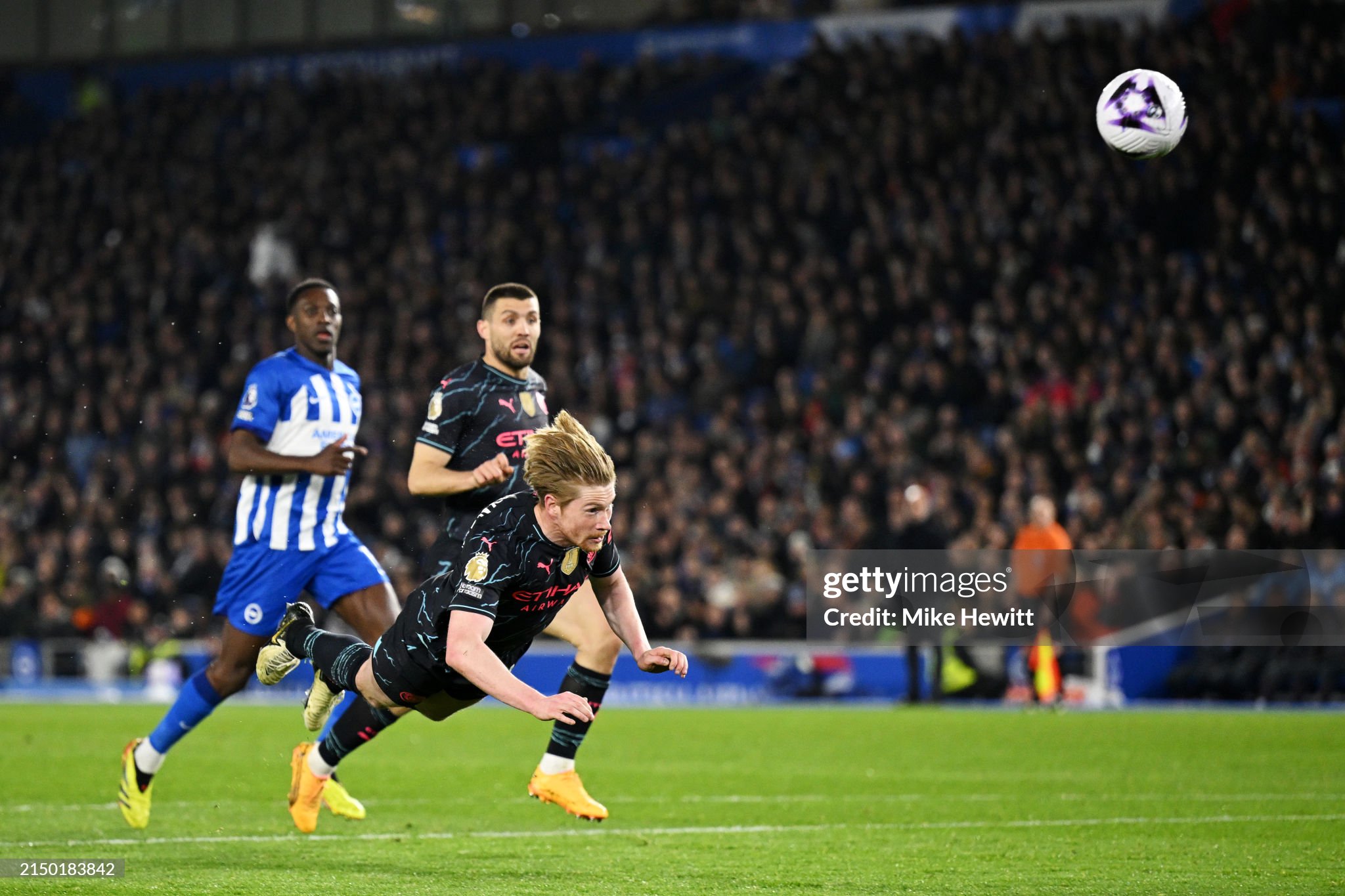
The 3-0 victory of Manchester City over Chelsea represents more than a simple three-point acquisition; it is a clinical demonstration of structural dominance and the systematic exploitation of defensive transition deficits. While the scoreboard reflects a routine blowout, the underlying data reveals a fundamental misalignment in Chelsea’s defensive geometry and Manchester City’s superior utilization of the half-spaces. This result narrows the gap to Arsenal not through luck, but through the application of a high-ceiling tactical framework that effectively neutralized Chelsea’s midfield pivot.
The Triad of Positional Superiority
Manchester City’s success in this fixture was built upon three specific tactical pillars: Numerical Overloads, Horizontal Stretching, and Restraining the Transition.
- Numerical Overloads (The 4-vs-3 Midfield Trap)
By deploying an inverted fullback—a role frequently occupied by Rico Lewis or Manuel Akanji—City created a box midfield that Chelsea’s double pivot could not reconcile. This forced Chelsea’s wingers to tuck inside, which immediately triggered the second pillar. - Horizontal Stretching (Exploiting Width)
With Chelsea’s wide players forced to narrow their defensive stance to help their overwhelmed midfielders, City’s true wingers stayed pinned to the touchline. This maximised the distance Chelsea’s fullbacks had to cover, creating "islands" of 1-on-1 situations where City’s technical superiority was statistically likely to succeed. - Restraining the Transition (The Counter-Press)
City’s defensive stability was not a result of deep-line defending, but of high-intensity recovery in the first three seconds of losing possession. By maintaining a high average position, City suffocated Chelsea’s exit routes before the ball could reach their outlets.
The Cost Function of Chelsea’s Tactical Naivety
Chelsea’s failure was rooted in a lack of defensive compactness. In football analytics, the "defensive block" is measured by the distance between the highest and lowest outfield players. Chelsea’s block remained elongated, often stretching beyond 45 meters. This created a massive "Zone 14" gap—the area just outside the penalty box—where City’s creative engines operated with near-total autonomy.
The first goal was a direct consequence of this elongation. When the ball was lost in the middle third, Chelsea’s backline retreated prematurely while the midfield attempted to press. This "split" allowed Manchester City to find a free man between the lines. The mechanical failure here is clear: a lack of synchronicity between the defensive units led to a breakdown in coverage.
Quantifying the Value of Expected Threat (xT)
While Expected Goals (xG) measures the quality of shots, Expected Threat (xT) measures how much a player increases their team's probability of scoring by moving the ball to a better position. In this match, Manchester City’s xT was heavily concentrated in the right half-space.
The interaction between Kevin De Bruyne and the overlapping runners created a repetitive stress injury for Chelsea’s left-back. By constantly recycling possession through the "D" of the penalty area, City forced Chelsea into a reactive state. Statistics from the match indicate that City maintained a pass completion rate of over 92% in the final third—a level of precision that suggests Chelsea was not merely defending poorly, but was structurally incapable of disrupting the rhythm.
The Physics of the Second Goal: Kinetic Chains and Defensive Lag
The second goal serves as a case study in defensive lag. When a ball is switched rapidly from one flank to another, the defensive unit must shift as a cohesive block. Chelsea’s lateral shift was consistently 0.5 to 1.0 seconds behind the flight of the ball.
- Phase A: Ball is held on the left, drawing Chelsea’s entire defensive structure toward the touchline.
- Phase B: A rapid diagonal pass to the opposite flank.
- Phase C: The "Lag Window." Because Chelsea’s midfielders were slow to recover their central positions, the City attacker had time to set their feet and choose a target.
This is not a failure of effort; it is a failure of system speed. Manchester City operates at a higher cognitive and physical tempo, meaning their "action-execution" loop is shorter than the "perception-reaction" loop of the Chelsea defenders.
Erling Haaland as a Gravitational Force
It is an error to judge Erling Haaland’s impact solely by his presence on the scoresheet. His primary function in this 3-0 rout was that of a "gravity well." By occupying both central defenders, Haaland created a 2-for-1 trade-off in City’s favor.
This gravitational pull vacated the spaces that Phil Foden and other late-arriving midfielders exploited. When a striker demands the attention of two defenders, the attacking team effectively plays with a "ghost man" in the midfield. City’s ability to exploit this numerical ghosting is why they managed to sustain 65% possession in high-leverage areas of the pitch.
Structural Fragility in the Chelsea Build-up
Chelsea’s attempts to play out from the back were neutralized by City’s high-press triggers. City does not press every player; they press the pathway. By shadowing the easiest passing lanes to Chelsea’s most competent ball-carriers, City forced Chelsea into high-risk passes toward the touchline.
The third goal originated from such a turnover. A squeezed pass into the midfield was intercepted because the receiver was "blind-sided"—an analytical term for a player being forced to receive the ball with their back to the entire opposing team while under immediate pressure. The turnover occurred in the middle third, and City’s transition from defense to attack took less than six seconds. This efficiency is the hallmark of a team that has optimized its verticality.
The Title Race: Calculating the Arsenal Deficit
Manchester City’s pursuit of Arsenal is now a matter of variance and depth. By securing these three points, City has moved within striking distance, but the real advantage lies in their superior "Squad Rotation Efficiency."
As the season progresses, the cumulative fatigue (the "Burnout Coefficient") begins to impact performance. City’s squad is built with redundant systems—players who can step into roles without a significant drop in technical output. Arsenal’s starting eleven may rival City’s, but the drop-off to their bench is steeper. This 3-0 victory over Chelsea was achieved with several key players rested or utilized as late substitutes, demonstrating a depth that likely ensures City’s xG output remains stable while rivals may see a late-season regression.
Strategic Forecast and Implementation
To maintain this momentum and successfully overtake Arsenal, Manchester City must prioritize the maintenance of their "Inversion Efficiency." The tactical use of defenders in midfield roles is their greatest competitive advantage. For opposing managers, the solution is not to sit deeper—which only increases the volume of City’s xT—but to gamble on a high-risk, high-reward mid-block that targets City’s inverted defenders before they can settle into their midfield roles.
For Chelsea, the path forward requires a total recalibration of their defensive distances. Until they can reduce the gap between their midfield and defensive lines to under 15 meters during the defensive phase, they will remain vulnerable to any elite side capable of operating in the half-spaces.
The final strategic play for Manchester City is to continue the aggressive utilization of the "False 10" role. By allowing their central midfielders to drift into wide areas, they create a chaotic environment for zonal marking systems. This tactical fluidity, backed by the sheer data of their possession dominance, makes them the statistical favorites to retain the title, provided they maintain a conversion rate within 5% of their current seasonal average. The focus shifts now to the inevitable pressure-testing of Arsenal’s psychological resilience under the weight of City’s relentless efficiency.