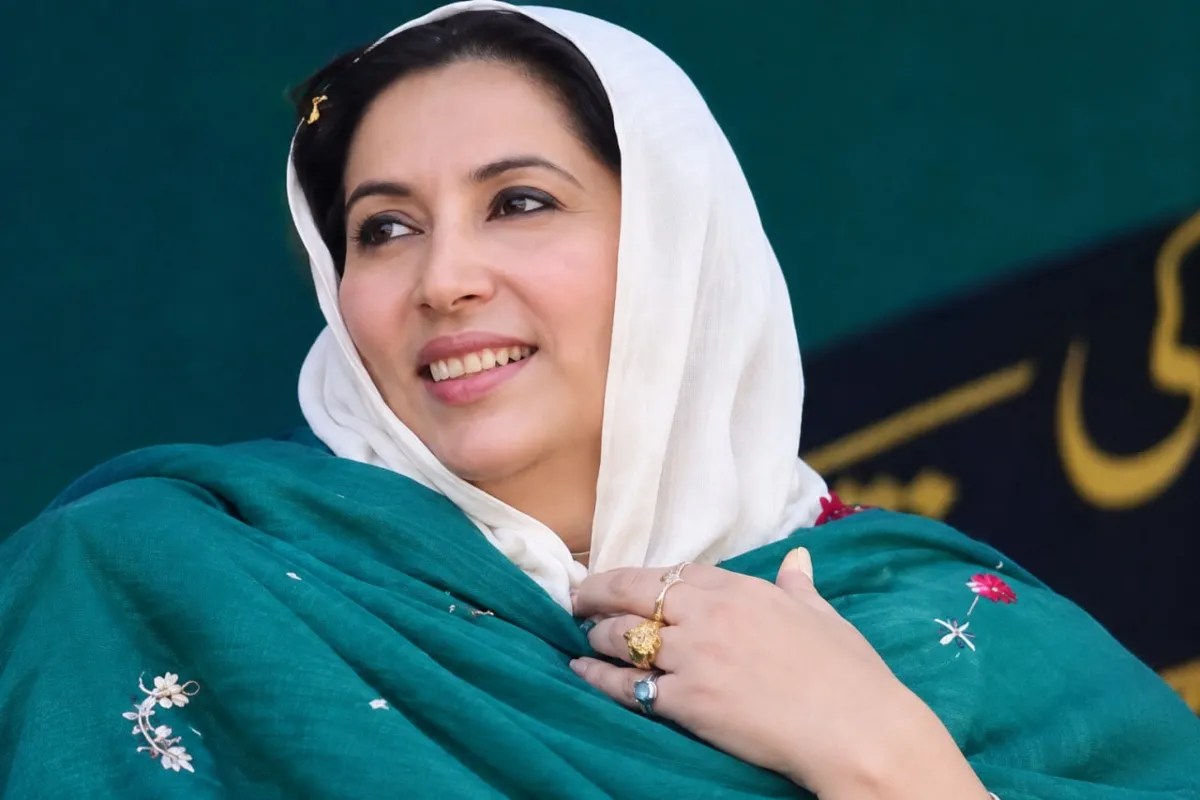
Public jubilation in the wake of political assassination remains one of the most jarring paradoxes of modern South Asian history. When Benazir Bhutto referenced the distribution of sweets and betel leaves following the death of Pakistan’s first military dictator, General Muhammad Zia-ul-Haq, in her posthumously published autobiography Daughter of the East, she pulled back the curtain on a profound societal fracture. Decades later, the imagery of free paan and festive mithai distributed on the streets of major urban centers continues to challenge sanitized narratives of national grief.
Understanding this phenomenon requires stepping outside standard historical summaries and examining the volatile convergence of personal survival, institutional repression, and popular relief.
The Architect of State Authoritarianism
General Zia-ul-Haq seized power in a military coup in July 1977, deposing the populist Prime Minister Zulfikar Ali Bhutto. What followed was an era defined by ideological reengineering, public floggings, the systematic erosion of democratic institutions, and the hanging of the deposed premier in 1979. For millions of Pakistanis, particularly within Sindh and the progressive intellectual circles of Lahore and Karachi, Zia’s eleven-year regime felt less like a government and more like an occupation.
The state apparatus utilized religious ordinances to legitimize military rule, transforming penal codes and shrinking civic freedoms. Dissent was met with imprisonment or corporal punishment. In this climate of relentless pressure, opposition figures and ordinary citizens alike developed quiet networks of resistance. When a C-130 Hercules aircraft carrying Zia crashed near Bahawalpur on August 17, 1988, the instantaneous public reaction in certain quarters was not mourning, but an uninhibited exhale.
Breaking the Fear Barrier
Authoritarian regimes rely heavily on manufactured consensus and the enforcement of public reverence for authority. When a dictator dies under sudden and catastrophic circumstances, the immediate aftermath creates a brief window where the monopoly on fear breaks down.
In her memoir, Benazir Bhutto recounted how ordinary people reacted to the news of Zia's death. Street vendors in parts of urban Sindh and pockets of Punjab began handing out sweets, while local merchants offered free betel leaves to passersby. This was not organized by a political party directorate; it was an organic, decentralized outburst of relief.
Historians often debate the optics of celebrating a death. Yet, viewed through the lens of political trauma, the distribution of confectionery functioned as a visceral rejection of the regime's forced piety. It was a public signal that the era of state-sponsored intimidation had fractured, if only momentarily.
The Architecture of Divided Memory
Pakistan’s political landscape has long been defined by sharp regional and institutional divides. While the military establishment and conservative constituencies viewed Zia as a champion of Islamic conservatism and state stability, marginalized political workers, regional nationalists, and the Pakistan Peoples Party base experienced his tenure as an era of targeted persecution.
This duality explains why historical events in the country rarely yield a single, unified narrative. The same date on the calendar evokes starkly opposing emotional registers depending on one's familial, political, and geographic background. Benazir's documentation of the street celebrations serves as a primary source for understanding this subterranean friction, highlighting how deeply personal political grievances run within the populace.
The echoes of 1988 reverberate through contemporary political discourse. Whenever modern leaders attempt to rewrite institutional histories or suppress opposition voices, the memory of those street vendors handing out free sweets serves as a historical reminder. Repressive systems can control legislative bodies and broadcast networks, but they cannot legislate genuine affection from a populace subjected to decades of emergency rule.
Ultimately, the act of distributing mithai upon the death of an autocrat reveals the complex interplay between popular sentiment and state power in South Asia. It strips away diplomatic polish to expose the raw, unfiltered reality of a country perpetually negotiating its democratic identity.