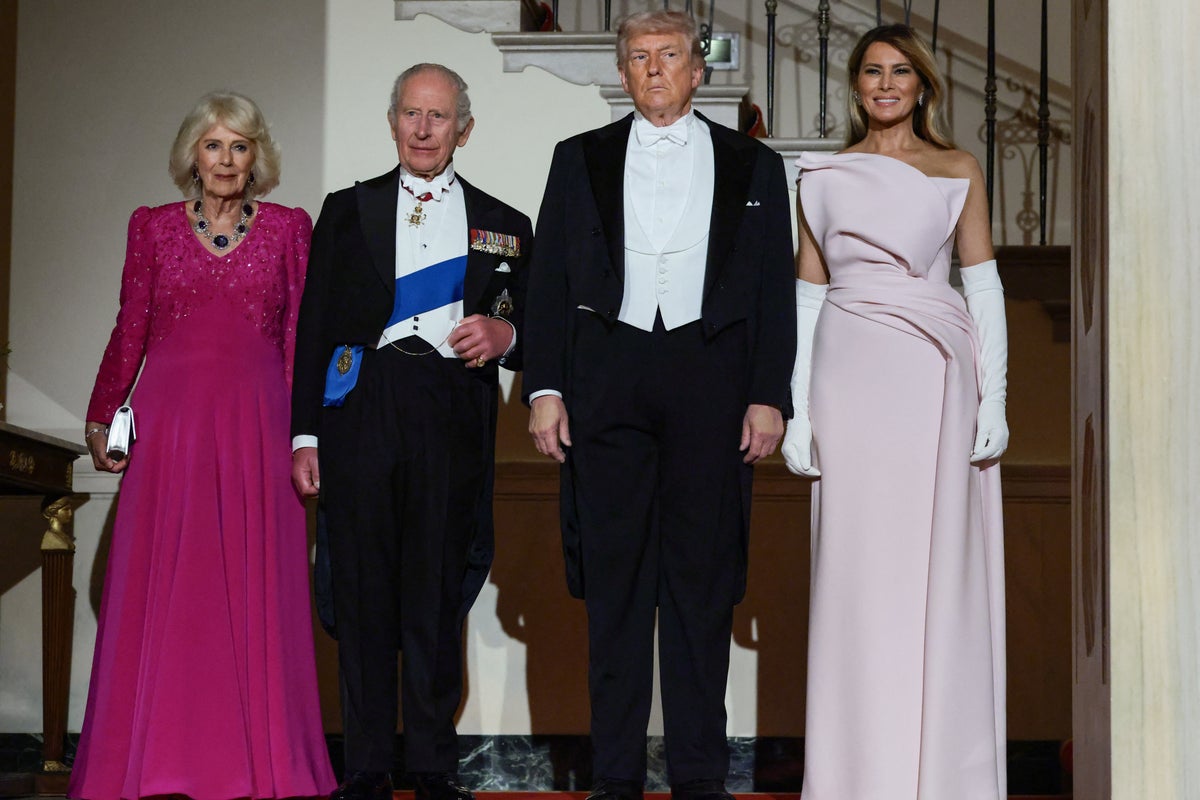
The dessert course at the state dinner held for King Charles III and Queen Camilla was not merely a final culinary flourish. It was a calculated statement of continuity. Served as a beehive-shaped chocolate gâteau, the dish featured vanilla bean custard and honey harvested directly from the White House South Lawn. While the menu highlighted the technical precision of the executive kitchen, the ingredient itself—that distinctive amber clover honey—served a deeper purpose. It linked the current administration to an agricultural tradition that has quietly survived multiple handovers of power, functioning as a non-partisan anchor in a city defined by its volatility.
When First Lady Melania Trump recently introduced a new, house-shaped beehive to the South Lawn, she did more than expand an apiary. She anchored her own signature onto the grounds, creating a physical intersection of domestic pride and diplomatic gesture. This decision, timed just before the arrival of the British monarch, allowed the White House to extend an olive branch of shared environmental values. King Charles has spent decades advocating for sustainable farming and the preservation of heirloom species. By placing a jar of local, estate-grown honey at the center of the royal menu, the administration bypassed political friction in favor of a universal language: stewardship of the land.
The mechanics of this culinary diplomacy are often invisible to the public. Behind the scenes, the Executive Residence staff manages the hives not just as a hobby, but as a deliberate agricultural operation. The honey program, which began in 2009 under the Obama administration, has matured into a permanent fixture of the grounds. It is overseen by personnel who serve regardless of which party occupies the Oval Office. This institutional memory is essential. The bees are not political actors; they are workers. Their survival depends on the stable, expert maintenance of the gardens, the Flower Cutting Garden, and the broader vegetation that populates the National Mall.
The addition of the new, custom-designed beehive brings the total number of colonies on the South Lawn to four, with the potential to increase total annual production to over 250 pounds. This volume is significant. It is enough to supply the kitchen for state dinners, provide refined gifts for visiting dignitaries, and even support local charitable efforts. This is how the White House projects soft power. It is not just about the pomp of the ceremony or the prestige of the guest list. It is about the ability of the host to present something from their own home—something they have tended, nurtured, and harvested—to a guest who represents the history of a monarchy that values the exact same traits.
Consider the design of the new hive. Handcrafted by a local artisan to mimic the architecture of the White House itself, the structure is a deliberate conversation piece. It serves a functional role, providing a home for the bees, but it also carries symbolic weight. In the context of a state dinner, these physical objects become tangible symbols of stability. When guests walk the grounds or dine in the State Dining Room, they are surrounded by indicators of permanence. The gardens are kept. The bees are fed. The honey is sweet. These elements suggest that while administrations may come and go, the house remains.
The logistics of maintaining an apiary in the heart of Washington D.C. are complicated. The White House grounds are effectively an urban island, subject to the environmental pressures of a dense capital city. The Executive Residence groundskeepers, led by long-serving staff such as Chief Horticulturist Dale Haney, must account for seasonal shifts, urban heat, and the specific needs of pollinators. The honey produced here is known for its light clover and basswood flavor, with notes of citrus that reflect the specific forage available on the grounds and the surrounding Mall. The chefs who utilize this ingredient are not simply using a pantry staple; they are working with a distinct, hyper-local product that cannot be replicated.
There is a distinct intelligence in using this honey to honor a British monarch. The United Kingdom has a deep, cultural affinity for garden history and biodiversity. By choosing a menu that emphasized the White House garden, the planning team signaled an awareness of the guest’s personal interests. It is a refinement of the state dinner format—a shift from strictly formal, impersonal service toward a personalized experience that reflects the unique character of the residence. The beehive-shaped gâteau was the focal point, a piece of edible architecture that drew a direct line from the garden to the plate.
The history of the White House apiary serves as an example of how small initiatives can gain institutional permanence. When it was first introduced, the idea of keeping bees on the South Lawn was novel, even risky. Concerns about safety, security, and maintenance were significant. Yet, through consistent care and success, the program overcame these initial hurdles. Today, it is an expected part of the White House ecosystem. New administrations often look for ways to leave a mark, and this initiative offers a rare opportunity to combine legacy-building with tangible utility.
There is a lesson here about the nature of executive residence management. Much of what occurs within the White House is performative, but the performance relies on a base of functional reality. The staff must ensure that the house operates, that the silver is polished, and that the grounds are maintained. These tasks are the bedrock of the presidency. When an administration chooses to highlight these tasks—to turn the harvesting of honey into a diplomatic asset—they are expressing confidence in the stability of their own house. They are saying that they are in control of their domain, down to the very bees in the garden.
The use of this honey also reaches beyond the dinner table. Jars of White House honey frequently travel the world as official gifts from the President and First Lady. They are tokens that carry the weight of the institution. When a head of state receives a jar of honey harvested from the South Lawn, they are receiving an artifact of the presidency. It is a thoughtful, agrarian gift that contrasts with the typical, mass-produced items often exchanged in diplomatic settings. It demonstrates an attention to detail that is highly valued in the world of high-level protocol.
The broader implications for agricultural policy are less direct, but the symbolic value remains. By showcasing the apiary, the administration brings attention to the importance of pollinator health. This is an issue that crosses partisan lines, touching on environmental conservation, food security, and the health of the local ecosystems that surround the capital. It is a quiet form of advocacy. The White House does not need to issue a policy white paper on the importance of bees to make a point; it simply needs to keep the bees on the lawn and serve the honey at dinner.
The recent expansion of the program also highlights the involvement of non-governmental partners, such as the Trust for the National Mall. These partnerships are critical to the maintenance of the public spaces surrounding the residence. They show how the White House functions as part of a larger community, reliant on private support and specialized labor to maintain its grounds. This is a model of public-private interaction that keeps the gardens—and the hives—functioning through fiscal and political cycles.
As the administration looks toward the future, the apiary will likely remain a fixture. It has survived the test of time, proving itself to be a manageable, productive, and symbolic asset. Future occupants of the White House will inherit this tradition, just as they inherit the gardens and the structure itself. They will be faced with the choice of whether to continue the project, expand it, or let it fade. Based on the current investment, it seems clear that the value of having a living, producing, and symbolic apiary on the grounds is too high to abandon.
The state dinner for King Charles and Queen Camilla has set a high bar for this kind of subtle, garden-based diplomacy. It served as a reminder that the most effective gestures are often those that require the most patience. One cannot simply conjure a hive; one must wait for the bees to build it. One cannot simply demand honey; one must tend to the forage that creates it. The presence of that honey on the royal menu was a testament to the long-term planning and institutional continuity that defines the best of the presidential residence.
When the last guest departs and the plates are cleared, the bees remain. They continue their cycle on the South Lawn, oblivious to the political shifts or the diplomatic maneuvering that happens in the offices above them. They are a constant, a small, humming heartbeat at the center of the seat of American power. Their work, harvested and refined into the gold of the White House kitchen, will continue to appear on tables, at state dinners, and in the hands of visiting dignitaries. It is a quiet, enduring legacy that connects the house to the earth, reminding all who visit that behind the power and the policy, there is a physical place—a home—that must be fed, tended, and sustained. The honey is simply the sweetest evidence of that ongoing labor.