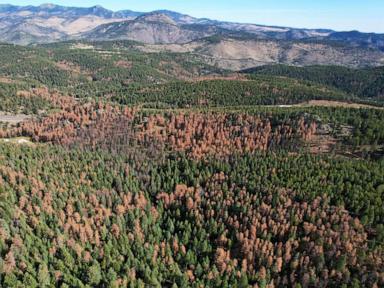
The marble halls of the Supreme Court rarely smell like pine resin or rotting timber. Yet, recent courtroom battles have brought the raw, scorched reality of environmental collapse right to the justices' bench. You have invasive bark beetles carving through dead ecosystems and tinderbox forests waiting for a spark, all while multi-billion-dollar legal fights decide who foots the bill for planetary heating.
For years, local governments watched their infrastructure crumble under unprecedented floods and heatwaves. They didn't just sit there. They sued major energy companies in
Why Climate Change Legal Battles at the Supreme Court Change Everything for Your Wallet
news
The Supreme Court isn't just about abstract constitutional debates anymore. Right now, the highest court in the country is wrestling with a much messier reality: who pays the astronomical bill for a warming planet.
You've probably seen the headlines about killer beetles chewing through tinderbox forests across the American West. Maybe you've watched your own home insurance premiums double over the past three years. These aren't isolated events. They are the financial and environmental fallout of a shifting climate, and local communities are finally fighting back against the corporations they hold responsible.
When cities and states sue oil and gas giants in state courts, they aren't just looking for a political win. They want billions of dollars to pay for seawalls, wildfire mitigation, and infrastructure overhauls. Big energy companies hate this strategy. They want these massive liability lawsuits thrown into federal court where the rules favor them.
The stakes are massive. If local governments win the right to sue fossil fuel companies under state consumer protection and nuisance laws, the financial floodgates open.
The Local Cost of Global Emissions
Let's look at what's actually happening on the ground. Take the timber industry in states like Oregon and California. Warmer winters mean native bark beetles don't freeze to death in their natural cycles. Instead, populations explode. They kill millions of acres of pine and fir trees, turning entire mountain ranges into standing tinderboxes.
When a stray lightning strike hits, the resulting wildfires burn hotter and faster than anything fire crews have historically managed. Cities spend tens of millions of dollars clearing dead brush, evacuating neighborhoods, and rebuilding water treatment plants choked with ash.
Local taxpayers shouldn't foot the entire bill for disasters driven by corporate extraction. That's the argument driving these lawsuits. State and local officials argue that energy companies knew about these exact risks for decades while actively running PR campaigns to downplay them.
Why the Supreme Court Battle Matters
Energy corporations are fighting tooth and nail to move these lawsuits out of local courts. They know local juries might not look kindly on out-of-state corporate giants whose products directly contributed to local disasters.
Federal courts operate under a different framework. Energy companies argue that federal law—specifically the Clean Air Act—preempts state-level lawsuits. Their core defense is simple: you can't use state laws to regulate global emissions after the fact.
If the Supreme Court sides with the corporations, local governments lose their most potent legal weapon. Cities will have to absorb the full cost of climate adaptation through higher property taxes, soaring utility bills, and neglected municipal infrastructure.
What This Means for Your Future
You might think a Supreme Court docket thousands of miles away has nothing to do with your everyday life. You'd be wrong.
Insurance markets are already reacting to these legal uncertainties. Major insurers are pulling out of wildfire-prone areas in the West and flood-prone zones along the Gulf Coast. If local municipalities cannot secure funding to protect their infrastructure, private insurance companies will keep raising rates or fleeing those markets altogether.
You pay for climate change whether you live in a coastal flood zone or an inland suburb. You pay through higher food prices when droughts ruin crops, through surging utility rates as power grids strain under extreme heat, and through higher taxes when local governments scramble to fix washed-out roads.
The legal skirmishes happening at the Supreme Court will determine whether fossil fuel companies share in those adaptation costs or leave everyday citizens holding the bag. Watch how these rulings land. They will reshape local economies, real estate markets, and municipal budgets for the next thirty years.


