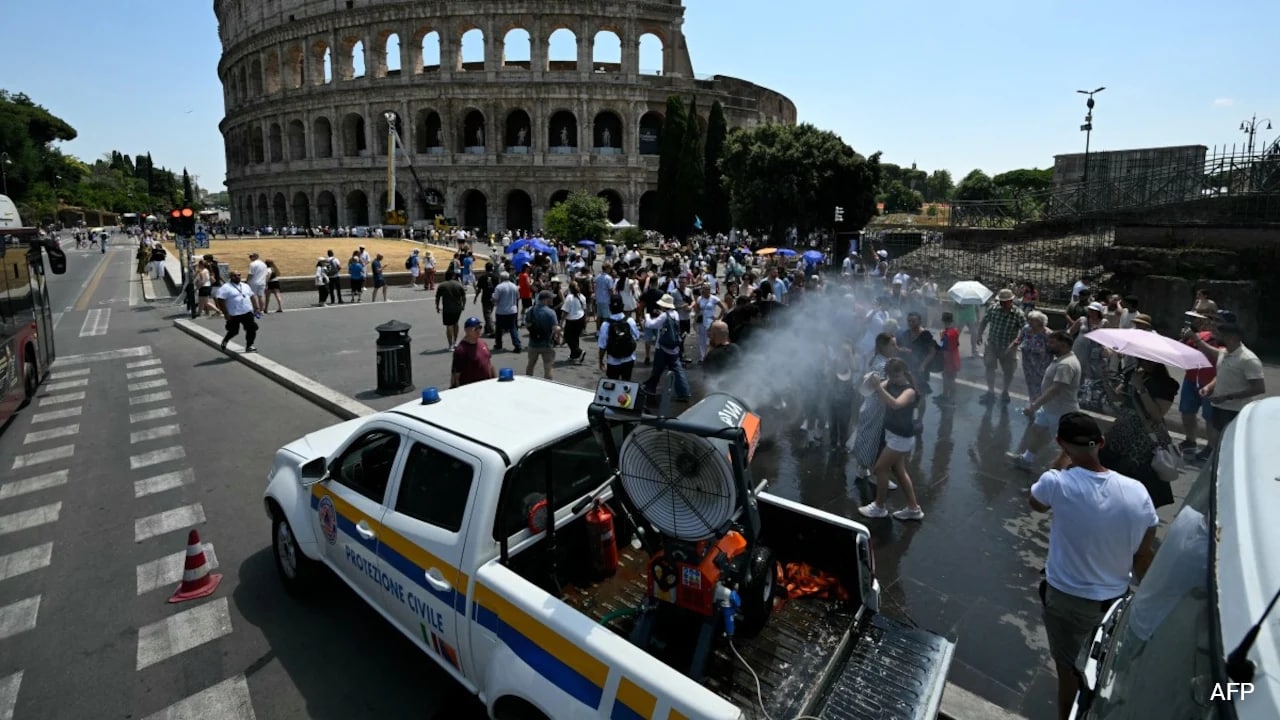
You stand in a three-hour line outside the Colosseum, the asphalt melting beneath your sneakers. The thermometer reads 36°C (97°F), but your skin insists it's closer to 45°C. Sweat doesn't evaporate here; it just pools under your clothes because the heavy air holds it captive. This is the reality of the European heatwave tearing through Italy right now, turning dream vacations into endurance tests.
When a family visiting from New Delhi openly complained that Rome felt more oppressive than the peak of summer in India, it wasn't an exaggeration. It was a structural critique. The tourist, Arockia Rajasekhar, pointed out a brutal truth about the Italian capital: back home, when it hits 42°C, infrastructure adapts. You move from an air-conditioned car to an air-conditioned mall. In Rome, you walk miles through ancient cobblestone ruins under a relentless sun, with zero shade and even less climate control.
If you have a trip booked to Italy this summer, you don't need to cancel. But you absolutely must change how you travel. The old itinerary of casual afternoon strolls and spontaneous sightseeing is dead, replaced by a climate reality that requires tactical planning.
The Infrastructure Trap Facing Summer Tourists
The primary mistake travelers make is comparing raw numbers. A 36°C day in Rome feels radically different from the same temperature in a modern city. The issue isn't just the sun; it's the urban layout.
Rome is a giant heat sink made of stone, brick, and concrete. These materials absorb thermal energy all day and radiate it back out at night. Meteorologists call this the urban heat island effect. Compounding the issue is a trend of "tropical nights" across Southern Europe, where temperatures refuse to drop below 20°C (68°F) after dark. The ancient walls never actually cool down. They just store the heat and pile tomorrow's sun right on top of it.
Then there is the air conditioning problem. Unlike American or Asian hubs, European architecture historically relied on thick stone walls and window shutters to manage heat. That worked decades ago. It fails completely during modern, prolonged heat domes.
Many boutique hotels and Airbnbs in historic districts utilize low-power, localized AC units that struggle to lower a room’s temperature past 26°C when the exterior walls are baking. Worse, strict historic preservation laws prevent many properties from installing proper external compressors. You are essentially sleeping inside a beautiful, slow-cooking brick oven.
How to Work Around the Red Alerts
Italy’s Health Ministry regularly issues "red alerts" for Rome, Florence, and Milan. This isn't just a weather advisory; it's a medical warning stating that the climate poses a risk to healthy, active adults, not just the elderly.
If a red alert hits during your trip, your day needs to be split cleanly into two distinct shifts.
The First Shift: The Sunrise Sprint
You need to be out of your accommodation by 7:30 AM. Places like the Roman Forum, the Trevi Fountain, and the Spanish Steps are beautiful at 8:00 AM, mostly empty, and entirely bearable. You can get three hours of high-quality exploration done before the air turns into a furnace.
The Lockdown: 11:30 AM to 4:30 PM
This is the danger zone. Do not walk across open piazzas. Do not stand in unshaded queues. Use this window exclusively for indoor activities with heavy-duty climate control.
The Vatican Museums and the Borghese Gallery are excellent choices, but you must book these tickets months in advance. If you didn't secure a ticket, do not attempt to wing it. Standing outside St. Peter's Basilica in July without a reservation is a fast track to heat exhaustion. Instead, use these hours to linger over a three-course lunch in a basement trattoria or head back to your room for a siesta.
The Second Shift: Nighttime Exploration
The city wakes back up around 6:00 PM, but the air stays thick. Focus your evening on outdoor dining or night tours. The Colosseum offers evening visits that let you walk the arena floor under the stars, avoiding the brutal daytime glare entirely.
Practical Survival Hacks on the Roman Streets
If you find yourself caught out in the middle of the day, survival comes down to utilizing the city's ancient design features to your advantage.
- Weaponize the Nasoni: Rome has over 2,500 public drinking fountains known as nasoni (large noses). The water running through them is cold, completely safe, and flows directly from alpine aqueducts. Don't buy plastic water bottles from tourist traps for four euros. Carry an insulated steel flask and fill it up at every single street corner.
- The Fountain Dip Protocol: You will see desperate tourists dunking their feet into the Trevi Fountain or the Barcaccia at the Spanish Steps. Don't do it. Local police issue fines starting at 450 euros for touching the water in historic monuments. If you need to cool down, splash water from a nasone onto your wrists and the back of your neck. It instantly lowers your perceived body temperature.
- Ditch the Backpack: A heavy nylon pack glued to your back creates an insulation layer that prevents your body from cooling itself. Switch to a lightweight canvas tote or a small crossbody bag to keep your skin exposed to whatever breeze exists.
Adjusting Your Culinary Expectations
Your eating habits have to change when the climate shifts. Heavy plates of Carbonara, Cacio e Pepe, and deep-fried artichokes require significant metabolic energy to digest, which raises your internal temperature.
Local Romans shift their diet toward insalata di riso (cold rice salad), prosciutto with melon, and fresh fruit. Save the rich pasta dishes for late-night dinners when the air has stabilized slightly.
And while gelato is mandatory, remember that high-sugar treats cause a temporary spike in metabolic heat. Lean toward fruit-based sorbets (sorbetto) like lemon or strawberry. They are far more hydrating and cooling than heavy, cream-based flavors.
Your next move if you are heading to Rome this week is a simple audit of your current itinerary. Look at your bookings for the 12:00 PM to 4:00 PM window. If you see phrases like "Walking Tour" or "Self-Guided Exploration of Ruins," cancel them immediately. Swap them for indoor museum slots, or simply write those hours off as rest time. Fighting the Roman summer sun is a losing battle, and the city is far more enjoyable when you stop trying to conquer it and start adapting to it.