Imagine a city 4,500 years ago with sophisticated water canals, massive dam systems, and jade ornaments so intricate they'd make a modern jeweler sweat. This wasn't some mythic Atlantis. It was the Liangzhu culture in China’s Yangtze River Delta. For a thousand years, these people built a society that rivaled anything in ancient Mesopotamia or Egypt. Then, almost overnight, they vanished from the archaeological record.
People used to think war or some social uprising wiped them out. That's a common go-to for historians. But the dirt tells a different story. Recent geochemical analysis of stalagmites and sediment layers points to a much more terrifying culprit. It wasn't an invading army. It was the weather. Specifically, a period of catastrophic flooding caused by the collapse of the Holocene Thermal Maximum.
Why the Liangzhu Miracle Ended So Abruptly
The Liangzhu were masters of their environment. They didn't just live near water; they controlled it. They built the world's oldest known large-scale water management system. It featured high dams, low dams, and levees that regulated water flow for massive rice paddies. They were the original hydraulic engineers.
But their strength became their Achilles' heel. When you build your entire civilization on the premise that you can control the local river system, you're fine until the river decides it doesn't want to be controlled anymore. Around 4,300 years ago, the Asian monsoon patterns shifted. The rainfall didn't just increase slightly; it became relentless and chaotic.
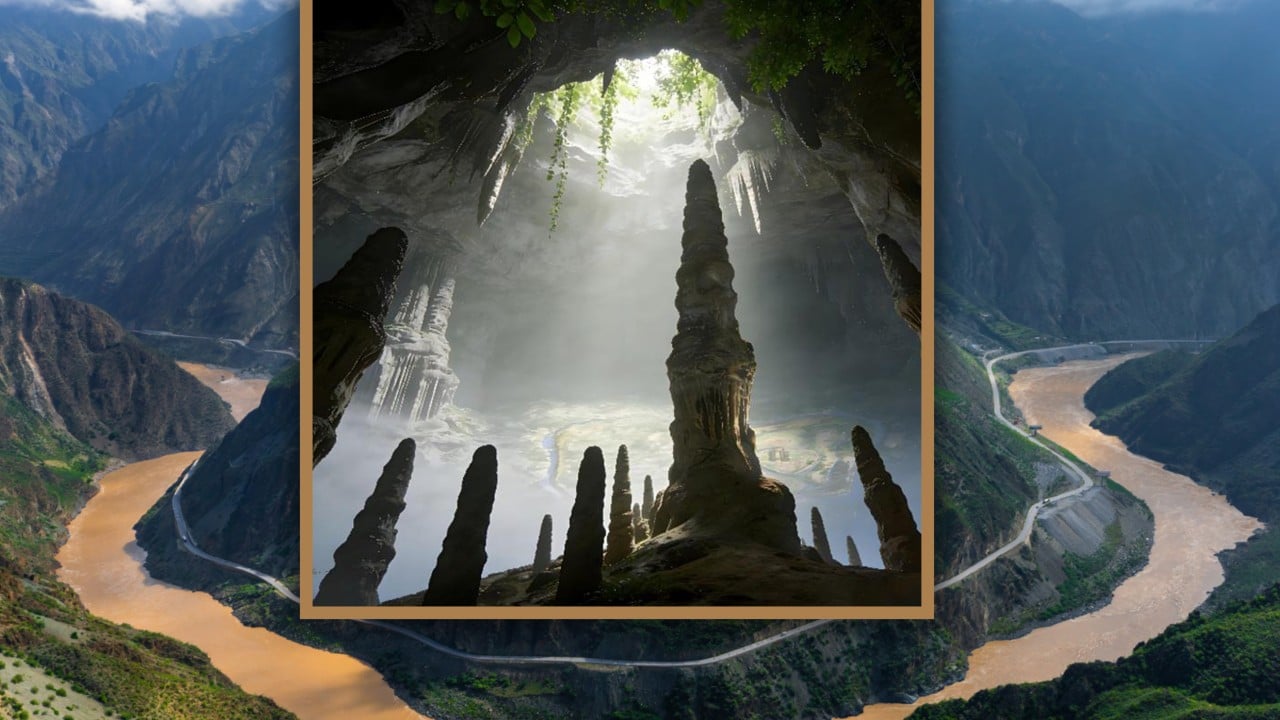
Studies published in Science Advances by researchers like Christoph Spötl have looked at oxygen isotopes in cave formations from the region. The data is clear. A massive increase in precipitation occurred right when the Liangzhu disappeared. The dams weren't built for that kind of volume. They breached. The rice paddies—the literal lifeblood of the city—were buried under layers of silt and clay. You can still see that distinct layer of yellow-gray mud in the stratigraphic record today. It sits right on top of the Liangzhu artifacts like a tombstone.
The Myth of Linear Progress
We like to think of history as a steady climb upward. We assume that once a society hits a certain level of complexity, it stays there. The Liangzhu prove that’s a lie. They had a complex social hierarchy, advanced craft specialization, and a proto-writing system. Yet, they couldn't survive a century of extreme weather.
When the floods came, the social contract likely disintegrated. If the elites promised protection through their monumental dams and rituals, and those dams failed, the commoners had no reason to stay. There’s no evidence of a "Great Battle" at Liangzhu. There are no charred remains of a city burned to the ground by an enemy. Instead, there's just... silence. The people walked away. They abandoned their jade and their massive timber halls because you can't eat jade when your rice fields are five feet underwater.
Comparing Liangzhu to the Longshan Transition
After the Liangzhu faded, the Longshan culture started to dominate the region. But here's the kicker: the Longshan didn't just pick up where the Liangzhu left off. They were different. They were more militaristic, and their settlements moved to higher ground.
This transition shows a fundamental shift in human strategy. The Liangzhu tried to master the wetlands. The Longshan learned to fear them. This wasn't just a change in pottery styles. It was a complete rewrite of how humans interacted with the Chinese landscape. We see this pattern globally—the Akkadian Empire in Mesopotamia and the Old Kingdom in Egypt also faced severe climatic stress around this same window, often called the 4.2-kiloyear event.
The planet went through a dry spell in some places and a deluge in others. The Liangzhu just happened to be in the path of the water.
Why This Isn't Just Ancient History
You might think 4,500 years is too long ago to matter. You’d be wrong. The Yangtze River Delta is currently one of the most densely populated and economically vital regions on Earth. Cities like Shanghai sit on the very same silt that buried the Liangzhu.
We’re currently seeing a modern version of the same climatic instability that killed the Liangzhu. The difference is that we have better technology, but we also have billions more people to feed. The Liangzhu had "nature-based solutions" long before that became a buzzword in 2026. They used wood and earth. We use concrete and steel. But the physics of a massive flood don't care about the material of the dam once the capacity is exceeded.
Archaeologists found that the Liangzhu city was occupied for about a thousand years before the collapse. That’s a long run. Most modern cities haven't even hit the 500-year mark yet. We talk about sustainability as if it's a new concept, but the Liangzhu were the masters of it until the environment shifted beyond their "design parameters."
Lessons from the Silt
If you want to understand where we're headed, look at the layers of clay in the Yangtze. The Liangzhu collapse teaches us three big things.
- Over-specialization is a trap. The Liangzhu were so good at wet-rice farming that they had no backup plan when the paddies flooded.
- Infrastructure has limits. No matter how impressive the engineering, there's always a "black swan" weather event that can overtop it.
- Social stability is tied to the environment. When the water management system failed, the entire political structure of the Liangzhu vanished.
The jade "cong" tubes found in Liangzhu graves are beautiful. They represent a peak of human artistry. But they were found discarded in the mud. Beauty and culture are luxuries of a stable climate.
The next time someone tells you that humans have always adapted to climate change, remind them of the Liangzhu. They didn't adapt. They left. Or they died. The ruins of their massive waterworks are a warning written in earth and stone. We should probably start reading it more carefully.
To get a better sense of how these patterns repeat, look into the 4.2-kiloyear event and compare the Liangzhu's fate with the collapse of the Indus Valley Civilization. The parallels in hydrological failure are startling. Study the maps of ancient Yangtze floodplains versus modern urban sprawl in Zhejiang province. You'll see we're building exactly where the water wants to go.