The political survival of the Islamic Republic of Iran currently hinges on a transition of power that minimizes systemic friction while maximizing ideological continuity. Central to this calculation is Mojtaba Khamenei, the second son of the current Supreme Leader, Ali Khamenei. While popular discourse often frames Mojtaba through the lens of a "hereditary monarchy," a structural analysis reveals a more complex mechanism: the transformation of the Beit-e Rahbari (the Office of the Leader) into a shadow executive branch that functions as the ultimate arbiter of Iranian domestic and foreign policy.
Understanding Mojtaba’s potential elevation requires a granular examination of the three pillars of his current influence: intelligence synchronization, economic patronage through Bonyads, and his standing within the clerical hierarchy of Qom. This is not a story of a "cleric with a gun," but rather a study of how a bureaucratic operative has effectively integrated the military-industrial complex of the Islamic Revolutionary Guard Corps (IRGC) with the theological legitimacy required by the Iranian constitution.
The Architecture of Shadow Governance
The Office of the Supreme Leader has evolved from a small advisory body into a sprawling administrative apparatus that bypasses the elected presidency. Mojtaba Khamenei sits at the nexus of this expansion. His primary function over the last two decades has been the role of a strategic gatekeeper. By controlling the flow of information to his father and managing the appointments of key IRGC commanders, he has created a feedback loop that reinforces his own indispensability.
The institutionalization of this office creates a specific bottleneck for any rival claimant. Any successor who does not have the intimate, daily operational control over the Beit will find themselves leading a hollowed-out institution. Mojtaba’s strength is not derived from public popularity—which is demonstrably low—but from his position as the architect of the very systems that any future leader would need to govern.
The Intelligence-Security Nexus
A critical turning point in Mojtaba’s ascent was the 2009 post-election crackdown. During this period, the IRGC’s Intelligence Organization (IRGC-IO) saw its powers expanded to rival and eventually eclipse the Ministry of Intelligence (MOI). Structural evidence suggests that Mojtaba was the primary liaison between the Beit and Hossein Taeb, the then-head of the IRGC-IO.
This partnership established a dual-track security state:
- The Formal Layer: The Ministry of Intelligence, which remains somewhat accountable to the elected President and Parliament.
- The Parallel Layer: The IRGC-IO and the Ammar Headquarters, which report directly to the Supreme Leader’s office and operate with near-total legal immunity.
By aligning himself with the parallel layer, Mojtaba ensured that the most coercive elements of the state are personally loyal to the lineage of the Leader rather than the office of the Presidency. This bypasses the constitutional checks that might otherwise disrupt a succession.
The Economic Moat: Patronage and Para-statal Control
Political power in Iran is inextricably linked to the control of Bonyads (charitable foundations) and the IRGC-linked conglomerate, Khatam al-Anbiya. These entities operate outside the national budget and are exempt from standard auditing processes.
Mojtaba’s role in managing these assets serves two strategic purposes. First, it provides a "war chest" independent of oil revenues or international sanctions. Second, it allows for the distribution of patronage to the mid-level clerical and military cadres whose support is essential during a transition. When analyzing the cost-benefit ratio of supporting Mojtaba versus an outsider, these cadres must weigh the risk of a new leader dismantling their economic privileges. Mojtaba represents the preservation of the status quo for the elite.
The financial infrastructure under the Beit includes:
- Setad (EIKO): An organization with assets estimated in the tens of billions, focusing on real estate, telecommunications, and pharmaceuticals.
- Mostazafan Foundation: A massive industrial conglomerate controlling significant portions of the country’s manufacturing and shipping.
The integration of these assets into the Office of the Leader means that the Supreme Leader is not just a spiritual guide, but the CEO of the country’s largest sovereign wealth fund. Mojtaba’s deep familiarity with these ledgers makes him the logical "Chief Operating Officer" for the regime’s survival.
The Legitimacy Deficit and the Qom Strategy
The most significant barrier to Mojtaba’s succession is the lack of traditional religious credentials. In the Shia hierarchy, a Supreme Leader is theoretically expected to be a Marja (a source of emulation) or at least a high-ranking Mujtahid (one capable of independent legal reasoning).
Mojtaba has spent the last decade attempting to bridge this gap. His move to Qom to teach advanced jurisprudence (Kharij lectures) was a calculated attempt to build a clerical resume. However, religious authority cannot be manufactured through administrative decree alone. The senior Grand Ayatollahs in Qom remain skeptical of a hereditary transition, viewing it as a deviation from the revolutionary principle of Velayat-e Faqih.
To counter this, Mojtaba has utilized a "co-optation and coercion" strategy:
- Subsidizing Seminaries: Directing funds from the Beit to specific religious schools to create a new generation of clerics who owe their livelihoods to his family.
- Marginalizing Dissent: Using the Special Clerical Court to silence high-ranking figures who voice opposition to the "monarchical" shift of the office.
This creates a veneer of religious legitimacy that, while thin, may be sufficient to satisfy the Assembly of Experts—the body responsible for selecting the next leader—provided the IRGC remains fully committed to his candidacy.
The Assembly of Experts as a Rubber Stamp
The Assembly of Experts is often described as the "electorate" for the Supreme Leader. However, the vetting process conducted by the Guardian Council ensures that only those loyal to the current leadership can run for the Assembly. This circular logic ensures that the Assembly acts less as a deliberative body and more as a formalizing agent for decisions already made within the Beit and the IRGC high command.
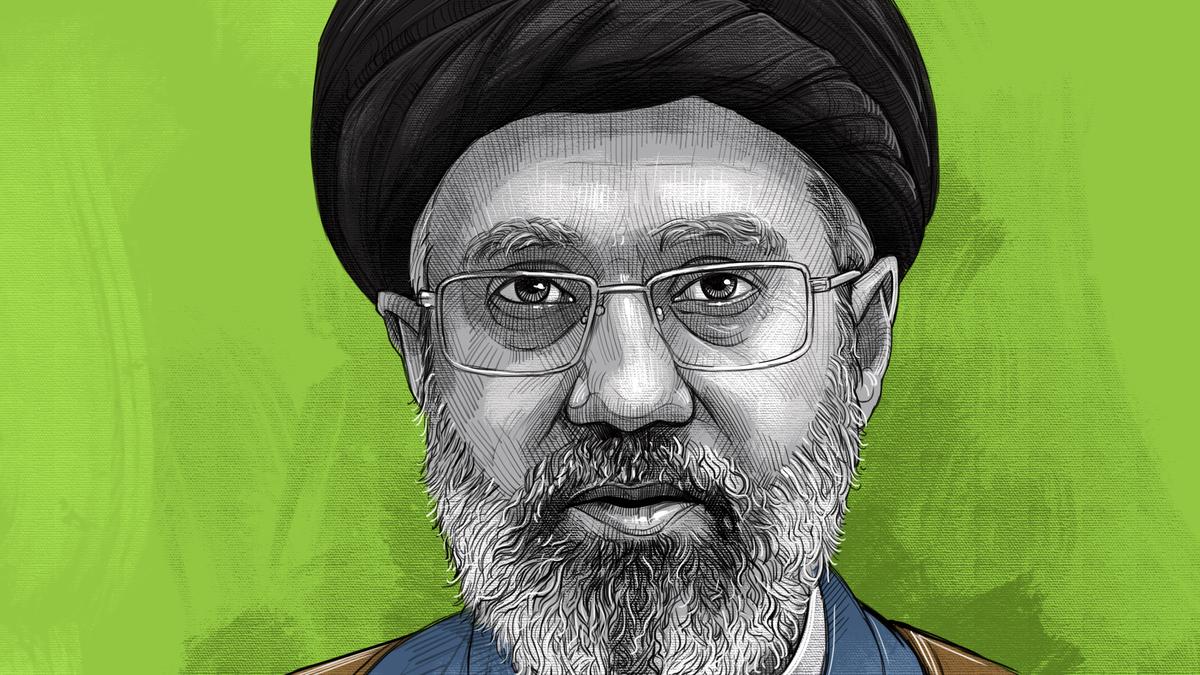
The death of Ebrahim Raisi, the former President and a top contender for the leadership, significantly altered the probability matrix. Raisi provided a "clerical-civilian" face for the regime. With his removal from the board, the options have narrowed. The remaining candidates either lack the necessary security ties or are too old to represent a long-term stabilization strategy.
Friction Points and Systemic Risks
Despite the structural advantages, Mojtaba’s path is not guaranteed. Three primary variables could destabilize the transition:
- Public Volatility: The Iranian populace has shown increasing willingness to engage in large-scale protests (e.g., 2017, 2019, 2022). A hereditary succession could serve as a powerful catalyst for civil unrest, as it directly contradicts the "anti-monarchy" foundation of the 1979 Revolution.
- IRGC Internal Rivalries: While the IRGC top brass is currently aligned with the Beit, the organization is not a monolith. Younger, more nationalistic officers may resent the "clericalization" of the economy or the perceived incompetence of the hereditary elite.
- The "Hidden Imam" Paradox: Within hardline circles, there is a theological tension between the absolute power of the Supreme Leader and the preparation for the return of the Mahdi. If Mojtaba is seen as too secular or too focused on dynastic preservation, he may lose the "true believer" faction of the Basij militia.
Strategic Forecast: The Transition Protocol
The most likely scenario is not an immediate announcement of Mojtaba as the successor, but a phased "testing" period. This involves increasing his public profile while maintaining his role in the shadows. The regime will likely emphasize his military connections and his "hardness" against Western influence to appeal to the security core.
If the transition occurs during a period of external pressure—such as increased sanctions or regional conflict—the IRGC will likely prioritize stability over all other factors, forcing the Assembly of Experts to ratify Mojtaba quickly. The goal will be to present the world with a fait accompli before internal opposition can crystallize.
The international community must recognize that Mojtaba Khamenei represents the ultimate fusion of the clerical and security states. His leadership would likely result in an even more insular, securitized, and ideologically rigid Iran. The shift would move the country away from the hybrid "theocratic-republican" model of the early revolution toward a "clerical-military autocracy" where the republican elements are entirely vestigial.
Strategic planners should focus on the internal mechanics of the Beit-e Rahbari and the IRGC-IO as the primary indicators of power shifts. Monitoring the appointments within the Setad and the Mostazafan Foundation will provide more insight into the succession than public statements from the Ministry of Foreign Affairs. The battle for the future of Iran is being fought not in the ballot box, but in the accounting offices and intelligence headquarters of the Supreme Leader’s inner circle.