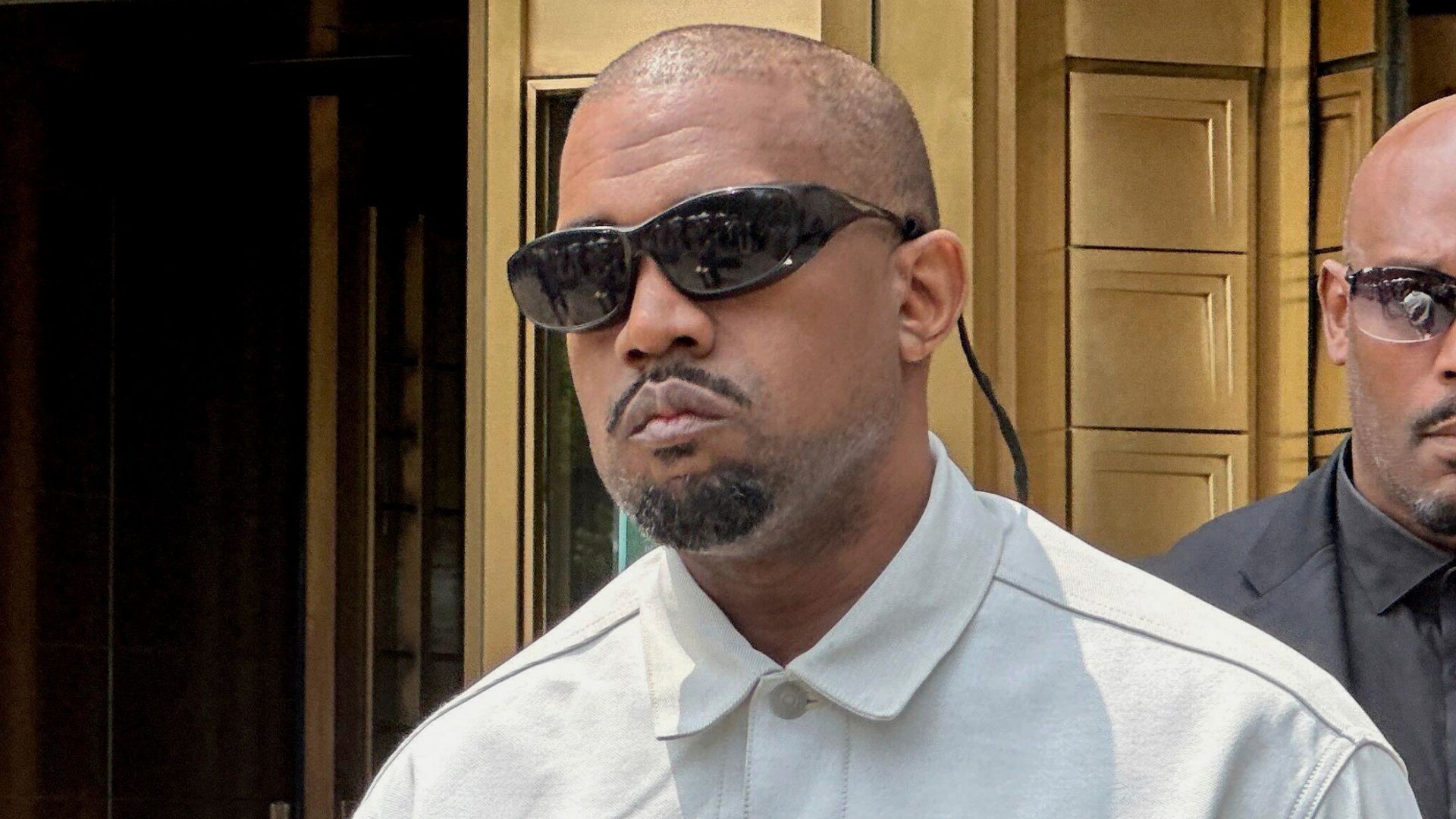
The indefinite postponement of Kanye West’s Marseille performance is not a mere scheduling conflict; it is a case study in the intersection of high-variance artistic brand risk and the rigid regulatory architecture of European public safety. When an artist with a history of polarizing rhetoric attempts to interface with a municipality governed by strict secularism and public order mandates, the resulting friction creates a prohibitive cost of operations. The failure in Marseille highlights three specific failure points: the breakdown of the private-public security pact, the misalignment of "drop culture" logistics with international stadium infrastructure, and the specific legal mechanisms French authorities utilize to gatekeep cultural influence.
The Security-Risk Matrix and Public Order Thresholds
In the context of European mass gatherings, venue approval is contingent upon a shared risk assessment between the promoter and local law enforcement. For a standard Tier-1 artist, this assessment focuses on crowd density, ingress/egress flow, and fire safety. However, the Ye brand introduces a secondary layer of "Societal Risk" that French law permits authorities to weigh heavily. For a closer look into similar topics, we recommend: this related article.
French prefectures hold the administrative power to ban events if they pose a "grave threat to public order." This is not restricted to physical violence. In the French legal framework, specifically under the precedents set by cases involving controversial performers like Dieudonné, the state can argue that an artist's presence violates "human dignity" or incites communal tension.
The Risk Assessment Hierarchy: For additional information on this issue, extensive coverage is available on Rolling Stone.
- Operational Risk: Can the local police force manage the 50,000+ attendees expected at the Orange Vélodrome?
- Reputational Risk: Does the municipal government face political blowback for hosting an individual with a recent history of anti-semitic statements?
- Security Risk: Does the performance provide a flashpoint for counter-protests that would necessitate a surge in Gendarmerie presence, thus draining regional resources?
The postponement suggests that the promoter, likely operating on thin margins given the high insurance premiums associated with West, reached an impasse where the cost of required security exceeded the projected ROI of the event.
The Logistics of Spontaneity vs Stadium Procurement
West’s current touring model—centered on "Vultures" listening parties—relies on a high-speed, low-asset-deployment strategy. Unlike traditional "Eras" style tours that require months of technical load-in for complex stage builds, these listening parties are theoretically agile. However, this agility is an illusion when applied to European stadium logistics.
Stadiums like the Orange Vélodrome are not merely venues; they are highly regulated utilities. Securing a date requires a minimum lead time of six to twelve months for municipal scheduling. West’s preference for "pop-up" style announcements creates a fundamental mismatch with the Stochastic Demand Model of high-end touring.
The Lead-Time Bottleneck
- Vendor Contracts: Large-scale events require local labor unions and security firms to be booked months in advance. Late-stage announcements force promoters into the "Spot Market" for labor, where costs can be 200% to 300% higher than contracted rates.
- Insurance Underwriting: Reinsurance for a Ye event is a specialized product. Underwriters look for "Event Cancellation" coverage that protects against both the artist failing to show and the state intervening. In the current climate, the premium for such a policy likely reached a level that rendered the Marseille date economically unviable.
- Permit Lag: French administrative law requires a specific "Dossier de Sécurité" to be filed well in advance. Attempting to force a performance through this system in a matter of weeks is a recipe for administrative rejection.
The Economic Impact of the Marseille Blockade
Marseille is a city with a high degree of cultural sensitivity and a diverse demographic profile. For the local government, the economic injection of a stadium-level concert (estimated at €5M–€8M in direct and indirect spending) was weighed against the potential cost of social friction.
The decision to "consider blocking" the performance acts as a soft-power veto. By delaying the permit process, the state forces the artist into a "postponement" that is functionally an exit. This avoids the legal challenge of an outright ban while achieving the same outcome: the removal of the risk variable from the city's immediate operational horizon.
The Three Pillars of Artist De-Platforming in Public Spaces:
- Administrative Friction: Using bureaucratic delays to exhaust the promoter's capital.
- Safety Pretext: Citing "unavailability of law enforcement" due to concurrent events or elevated terror threat levels (Vigipirate).
- Moral Clauses: Utilizing the "Dignité Humaine" clause to argue the performance is incompatible with local values.
Brand Dilution and the Loss of Institutional Trust
A recurring pattern of "postponements" creates a feedback loop of institutional distrust. Each failed event increases the Risk Premium for the next venue. Future promoters in cities like Berlin, London, or Milan will look at the Marseille failure as a data point indicating that the Ye brand is no longer a "plug-and-play" revenue generator but a high-maintenance liability.
This creates a structural decline in the artist's ability to utilize traditional infrastructure. When the top-tier stadiums (the "A-List" venues) perceive a 50% probability of cancellation or state intervention, they prioritize lower-revenue but higher-certainty acts. This forces the artist into suboptimal venues—smaller, private, or in jurisdictions with weaker regulatory oversight—which in turn diminishes the brand's perceived scale and cultural dominance.
The Cost Function of Controvery
$C_{total} = C_{ops} + C_{sec} + P_{risk}(L_{rev})$
Where:
- $C_{total}$ is the total cost of the event.
- $C_{ops}$ is the standard operational expenditure.
- $C_{sec}$ is the elevated security cost due to artist profile.
- $P_{risk}$ is the probability of a state-mandated shutdown.
- $L_{rev}$ is the potential loss of revenue from a non-refundable venue deposit.
In the Marseille calculation, $P_{risk}$ approached 1.0, making the total cost function unsustainable for any rational promoter.
Strategic Pivot: The Shift to Non-Western Venues
The Marseille incident confirms that the Ye brand is reaching a saturation point of friction within Western democratic regulatory frameworks. To maintain the scale of his performance art, the strategic recommendation is a pivot toward "Low-Regulation High-Capital" markets.
We are seeing the early stages of this with performances in places like Haikou, China. These jurisdictions offer a different risk profile. While they carry high political risk, they lack the specific "Public Order" and "Protest Culture" mechanisms that caused the Marseille bottleneck. In these environments, the state's control over the venue is absolute; if the government invites the artist, the "Administrative Friction" disappears.
Strategic Actionable:
The West organization must abandon the attempt to force spontaneous "drop" logistics onto European municipal infrastructure. To return to the European market, the brand requires a "Logistics Cleanse"—a series of events with 12-month lead times, transparent security dossiers, and pre-negotiated "Human Dignity" waivers with local prefectures. Failure to do so will result in a permanent exile from Tier-1 European venues, relegating the "Vultures" era to a series of missed opportunities and sunk costs in deposits and legal fees. The Marseille postponement is the final warning that the "chaos as a service" model has hit a hard ceiling against the French state's regulatory wall.
The immediate move is to consolidate the remaining European dates into a single, high-security private venue outside of municipal jurisdiction or to terminate the European leg entirely to prevent further capital flight through non-refundable venue holds.