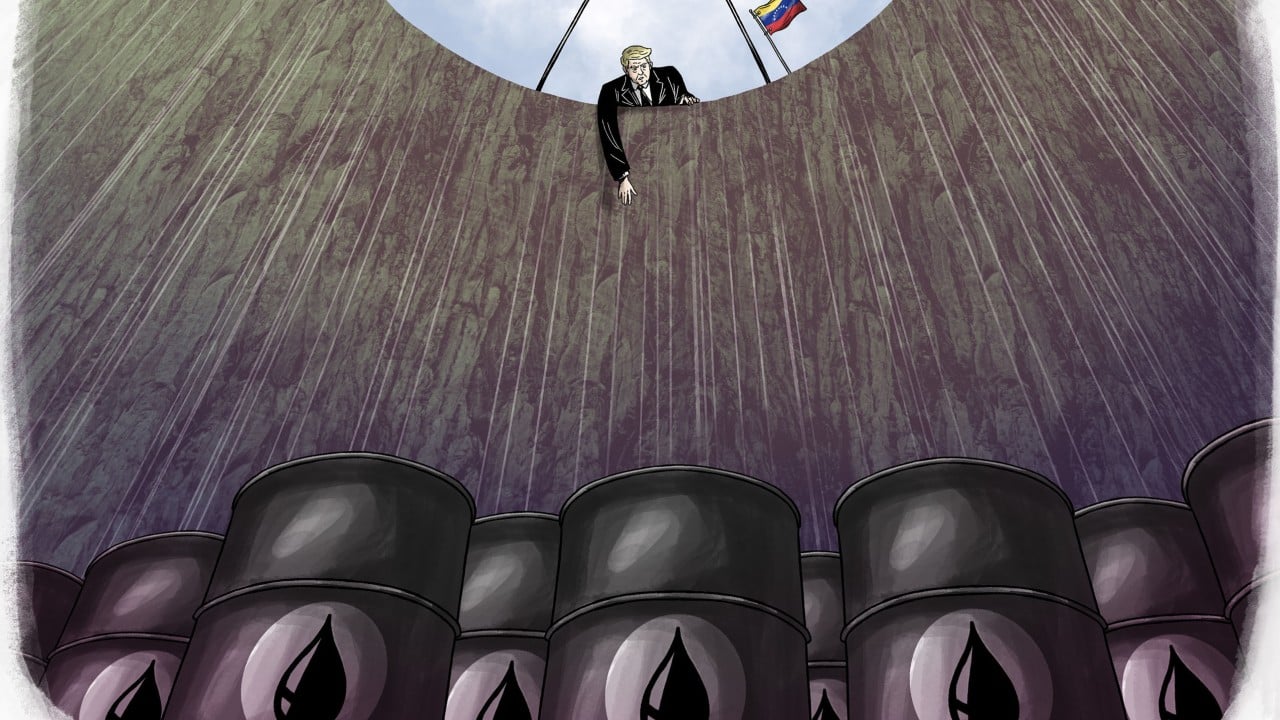
The reconfiguration of Venezuela's energy architecture under United States administration control introduces a fundamental shift in resource governance. By securing majority control and operational rights over seventeen heavy oil fields encompassing approximately sixty-five billion barrels of proven reserves through North American Blue Energy Partners, Washington has rewritten the bilateral ledger of the Orinoco belt. This intervention alters the immediate flow of physical crude and disrupts the multi-year debt servicing mechanisms that previously bound Caracas to Beijing. Rather than responding with immediate escalation, Beijing's calculated restraint exposes a pragmatic calculus dictated by asset exposure ratios, alternative supply elasticity, and long-term systemic positioning.
The structural reality of Chinese exposure in Venezuela has undergone continuous deflation since the peak of oil-backed lending programs administered via the China Development Bank. Initial credit extensions totaling roughly sixty billion dollars through 2015 amortized down to an estimated ten to twelve billion dollars by the onset of the transition. This residual debt was serviced primarily through discounted crude shipments directed toward independent processing facilities, colloquially known as teapot refineries, concentrated in Shandong province.
Because Venezuelan heavy crude accounted for a single-digit percentage of overall Chinese import volumes, the quantitative disruption to national energy security remains manageable in the short term. Furthermore, substantial maritime stockpiles floating off Malaysia and Chinese coasts provide an immediate inventory buffer, insulating independent refiners from sudden feedstock starvation during the initial transition phase. This inventory cushion explains the calibrated nature of official diplomatic responses from Beijing, which have relied on formal assertions of international law rather than retaliatory economic blockades.
The operational mechanics of the newly established concession model rely on private-sector capital mobilization to bypass the structural degradation of the state-owned enterprise Petróleos de Venezuela. Decades of underinvestment, mismanagement, and comprehensive economic sanctions degraded baseline production capacity, converting massive subterranean wealth into an underutilized asset base. The current framework bypasses traditional intergovernmental aid by granting long-term operational rights to a private corporate entity backed by U.S. governance oversight and equity participation.
This architecture introduces specific risk parameters that will dictate operational success:
- Capital Expenditure Intensity: Rebuilding heavy oil upgraders, drilling infrastructure, and pipeline networks requires multi-billion-dollar capital injections that must be sourced entirely from private markets without taxpayer exposure.
- Viscosity and Refining Constraints: Orinoco crude is exceptionally heavy and acidic, requiring specialized heavy coking refineries primarily located along the U.S. Gulf Coast to process efficiently.
- Governance and Compliance Monitorship: The implementation of strict financial transparency mechanisms and independent audits is designed to prevent the institutional corruption that crippled previous revenue distribution models.
For Beijing, patience functions as a rational hedging strategy rather than passive acceptance. Chinese state enterprises maintain extensive equity investments and infrastructure stakes across Latin American mining, agricultural, and logistics sectors. Direct confrontation over a depreciating asset portfolio in Venezuela risks triggering broader systemic friction that could jeopardize larger strategic gains across the hemisphere. By standing back, Chinese policymakers allow the initial heavy lifting of infrastructure reconstruction and political stabilization to be absorbed by American capital and operational risk-bearers.
The evolution of this arrangement hinges entirely on the velocity of capital expenditure deployment and the stability of the newly privatized production framework. If the structural changes successfully lift output from historical lows, global heavy oil supply curves will shift, altering regional pricing dynamics for heavy-sour feedstocks. Conversely, if institutional friction or financing bottlenecks stall production growth, the physical barrels will fail to materialize, rendering the geopolitical realignment an exercise in paper ownership rather than physical market dominance.
Redirect capital expenditure toward securing long-term off-take agreements with the newly operationalized private Venezuelan entity while establishing rigorous supply chain contingencies to insulate domestic refining margins from geopolitical volatility.
Venezuelan oil market shifts and China's response
This video provides additional context regarding how Beijing navigates the altered operational parameters and dollar-denominated trade rules governing Venezuelan crude under the new administration framework.