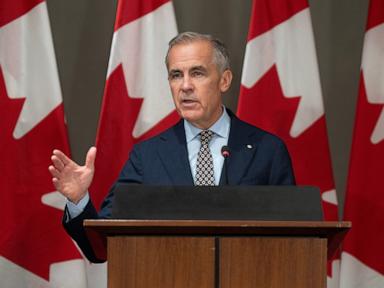
National economic resilience is a function of supply chain optionality and capital market independence. When a sovereign state maintains an asymmetrical dependency on a single trading partner for more than seventy-five percent of its export volume, it structurally subordinates its monetary and foreign policies to that partner's domestic political cycle. Recent shifts in transatlantic diplomacy, characterized by Canadian Prime Minister Mark Carney pivoting toward institutional integration with the European Union, illustrate an intentional effort to re-engineer this dependency matrix. Evaluating this geopolitical pivot requires analyzing the cost functions of US debt issuance, the mechanics of secondary financial leverage, and the structural trade-offs of entering the European single market framework.
The Sovereign Cost Function of US Borrowing
The cost of capital for North American economies is inextricably linked to the fiscal trajectory of the United States. As US federal debt expands relative to GDP, Treasury issuance absorbs global liquidity, driving up benchmark yields and widening the sovereign spread for neighboring borrowers. For Canada, this dynamic introduces imported inflation and forces domestic monetary authorities to manage currency depreciation pressures without triggering domestic asset deflation.
When a dominant partner implements arbitrary protectionist tariffs or leverages payment settlement architecture as an instrument of statecraft, the dependent nation faces a direct tax on its productive sectors. This friction alters the traditional trade equilibrium. Exporters can no longer operate on the assumption of friction-free market access. Instead, they must price political volatility directly into their capital expenditure models. The rational response to this systemic risk is structural decoupling—not as an ideological gesture, but as a mandatory risk-mitigation protocol.
Transatlantic Integration as Arbitrage
Diversifying trade and institutional alignment toward the European Union introduces an alternative gravity well for Canadian capital, energy, and critical minerals. However, this strategy operates under distinct economic constraints. The European Union functions as a highly regulated, rules-based common market characterized by stringent environmental standards, complex digital governance directives, and deeply integrated defense-industrial cooperation frameworks.
Entering this sphere requires capital expenditure focused on regulatory compliance rather than mere volume expansion. The mechanism relies on three distinct pillars:
- Critical Supply Chain Redirection: Shifting export pipelines for critical minerals, advanced manufacturing components, and green energy vectors away from North American corridors toward European industrial hubs. This replaces a high-risk, single-destination model with a bilateral distribution network.
- Institutional Harmonization: Aligning digital infrastructure, artificial intelligence governance, and professional credential recognition to reduce trade friction. By adopting shared standards, both economies lower the transaction costs associated with cross-border technology transfers.
- Defense Industrial Co-Production: Integrating procurement strategies through specialized security instruments. This provides domestic defense contractors with multi-state scale, mitigating the vulnerability of relying entirely on Pentagon-centric supply chains.
Financial Settlement Architecture and Secondary Leverage
The most profound vulnerability of unipolar economic integration lies in financial plumbing. Global trade settlement relies predominantly on systems susceptible to extraterritorial jurisdiction. When a dominant currency issuer controls the foundational clearing mechanisms, it possesses secondary enforcement powers over any foreign institution touching its banking network.
Mitigating this exposure requires developing redundant financial channels. Connecting instant payment systems across jurisdictions, establishing bilateral currency swap lines, and utilizing alternative settlement rails insulate a sovereign economy from financial exclusion. While these alternatives cannot immediately replace the sheer liquidity of dominant global currency markets, they establish a functional secondary lane that prevents a primary partner from weaponizing currency clearing as unilateral leverage.
Strategic Execution and Downside Risks
Diversifying away from a dominant trade partner carries explicit trade-offs. The European market does not match the immediate geographic proximity or logistical velocity of the North American corridor. Transportation costs are higher, transit times are longer, and European economic growth rates have historically lagged behind North American output. Furthermore, committing capital to sovereign-backed industrial strategies, such as domestic artificial intelligence infrastructure and critical mineral extraction, crowds out private sector flexibility and requires sustained fiscal discipline.
To secure long-term macroeconomic stability without eroding fiscal health, sovereign strategy must focus on securing binding, multi-decade resource off-take agreements with European partners while ring-fencing domestic capital markets against external interest rate shocks. The ultimate objective is not complete autarky or total severance from traditional partners, but the establishment of an unassailable alternative negotiating posture.
A Pivotal Shift in Transatlantic Trade
This video provides an on-the-ground analysis of Prime Minister Mark Carney's strategic rationale for diversifying Canada's economic partnerships away from the United States and toward European institutions.