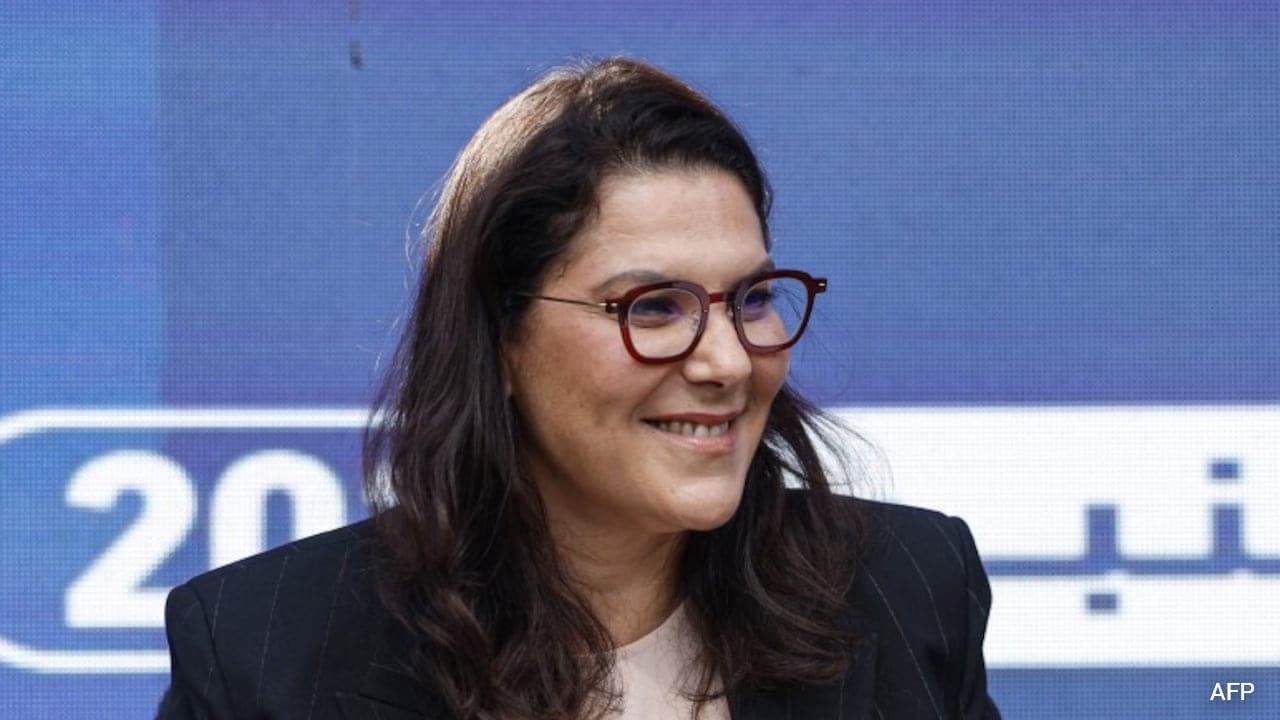
The appointment of Fatima Ezzahra El Mansouri as Morocco's Head of Government by King Mohammed VI marks a watershed moment in North African statecraft. Beyond the historic milestone of installing the nation's first female prime minister, the transition establishes a new administrative equation. This shift intersects legislative plurality, economic restructuring under the Authenticity and Modernity Party (PAM), and the institutional pressures of impending international visibility, most notably the 2030 FIFA World Cup.
Analyzing this shift requires moving past symbolic achievements to examine the underlying structural mechanisms driving Moroccan governance, the economic constraints facing the new administration, and the operational bottlenecks that will test the execution capacity of the incoming cabinet.
The Electoral Mechanics and Coalition Architecture
The Moroccan political system operates under a constitutional monarchy where executive authority is shared. While the King retains ultimate strategic direction over sovereign domains, foreign policy, and defense, the Head of Government manages domestic policy, administrative apparatuses, and legislative execution.
The mechanism that brought El Mansouri to power began with the September 2026 legislative elections. The PAM secured a plurality, winning 97 out of 395 seats in the House of Representatives. To form a functional government, a majority threshold of 198 seats is required. This structural reality mandates coalition building, transforming governance into an exercise in legislative negotiation and resource allocation among disparate political factions.
The PAM’s electoral campaign centered on an ambitious 350 billion dirham program spanning 2027 through 2031, divided into five core charters:
- Purchasing Power Charter (150 billion dirhams)
- Citizenship Charter (100 billion dirhams)
- Youth Integration and Employment Charter (50 billion dirhams)
- Security and Institutional Modernization Charter (50 billion dirhams)
- Growth and Sustainability Framework targeting consistent annual GDP expansion
The primary risk in this architecture lies in the fiscal multiplier. Pledging over one million new jobs by 2031 while managing state debt requires rigorous capital allocation. The structural friction point is the divergence between macroeconomic growth targets and localized socioeconomic strain.
Socioeconomic Pressures and the Urban Planning Legacy
El Mansouri’s elevation does not occur in a vacuum. Her prior executive experience as the Minister of National Spatial Planning, Urban Development, Housing, and Urban Policy from 2021 to 2026 provides a direct operational baseline. During that tenure, her portfolio intersected with high-stakes administrative files, notably the direct housing support program and the large-scale reconstruction efforts following the September 2023 Al Haouz earthquake.
This background is directly relevant to the domestic challenges currently generating public friction. Youth unemployment remains a primary vulnerability for the state. Figures from the High Commission for Planning highlighted persistent urban and peri-urban stress, with youth unemployment rates among citizens aged 15 to 24 hovering near historic highs. This economic pressure point triggered localized protests throughout 2025, centering on public service delivery, hospital conditions, and regional disparity.
The cost function of El Mansouri's administration is defined by its ability to convert macro-level capital investments into micro-level employment gains. Urban centers like Marrakesh—where El Mansouri served multiple terms as mayor—represent the testing ground for municipal service integration, administrative digitalization, and heritage preservation balanced against tourism demands. Translating municipal management success to a national scale requires overcoming bureaucratic inertia embedded within regional ministries.
Institutional Constraints and Sovereign Oversight
Evaluating the stability of the new cabinet requires an understanding of administrative friction within Morocco's executive branch. The structural framework grants the monarch the prerogative to appoint the Head of Government and ministerial nominees proposed by the premier. The swift adjustment of junior portfolios—such as the dismissal of vocational training officials early in previous transitional phases—demonstrates the low tolerance for administrative misalignment at the highest levels of the state.
For El Mansouri, managing this dynamic involves balancing party discipline with technocratic competence. As coordinator of the PAM's collective leadership since 2024, she has practiced collegial governance, yet leading a national cabinet introduces competing factional demands from coalition partners. The structural danger is policy paralysis caused by inter-party competition rather than ideological divergence.
Furthermore, voter disengagement presents a systemic risk to democratic legitimacy. Turnout in the 2026 legislative elections dipped to approximately 38 percent, signaling a widening gap between the electorate and political institutions. Re-engaging this demographic requires tangible policy outcomes rather than institutional rhetoric.
The Infrastructure Convergence: 2030 and Beyond
The temporal horizon for El Mansouri’s administration is sharply defined by external benchmarks. As Morocco prepares to co-host the 2030 FIFA World Cup alongside Spain and Portugal, the state faces an aggressive timeline for infrastructure delivery. Transport networks, hospitality capacity, digital infrastructure, and urban logistics must scale rapidly.
This mega-event acts as a forced accelerator for capital expenditure. However, rapid capital deployment often risks inflationary pressures and resource misallocation if not managed through rigorous procurement controls. The administrative challenge for the Head of Government is ensuring that infrastructure spending yields long-term productive assets rather than temporary economic stimulus.
The tactical imperative for the administration is dual-tracked. First, streamline regulatory hurdles for foreign and domestic private investment to hit the employment targets set out in the PAM manifesto. Second, optimize social transfer mechanisms to mitigate public dissatisfaction without compromising fiscal discipline.
The efficacy of El Mansouri's premiership will be measured not by the historic nature of her appointment, but by her capacity to execute complex structural reforms within a compressed, high-stakes timeline.