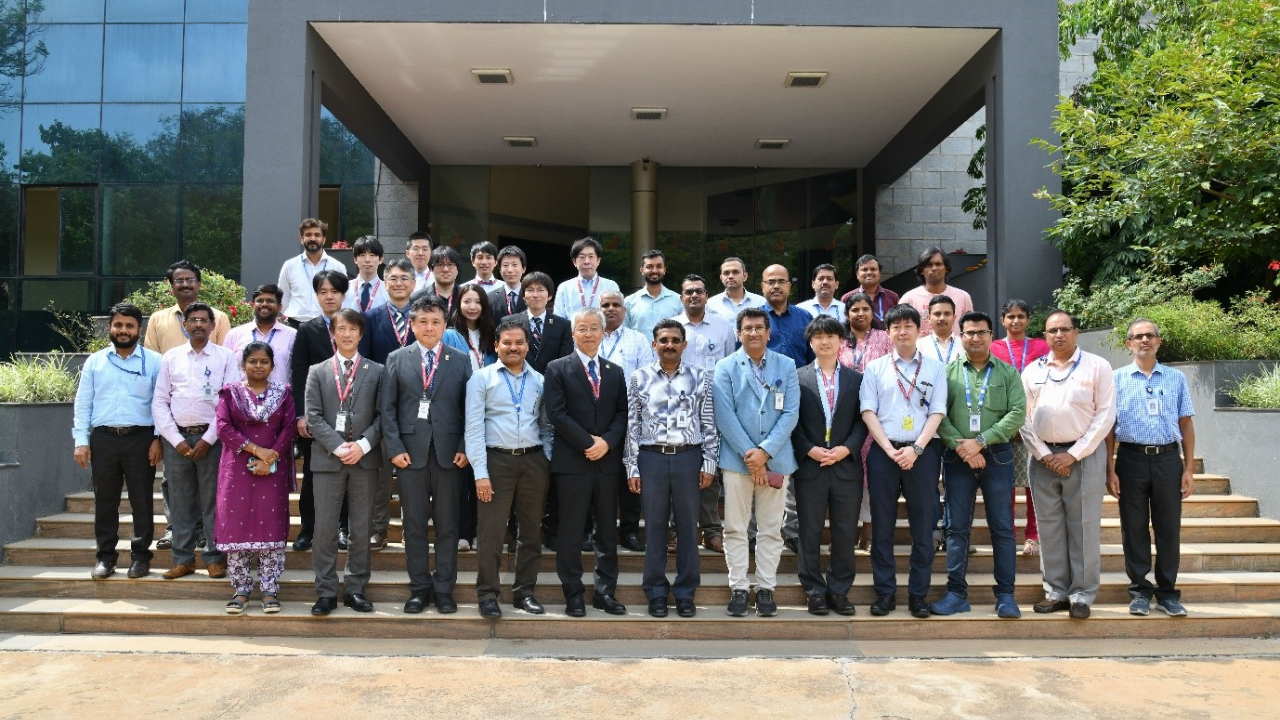
The Chandrayaan-5 mission, fundamentally structured as the Lunar Polar Exploration Mission (LUPEX), represents a shift from independent national prestige projects to a high-density technical partnership between ISRO (India) and JAXA (Japan). This collaboration is not a simple resource-sharing agreement; it is a calculated integration of India’s landing propulsion expertise with Japan’s advanced rover engineering and H3 launch vehicle capacity. The recent assessment of Japanese launch facilities by the ISRO team signals the transition from theoretical mission design to the physical constraints of orbital mechanics and hardware logistics.
The Bilateral Division of Technical Responsibility
The architecture of LUPEX is dictated by a strict bifurcation of hardware deliverables. ISRO is tasked with providing the lander module, leveraging the flight-proven algorithms and structural successes of Chandrayaan-3. JAXA assumes responsibility for the launch vehicle and the rover. This division addresses a critical mass-to-power bottleneck: the lunar south pole requires a heavy rover capable of sustained operation in permanently shadowed regions (PSRs), necessitating a launch vehicle with greater lift capacity than India’s LVM3.
The selection of the H3 launch vehicle as the primary insertion tool defines the mission's envelope. The H3's performance parameters allow for a higher payload fraction, which is essential for the inclusion of deep-drilling equipment. By offloading the launch responsibility to Japan, ISRO can concentrate its mass budget on lander durability and precision touchdown sensors, specifically designed for the rugged, high-latitude terrain of the lunar south pole.
The Physics of Site Preparation and Launch Logistics
The ISRO team’s visit to Japan focuses on the physical integration of the Indian lander with the Japanese H3 rocket. Launch site preparation involves three distinct technical vectors:
- Mechanical Interface Synchronization: The lander must be compatible with the H3 payload fairing and the structural adapter. This requires rigorous vibration testing and alignment of electrical umbilical systems to ensure the lander remains powered and monitored during the ascent phase.
- Cryogenic and Fueling Infrastructure: While the H3 uses liquid hydrogen and liquid oxygen, the Indian lander requires specific hypergolic propellant loading facilities. The site assessment determines if Tanegashima’s existing infrastructure can support the specific hazardous material handling protocols required by the Indian hardware.
- Telemetry and Ground Segment Integration: Data protocols must be standardized between ISRO’s ISTRAC (ISRO Telemetry, Tracking and Command Network) and JAXA’s ground stations to ensure continuous communication during the critical 15-minute terminal descent phase.
Water Ice Prospecting: The Core Objective Function
The strategic value of Chandrayaan-5 lies in its "Ground Truth" mission profile. While orbital sensors have provided high-probability maps of hydrogen signatures, they cannot confirm the physical state or chemical purity of lunar water. LUPEX is designed to solve the uncertainty in the lunar volatiles model.
The mission targets the lunar south pole specifically because the thermal environment within PSRs—where temperatures remain below 100 Kelvin—acts as a cold trap for volatiles. The LUPEX rover will utilize a 1.5-meter drill to extract subsurface samples. These samples are then analyzed in-situ to determine the concentration of water ice and the presence of other volatile compounds such as methane or ammonia.
This data is the primary prerequisite for any future In-Situ Resource Utilization (ISRU) attempts. If the water ice is found to be mixed with high concentrations of regolith at a granular level, the energy requirements for extraction increase exponentially. Chandrayaan-5 provides the empirical data required to calculate the ROI of future lunar refueling stations.
Navigational Constraints in High-Latitude Regions
Landing at the south pole introduces a specific set of geometric and lighting constraints that differ significantly from equatorial missions. The low angle of solar incidence means that shadows are long and persistent. This creates two primary engineering challenges:
- Power Continuity: The rover must utilize an intelligent pathfinding algorithm that maximizes exposure to "peaks of eternal light" while venturing into PSRs for sampling. The battery capacity must be sized to handle the thermal load of the lunar night, which lasts approximately 14 Earth days.
- Hazard Detection and Avoidance (HDA): In the high-contrast lighting of the pole, traditional optical sensors struggle with depth perception and shadow-induced false positives. ISRO’s lander will likely incorporate a multi-modal HDA system using both LiDAR and high-dynamic-range (HDR) cameras to differentiate between a safe landing flat and a crater filled with deep shadow.
The Economics of International Lunar Cooperation
The LUPEX mission serves as a blueprint for reducing the "Cost per Discovery" in deep space exploration. By sharing the development costs, both India and Japan mitigate the financial risk associated with heavy-lift lunar missions.
For India, this mission bridges the gap between the technology demonstration phase of Chandrayaan-3 and the complex sample-return ambitions of Chandrayaan-4. For Japan, it provides a high-stakes test for the H3 rocket, positioning it as a viable competitor in the global heavy-lift market.
Quantitative Risk Factors and Mitigation
The complexity of an inter-agency mission introduces specific failure modes that must be addressed through rigorous systems engineering:
- Software Latency and Compatibility: Commands must be translated across different software architectures. A rigorous "digital twin" simulation environment is used to test lander-rover handoffs before any hardware is integrated.
- Orbital Insertion Precision: The H3 must place the LUPEX stack into a precise Trans-Lunar Injection (TLI) orbit. Any deviation here consumes the lander’s onboard fuel reserves, reducing the margin for error during the final descent.
- Thermal Gradients: The transition from direct sunlight to deep shadow causes extreme thermal stress on the rover's chassis. The use of specialized insulation and Radioisotope Heater Units (RHUs) is a technical necessity, though the latter involves significant regulatory and safety hurdles.
The Strategic Trajectory for 2028
The 2028 timeline is ambitious but synchronized with the global Artemis Accords framework. As the United States and its partners move toward a sustained lunar presence, the data generated by Chandrayaan-5 will dictate the location and design of future habitats.
The move to Japanese soil for launch site assessment is the first physical step in a multi-year integration cycle. The success of this phase depends on the seamless alignment of Indian and Japanese aerospace standards.
Organizations monitoring the lunar economy must view Chandrayaan-5 not as an isolated scientific endeavor, but as the foundational survey mission for the south polar region. The data produced will define the "mineral rights" and resource maps of the 2030s. Stakeholders should prioritize the development of processing technologies that can handle the specific regolith-to-ice ratios expected from the LUPEX findings.