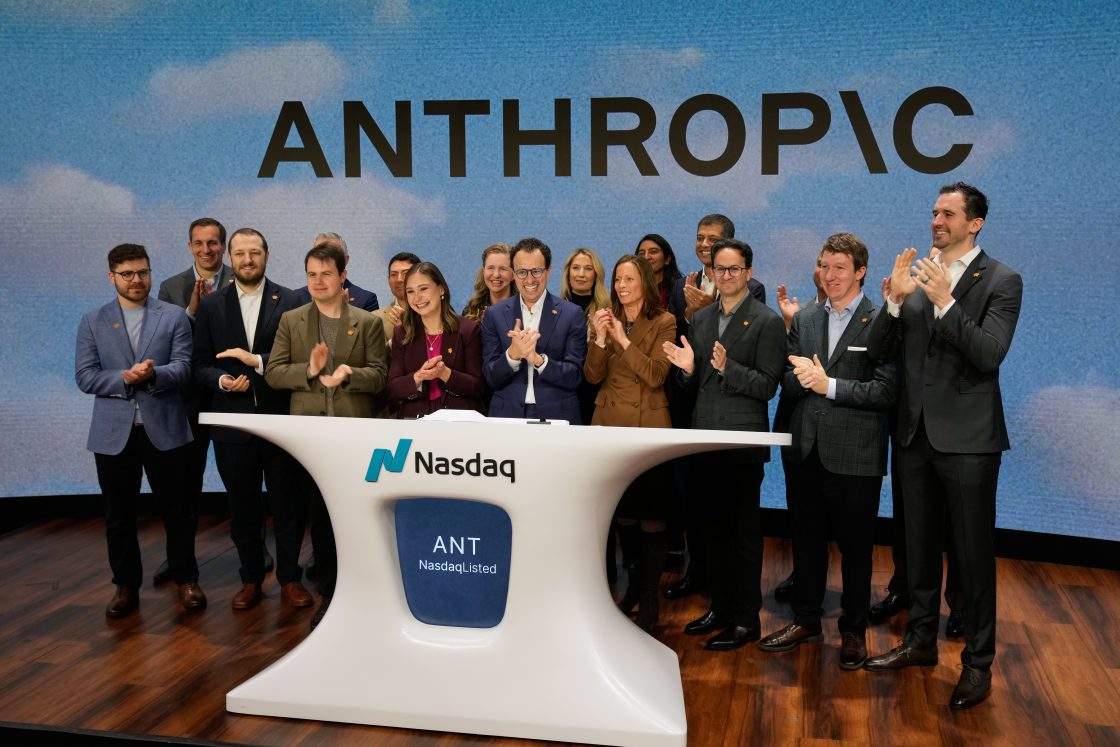
Anthropic's potential public market debut presents a fundamental structural conflict in late-stage technology finance: the tension between institutional equity design and mission-gated corporate governance. While secondary market valuations and private funding rounds evaluate AI labs using software-as-a-service multiples, Anthropic’s capital stack and corporate charter introduce structural complexity that conventional capital markets have rarely priced. Understanding the mechanics of an Anthropic initial public offering requires evaluating three structural pillars: revenue-to-compute efficiency ratios, cloud-provider equity circularity, and the governance power embedded in its Long-Term Benefit Trust—the mechanism often colloquially referenced as holding controlling veto authority, or the "god share."
The Financial Architecture: Enterprise AI Revenue vs. Compute Liabilities
Evaluating Anthropic's financial readiness for a public listing begins with decoupling top-line ARR growth from the underlying gross margin profiles dictated by compute infrastructure commitments. Enterprise AI developers operate under a cost structure fundamentally distinct from legacy cloud software providers.
Compute-Capital Circularity
A major portion of Anthropic's historical balance sheet expansion stems from hyperscaler commitments, primarily Amazon and Google. These arrangements combine equity investments with commercial agreements that obligate Anthropic to consume specific volumes of compute infrastructure, such as AWS Trainium/Inferentia chips and Google TPUs.
In classic financial analysis, this creates a circular capital flow:
- Cash inflows arrive from strategic investors categorized as financing cash flow.
- Capital exits to the same entities as operational expenditure for compute training and inference workloads.
- Gross margins are constrained by token generation costs, preventing the traditional 70-80% software gross margin expansion at scale.
For prospective public market investors, the primary valuation metric cannot simply be forward ARR. The critical variable is net compute margin (NCM), defined as total revenue minus direct hardware reservation costs, API serving overhead, and data pipeline licensing fees.
Enterprise Concentration and Churn Vulnerabilities
Anthropic's revenue distribution is skewed toward enterprise API integrations and developer workloads via platforms like Amazon Bedrock and Google Cloud Vertex AI. While indirect distribution reduces customer acquisition cost (CAC), it introduces a structural margin haircut and abstracts end-customer ownership.
- Direct API Sales: Delivers higher gross margin per token but requires internal developer support and dedicated sales infrastructure.
- Hyperscaler Managed Services: Drives faster volume growth and enterprise distribution, but reduces unit economics through revenue-share agreements and places customer relationship telemetry behind partner boundaries.
Without clear visibility into token retention dynamics—how customer compute demand holds up across model generation updates—public analysts will apply a higher discount rate to Anthropic's forward cash flows relative to traditional enterprise SaaS platforms.
The Governance Paradox: Deconstructing the Long-Term Benefit Trust
The defining structural anomaly of Anthropic's corporate structure is its identity as a Public Benefit Corporation (PBC) guided by the Long-Term Benefit Trust (LTBT). Public markets historically struggle to price entities where economic equity is completely decoupled from governance control.
Operational Mechanics of the Trust
The Long-Term Benefit Trust consists of an independent body of trustees holding no material financial interest in Anthropic. Its charter grants it the ultimate power to appoint and remove a controlling share of the board of directors. This structure creates an explicit dual-fiduciary objective:
- Economic Fiduciary Duty: Maximizing shareholder value for common and preferred equity holders.
- Public Benefit Duty: Ensuring the development of artificial general intelligence aligns with safety, security, and broad societal welfare.
In a traditional public company, the board of directors answers directly to common shareholders through annual proxy voting. In Anthropic’s structure, even if institutional public investors acquire a majority of economic interest, they cannot vote out the trustees or override board appointments tied to safety mandates.
       +-------------------------------------------------+
       |           Long-Term Benefit Trust               |
       |  (Independent Trustees / Zero Financial Interest)|
       +------------------------+------------------------+
                                |
                                | Appoints / Removes
                                v
       +-------------------------------------------------+
       |               Board of Directors                |
       |     (Dual Fiduciary: Value + Public Benefit)    |
       +------------------------+------------------------+
                                |
                   Directs Management & Operations
                                |
       +------------------------v------------------------+
       |               Anthropic, PBC                    |
       +------------------------+------------------------+
                                |
           +--------------------+--------------------+
           |                                         |
           v                                         v
+----------------------+                 +----------------------+
| Public Shareholders  |                 | Strategic Partners   |
| (Economic Capital)   |                 | (AWS, Google, VCs)   |
+----------------------+                 +----------------------+
The "God Share" Fallacy and Governance Reality
The term "god share" refers to the trust’s structural ability to block corporate actions that prioritize short-term revenue generation over safety protocols or systemic risk mitigation. Rather than representing a single special share of stock, it is an architectural governance rule written into the company's certificate of incorporation.
This creates specific public market frictions:
- M&A Impossibility: Unsolicited takeovers or strategic acquisitions by tech conglomerates are functionally impossible without LTBT consent, eliminating the acquisition premium typically priced into mid-cap growth equities.
- Capital Allocation Constraints: If the LTBT determines that training a next-generation model presents unquantifiable safety hazards, it can direct management to pause deployment, directly impacting quarterly revenue trajectories and operational forecasts.
- Litigation Risk: Disgruntled public shareholders attempting derivative lawsuits over missed earnings targets will face higher legal hurdles due to the statutory protections granted to Delaware Public Benefit Corporations balancing dual goals.
Valuation Methodologies for Frontier AI Labs
To establish a realistic public valuation range for Anthropic, traditional price-to-earnings ratios must be discarded in favor of model-adjusted compute metrics. Analysts will evaluate the business using three primary ratios:
Token Revenue Efficiency Ratio (TRER)
$$\text{TRER} = \frac{\text{Annualized Run-Rate Revenue}}{\text{Total Capital Expended on Training Compute}}$$
This ratio isolates the commercial yield generated per dollar of capital sunk into model development. A rising TRER indicates that model capability improvements are translating into immediate enterprise monetization, whereas a declining TRER signals diminishing marginal returns on frontier model scale.
The Hyperscaler Discount Rate
Because Anthropic's equity stack contains significant strategic capital from compute providers, public markets will price in a liquidity and concentration discount. If Amazon or Google holds non-voting equity alongside preferential infrastructure contracts, public investors must account for potential transfer pricing conflicts. The valuation model must apply a 15% to 25% structural discount to account for:
- Margin compression caused by mandatory compute purchasing commitments.
- Potential channel conflict if cloud partners deploy competing proprietary or open-weights models alongside Anthropic products.
Strategic Roadmap for Public Market Execution
For Anthropic to successfully execute an IPO without triggering a post-listing liquidity contraction, management must systematically resolve three operational friction points prior to filing an S-1.
First, the company must establish long-term price stability on fundamental compute supply. Transitioning from fixed-term infrastructure commitments to diversified, multi-provider capacity leases will decouple gross margins from single-vendor pricing power.
Second, Anthropic must formalize clear operational triggers for the Long-Term Benefit Trust. Capital markets can price operational risk, but they cannot price arbitrary governance interventions. Publishing an explicit regulatory and safety framework detailing the precise conditions under which the LTBT would intervene in commercial operations establishes an auditable risk surface for institutional underwriters.
Third, the company must drive direct enterprise contract penetration. Shifting the revenue mix toward multi-year direct enterprise commitments reduces dependence on cloud-marketplace aggregators, insulating net expansion rates and establishing standard SaaS-like visibility into recurring cash flow.