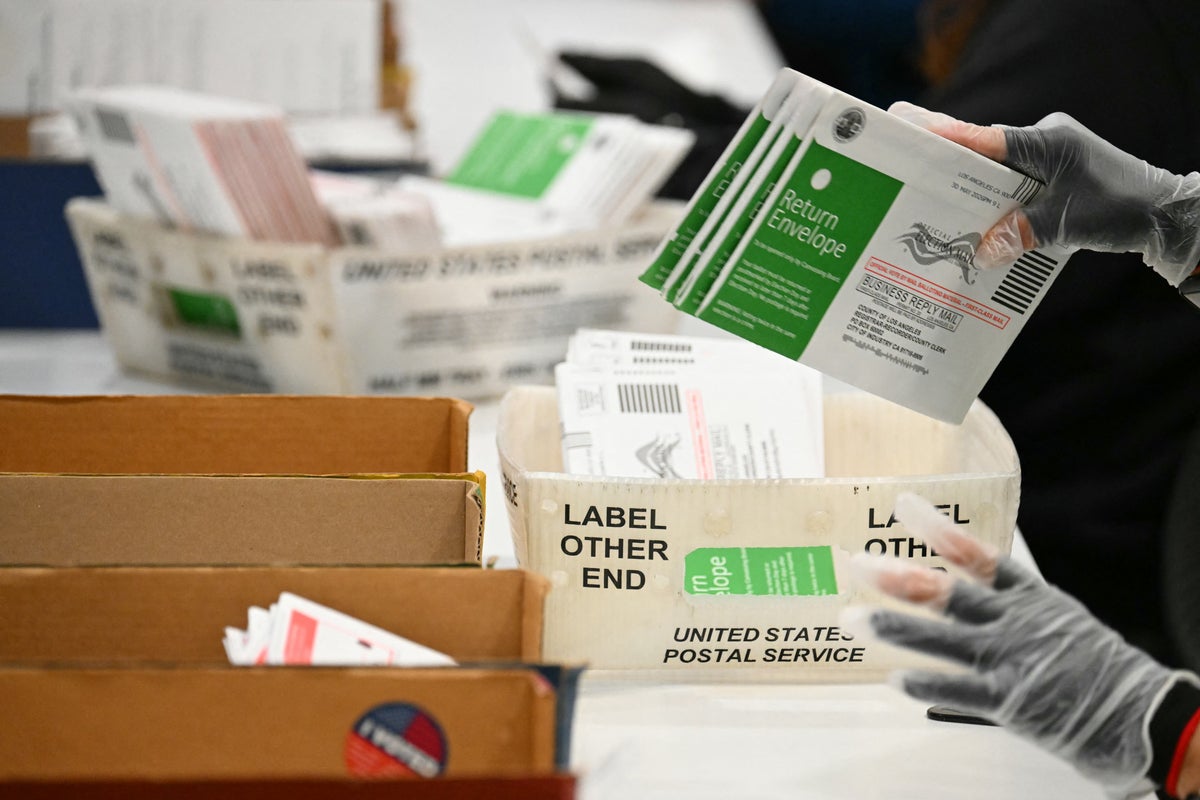
Electoral integrity rests on a fragile synchronization between administrative timelines and postal network throughput. When state deadlines mandate that a vote must arrive by Election Day, postal transit times cease to be a matter of administrative convenience and become a hard legal boundary. The systemic rejection of mail in ballots arriving after statutory cutoffs is not an anomaly of bad weather or isolated postal error; it is the predictable output of a structural mismatch between voter behavior, processing capacity, and mail delivery speeds.
Understanding why key states see thousands of ballots discarded requires breaking down the operational pipeline into distinct failure nodes. The journey from a voter marking a piece of paper to that ballot entering the official tally involves three independent systems: the postal collection infrastructure, the state signature verification and intake process, and the legal framework governing receipt versus postmark dates. When these systems fall out of phase, voter disenfranchisement scales predictably.
The Operational Bottleneck of Intake and Verification
The first major point of friction occurs the moment a completed ballot enters a local election office. Election administration is decentralized, hyper-localized, and notoriously underfunded for surge events. When postal delivery clusters heavily in the final seventy-two hours before a deadline, intake operations face a sudden velocity shock.
Every envelope requires a manual or semi-automated verification sequence. Staff must cross-reference voter signatures against registration databases, log barcode identifiers to prevent double voting, and sort the batches for extraction. This verification queue functions as a single-server bottleneck.
- The Queue Length Variable: As daily intake volume exceeds processing capacity, a backlog forms. Ballots sitting in unopened mail trays on election night are functionally dead if the state requires physical receipt by that deadline.
- The Cure Period Paradox: Many jurisdictions offer a signature cure period allowing voters to fix mismatched or missing signatures. However, if the ballot arrives on or immediately before Election Day, the notification and cure window often extends past the final legal certification date, rendering the correction mechanism useless.
State laws governing this phase create stark geographic disparities. Jurisdictions with receipt-deadline rules force the entire burden of transit efficiency onto the voter, whereas postmark-deadline states absorb the postal system's latency by recognizing the date of mailing.
The Postal Transit Variable and Delivery Latency
Postal networks operate on deterministic routing schedules that are optimized for commercial efficiency rather than constitutional access. First Class Mail standards guarantee delivery within two to five days, but this is an average, not a hard SLA for individual election mail.
Voters routinely misjudge the required lead time. Behavioral data shows a persistent tendency for citizens to request or return mail ballots during the final week of an election cycle. This behavior collides with the physical reality of mail processing plants.
- Collection Lags: A ballot dropped in a blue collection box late on a Saturday may not be postmarked until Monday evening, burning a full day of transit before the postal network even initiates long-haul transport.
- Interstate Routing Anomalies: Local election mail does not always travel point-to-point. Depending on regional sorting facility consolidation, a ballot mailed within the same county may be routed through a regional processing hub three states away before returning for local delivery.
- The Weekend Dead Zone: Postal operations scale back significantly on Sundays. Ballots mailed on a Friday afternoon often sit stationary through the weekend, collapsing the available window for a Tuesday deadline to a mere two business days.
The United States Postal Service operates special handling procedures for election mail, including designated drop-offs and expedited sorting. Despite these internal protocols, human error at the local post office level frequently results in election mail being mixed with standard commercial flats, bypassing specialized postmarking altogether.
Legal Divergence Across State Lines
The constitutional authority to run elections under the Elections Clause of the United States Constitution leaves time, place, and manner up to individual states. This fragmentation produces two entirely distinct operational realities for voters depending entirely on geographic jurisdiction.
Receipt-deadline states enforce a strict physical custody rule. The paper must be inside the election office doors by the close of polls on Election Day. Under this rule, a ballot postmarked a week early that gets delayed by a sorting facility error is legally voided through no fault of the voter.
Postmark-deadline states decouple transit time from voter eligibility. As long as the ballot bears a valid postal cancellation mark by Election Day and arrives within a specified grace period (ranging from three to fourteen days), it enters the official count.
- The Litigated Gray Area: States that attempt to bridge this gap by accepting ballots postmarked by Election Day but arriving days later frequently face legal challenges over separation of powers. State legislatures that set explicit statutory receipt deadlines often see courts or executive boards clash over emergency extensions.
- The Information Asymmetry: Voters rarely understand the precise legal definitions governing their state. Campaign messaging encouraging voters to "mail it in by Tuesday" conflates the act of mailing with the legal requirement of receipt, driving up late-arrival rates among uninformed populations.
The Cost Function of Voter Disenfranchisement
Discarded late ballots represent a quantifiable failure of democratic infrastructure. The cost function is distributed unevenly across demographic lines. Younger voters, low-income workers with inflexible schedules, and rural voters dependent on distant post offices experience higher rates of late-arriving mail.
When a ballot is rejected for arriving late, the voter receives minimal recourse. Unlike provisional ballots cast in person where a poll worker can explain the defect, a late mail ballot simply vanishes into an administrative exception log.
Mitigating this loss requires either a complete harmonization of state laws toward postmark-based eligibility or a massive public education campaign designed to shift behavioral norms toward early return. Until election administrators align processing capacity with postal realities, the late-arrival exclusion will remain a structural feature of mail-in voting that systematically filters out votes cast at the margins of the timeline.
Transition municipal election offices to digital receipt tracking dashboards that notify voters the exact hour their ballot clears postal custody, while simultaneously petitioning state legislatures to standardize postmark grace periods across all federal cycles.


