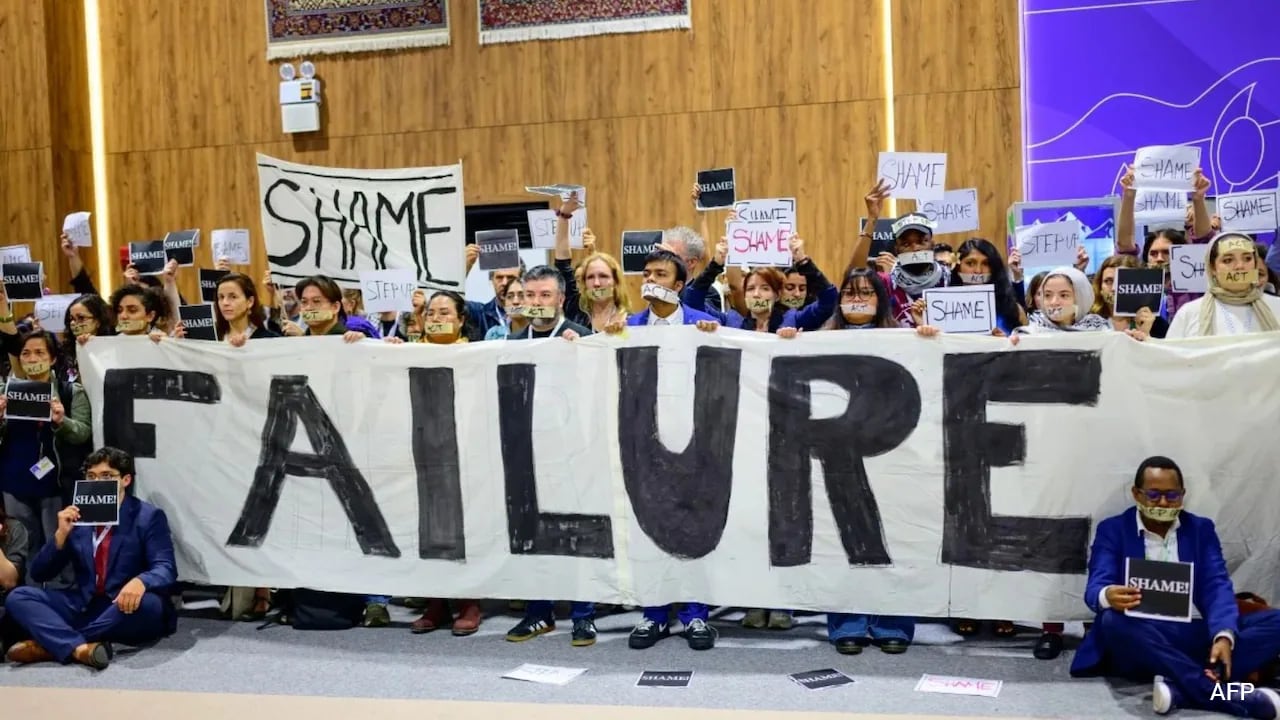
International climate summits routinely fail to produce binding, actionable decarbonization mandates because the United Nations Framework Convention on Climate Change (UNFCCC) operates under a consensus-based voting architecture that grants effective veto power to petrostates and high-emitting economies. When an annual Conference of the Parties (COP)—such as the prolonged deadlock witnessed at COP25 in Madrid, widely considered the longest climate summit in history—extends past its scheduled deadline without resolving core mechanisms like Article 6 carbon markets, the failure is not an anomaly of bad diplomacy. It is the predictable equilibrium of a multi-party prisoner's dilemma where short-term domestic economic survival overrides long-term collective atmospheric stability.
The Structural Defects of UNFCCC Decision-Making
To understand why marathon climate negotiations collapse into watered-down text, analysts must examine the procedural rules governing the COP process rather than the rhetoric of individual delegates. The UNFCCC never formally adopted Rule 42 of its draft rules of procedure, which would have allowed decisions by a two-thirds majority vote when consensus failed. Because Rule 42 remains unratified, the default operating mechanism is consensus.
In diplomatic practice, consensus does not require active unanimity; it requires the absence of formal, vocal objection. However, this threshold transforms every single participating nation—nearly 200 parties—into a potential chokepoint.
The Veto Dynamics of Asymmetric Stakes
The incentives among negotiating blocs are fundamentally misaligned, creating an asymmetric payoff matrix:
- Rentier Petrostates: Economies whose fiscal solvency depends directly on hydrocarbon extraction face immediate, quantifiable revenue destruction from aggressive fossil fuel phase-out language. For these actors, delaying consensus by five years preserves billions in state revenue, creating a rational incentive to obstruct procedural progress.
- Developing Industrializers: Nations reliant on coal and cheap baseload power to lift populations out of poverty view binding emissions caps as an existential threat to domestic stability and economic sovereignty.
- Climate-Vulnerable Nations: Small Island Developing States (SIDS) and Least Developed Countries (LDCs) face physical inundation and agricultural collapse. Yet, their economic weight within the global trading system provides minimal leverage to compel compliance from major emitters.
- Developed Economies: Historical emitters face domestic electoral constraints that penalize politicians who commit taxpayer capital to international climate finance without verifiable, reciprocal emissions reductions from major developing economies.
When these four blocs enter a closed negotiating room, the lowest common denominator dictates the final text. Any ambitious clause regarding fossil fuel phase-outs or strict carbon accounting is systematically diluted until the most recalcitrant party withdraws its objection. The summit clock runs over not because negotiators are unprepared, but because time exhaustion is a deliberate tactical weapon used by obstructionist delegations to force exhausted counterparts into accepting weak compromises.
The Three Pillars of Negotiation Breakdown
Beyond procedural voting rules, the recurring collapse of extended climate summits stems from three structural bottlenecks: carbon market accounting, climate finance liability, and compliance enforcement.
1. The Article 6 Accounting Arbitrage
A primary driver of prolonged deadlocks—exemplified by the 44-hour overtime collapse at COP25 in Madrid and recurring friction in subsequent summits—is the operationalization of Article 6 of the Paris Agreement. Article 6 governs international carbon markets, allowing countries to trade emissions reductions to meet their Nationally Determined Contributions (NDCs).
The technical dispute centers on corresponding adjustments. Without strict double-entry bookkeeping, a host nation could sell a carbon credit to a buyer nation while simultaneously counting that same emissions reduction toward its own domestic climate targets. This double-counting inflates global emissions reductions on paper while atmospheric carbon concentrations continue to rise.
Furthermore, developing nations possessing vast stockpiles of legacy carbon credits from the Kyoto Protocol's Clean Development Mechanism (CDM) demand the right to transition these older, often low-integrity credits into the modern Paris Agreement market. Accepting legacy credits floods the market with cheap supply, crashing the price of carbon and eliminating the financial incentive for new, capital-intensive decarbonization projects. The resulting standoff pits environmental integrity against liquidity, paralyzing technical working groups for days.
2. The Climate Finance Trust Deficit
Financial transfers from developed to developing nations represent the second major fracture point. In 2009 at COP15, wealthy nations pledged to mobilize $100 billion annually by 2020 to assist developing countries with mitigation and adaptation. The failure to meet that target on schedule permanently degraded institutional trust.
The analytical friction lies in the definition of "mobilized finance." Donor nations routinely count non-concessional loans, blended private capital, and repurposed development aid toward their totals. Recipient nations argue that debt-creating instruments exacerbate their fiscal distress rather than providing genuine adaptation support. When negotiations shift toward establishing a New Collective Quantified Goal (NCQG) or funding Loss and Damage mechanisms, developing blocs refuse to sign off on ambitious mitigation language until grant-based, public-sector capital flows are legally guaranteed. Because finance ministries in developed democracies cannot bind future parliaments to multi-decade fiscal transfers, negotiators offer vague pledges that developing blocs reject as non-bankable.
3. The Enforcement Vacuum of Nationally Determined Contributions
The Paris Agreement replaced the top-down, legally binding emissions targets of the Kyoto Protocol with a bottom-up architecture of voluntary NDCs. This design successfully maximized participation, bringing nearly every nation into the accord, but it sacrificed enforceability.
Under the current framework, the global stocktake assesses collective progress every five years, revealing a persistent gap between pledged reductions and the trajectory required to limit warming to 1.5°C. Yet, the UNFCCC possesses no punitive mechanism—no trade tariffs, no financial penalties, and no diplomatic sanctions—to penalize a country that misses its NDC or submits an inadequate update. When high-emitting nations miss targets without consequence, the rational response for competing economies is to moderate their own decarbonization spending to avoid industrial competitiveness losses.
Operationalizing the Cost of Delay
To measure the true cost of a failed or prolonged COP, decision-makers must look beyond diplomatic embarrassment and evaluate the capital allocation paralysis it induces in the private sector.
Institutional investors, sovereign wealth funds, and multinational energy corporations rely on regulatory certainty to price long-term infrastructure assets. A power plant, steel mill, or green hydrogen facility operates on a 20-to-40-year capital expenditure horizon. When COP negotiations fail to establish clear rules for cross-border carbon trading or fossil fuel phase-down timelines, the risk premium on clean energy capital rises.
This regulatory ambiguity creates a capital misallocation loop:
- Delayed Final Investment Decisions (FIDs): Developers hold back capital on grid-scale storage and industrial electrification while waiting for clarity on carbon credit monetization and state subsidy frameworks.
- Stranded Asset Accumulation: Without binding phase-out schedules, state-owned enterprises and private operators continue financing fossil fuel extraction infrastructure, locking in decades of future emissions.
- Fragmented Regional Regulation: In the absence of a functional global carbon market under the UNFCCC, major trading blocs implement unilateral mechanisms, such as the European Union's Carbon Border Adjustment Mechanism (CBAM). This fragments global trade, triggers retaliatory tariffs, and shifts climate diplomacy from cooperative multilateralism to protectionist trade friction.
Structural Limitations of the Multilateral Model
Critics often propose reforming the UN climate process by abolishing consensus rules or shrinking the summit footprint. While conceptually sound, these reforms face severe operational barriers.
Eliminating consensus requires consensus. The very nations that benefit from the current veto structure will block any procedural amendment designed to strip them of that power. Attempting to bypass the UNFCCC entirely by moving negotiations exclusively to smaller forums like the G20 or G7 solves the scale problem—since G20 nations account for roughly 80% of global emissions—but destroys global legitimacy. Excluding the 170+ nations most vulnerable to climate impacts strips the process of moral authority and invites widespread non-cooperation on global supply chains, critical mineral extraction, and biodiversity preservation.
Similarly, restricting corporate and fossil fuel lobbyists from attending COP summits does not alter the underlying geopolitics. National delegations from hydrocarbon-exporting states represent the exact same economic interests as their state-owned oil companies; removing corporate badges from the venue leaves the state-level veto intact.
Capitalizing on Bilateral Plurilateralism
Waiting for the UNFCCC consensus mechanism to deliver binding, rapid decarbonization is a failing strategy for both policymakers and corporate strategists. The multilateral process will continue to function primarily as a global transparency registry, a forum for scientific consensus-building, and a venue for incremental norm-setting—not as an engine of rapid industrial enforcement.
Organizations and governments seeking actual emissions reductions and capital deployment must bypass the consensus bottleneck by shifting focus toward climate clubs and bilateral plurilateral agreements.
- Deploy Sectoral Decarbonization Alliances: Instead of negotiating economy-wide treaties across 198 countries, coalitions of major producers and consumers should establish binding standards for specific high-emitting sectors—such as green steel, maritime shipping, and cement—linking market access directly to verified carbon intensity.
- Execute Bilateral Article 6.2 Frameworks: Rather than waiting for centralized UN carbon market infrastructure (Article 6.4) to reach full liquidity, capital-rich nations must execute direct, bilateral Article 6.2 cooperative agreements with host nations, establishing proprietary, high-integrity verification standards and corresponding adjustments outside the plenary deadlock.
- Price Trade-Linked Carbon Adjustments: Corporations must model capital expenditures assuming the proliferation of unilateral border carbon taxes rather than a unified global carbon price. Supply chains must be audited and regionalized to insulate margins from impending regulatory fragmentation across major trading blocs.