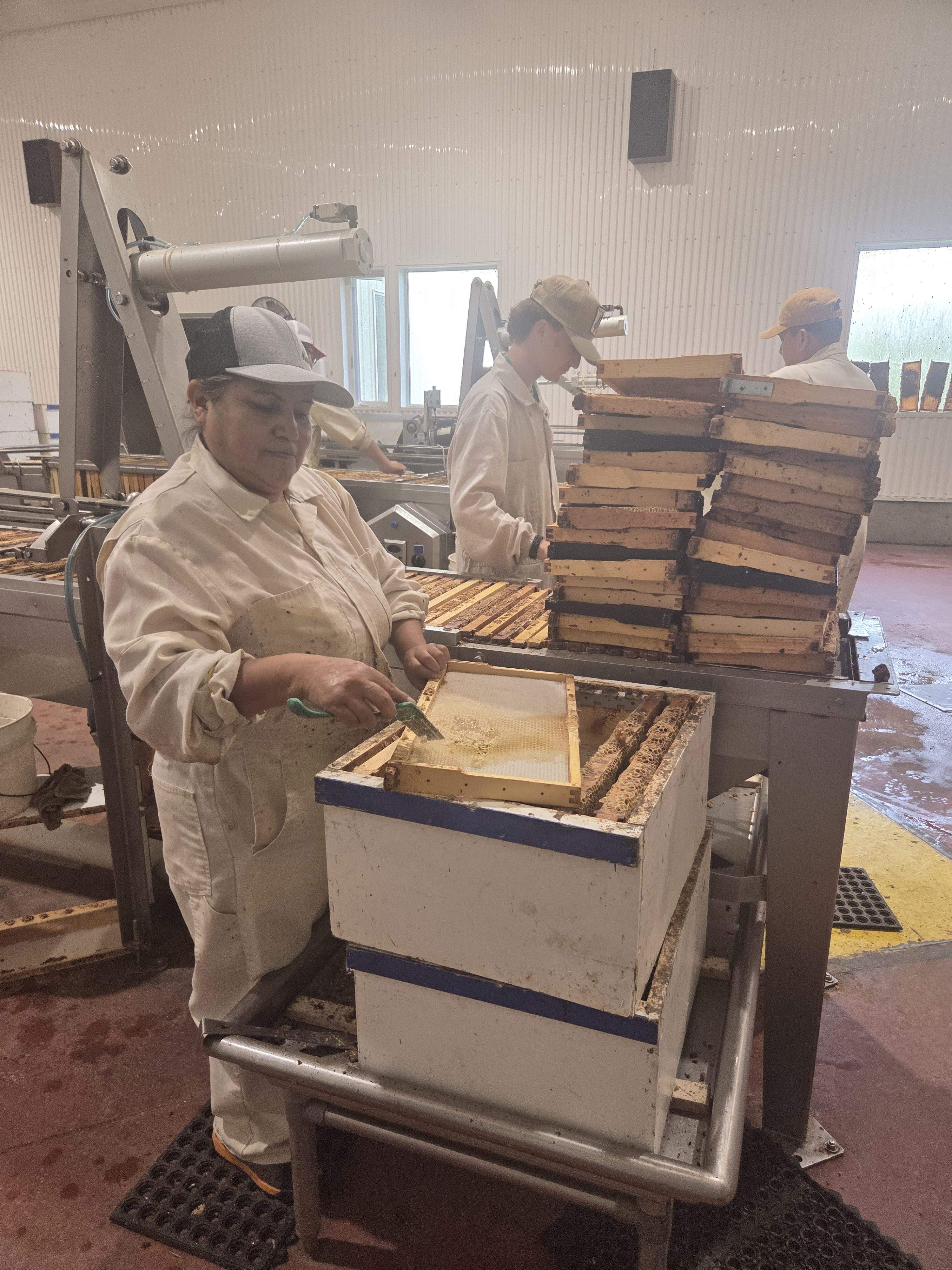
Geopolitical trade disputes rarely remain confined to heavy industrial sectors. When diplomatic frictions fracture established trade agreements, commodities lacking macro-political visibility absorb disproportionate collateral damage. The imposition of a fifty percent tariff on Canadian natural honey exports by the United States government represents a structural disruption for primary agricultural producers, particularly in Saskatchewan, where export velocity relies heavily on frictionless cross-border logistics. Understanding the mechanics of this shock requires moving past generic anxieties about trade friction and instead examining the specific cost functions, supply chain rigidities, and market displacement vectors now confronting primary producers.
The Exposure Vector and Export Dependency
Saskatchewan honey producers operate within a high-volume, export-dependent economic framework. While domestic consumption absorbs the baseline majority of Canadian production, individual commercial operations depend on the American market to clear between fifteen and twenty percent of their total inventory volume. This export allocation is not merely a supplementary revenue stream; it functions as the structural release valve preventing domestic oversupply and price depression. If you liked this piece, you might want to read: this related article.
When a fifty percent tariff is applied, the mathematics of cross-border trade shift instantly. The landed cost of Canadian honey in the United States rises above competitive threshold limits, effectively pricing domestic product out of the hands of American packers and industrial buyers. Because global honey markets are commoditized and highly sensitive to marginal price fluctuations, American buyers face minimal friction in redirecting their purchasing orders to alternative international suppliers, such as Argentina or various Asian exporters. The tariff does not merely reduce profit margins; it creates an absolute barrier to entry that severs established distributor relationships built over decades.
Input Cost Asymmetry and Capital Drag
The vulnerability of Saskatchewan beekeepers extends beyond finished-goods export exposure to encompass critical supply chain dependencies. Commercial scale apiculture requires intensive capital investment in operational equipment, including plastic honey frame foundations, hive bodies, extractors, and specialized processing machinery. A significant proportion of these manufactured inputs originate within the United States. For another perspective on this development, refer to the recent update from MarketWatch.
This dynamic creates an acute cost-price squeeze. While primary producers face an immediate loss of their American export channels and the looming threat of domestic price stagnation driven by redirected inventory, their capital expenditure baseline remains exposed to imported inflation. Repair components, replacement hardware, and specialized apicultural gear sourced south of the border are subject to cost pressures, shipping delays, and potential retaliatory tariff fallout. The cost function of honey production thus absorbs shocks from both ends: output pricing is severely compressed by lost export volume, while operational expenditures remain rigid or inflate due to cross-border frictions.
The Substitution Fallacy and Domestic Absorption Limits
Industry advocacy frequently points to domestic market expansion as an immediate structural remedy for lost export volume. The logic assumes that if Canadian households marginally increase their per capita consumption—such as purchasing an additional container of honey per season—the displaced export volume will be fully absorbed internally.
From a microeconomic perspective, this substitution model oversimplifies consumer behavior and purchasing power constraints. Domestic consumption cannot be treated as an elastic reservoir capable of absorbing commercial surplus on demand. Honey is a discretionary grocery item with inelastic short-term demand curves. Compounding the challenge, macroeconomic trade friction often coincides with broader inflationary pressures that reduce disposable household income. Relying on domestic goodwill or marketing campaigns to offset a major export deficit ignores the fundamental reality that consumer purchasing decisions are governed by utility and price point, not patriotic inventory management.
Diverting Capital to Alternative International Markets
For commercial operations seeking to replace lost American market share, diversification toward alternative international destinations such as Japan, the European Union, or Southeast Asian markets appears logically sound. However, global agricultural trade operates on strict regulatory compliance, established supply chains, and long-term contractual commitments.
Establishing a new export corridor requires navigating complex phytosanitary standards, securing container shipping logistics, and building brand trust with foreign importers. These are multi-year developmental projects, not short-term tactical pivots. A producer facing immediate inventory accumulation cannot seamlessly redirect multi-ton lots of bulk honey to overseas markets without incurring severe discounting penalties. The time lag between losing an established export destination and successfully onboarding a new international buyer creates a severe cash flow bottleneck, forcing producers to choose between holding inventory at high storage cost or dumping product into a depressed domestic spot market.
Structural Mitigation Through Biological Asset Management
Faced with external economic shocks that defy short-term diplomatic resolution, operational resilience shifts away from commercial maneuvering toward biological asset management. The foundational unit of commercial apiculture is the health and productivity of the hive itself.
Capital and managerial focus must reallocate entirely toward internal optimization. Maintaining low mortality rates over winter, minimizing disease vectors such as varroa mites, and maximizing honey yield per hive through rigorous genetic selection and feeding protocols represent the only variables entirely within the producer's operational control. By fortifying the biological foundation of the enterprise during a period of macro-level trade uncertainty, producers insulate their baseline productive capacity against external shocks, ensuring that when regulatory frameworks eventually stabilize or new trade corridors open, the core asset base remains intact and uncompromised.

/vidio-web-prod-video/uploads/video/image/1981791/eps-02-pertemuan-chen-jianghe-dengan-yuzhu-8cf85a.jpg)
