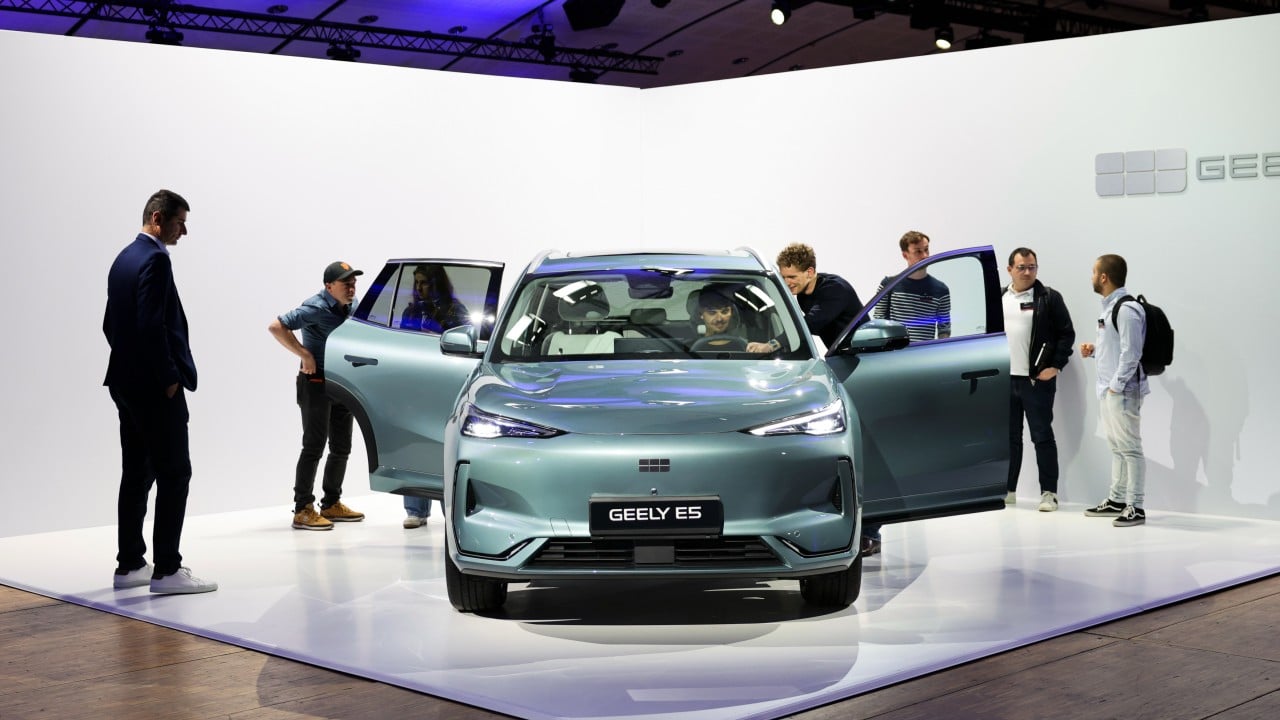
The recent decline in profitability across Geely, Chery, and BYD signals a fundamental shift from a growth-stage market to a zero-sum Darwinian environment. While superficial analysis blames "reduced incentives," the root cause is a systemic collapse in the price-to-value ratio driven by overcapacity and the expiration of the New Energy Vehicle (NEV) Purchase Tax Exemption buffers. Manufacturers are no longer fighting for new customers; they are cannibalizing their own margins to defend market share in a saturated domestic theater.
The Triple Constraint of Chinese EV Profitability
The profitability of a Chinese OEM is governed by three primary variables: the Cost of Customer Acquisition (CAC), the Unit Manufacturing Cost (UMC), and the State Subsidy Delta. When the Chinese government began tapering purchase incentives, it did not merely make cars more expensive for the consumer; it forcibly compressed the manufacturer's net take-home per unit.
This compression is best understood through the Price War Feedback Loop:
- Incentive Withdrawal: As direct subsidies vanish, the effective price to the consumer rises.
- Inventory Accumulation: Consumers, sensitive to price changes, delay purchases, leading to bloated dealer inventories.
- Aggressive Discounting: To maintain factory utilization rates (which must stay above 80% to remain viable), OEMs issue "limited time" discounts.
- Margin Evaporation: These discounts frequently exceed the value of the original lost subsidy, resulting in a lower net margin than during the high-subsidy era.
Vertical Integration as a Double-Edged Sword
BYD and Geely have historically relied on vertical integration to insulate themselves from supply chain shocks. By controlling the battery chemistry (FinDreams) and power electronics, these firms theoretically capture the margin usually reserved for Tier-1 suppliers. However, in a period of aggressive price cutting, this integration creates a Fixed Cost Trap.
When demand softens, a vertically integrated company cannot simply reduce orders from a third-party supplier to save costs. They own the factories, the lithium processing plants, and the assembly lines. Their fixed costs remain static while the Average Selling Price (ASP) of their vehicles drops. This creates a scenario where high volume is the only path to survival, yet achieving that volume requires price cuts that negate the benefits of the scale.
The current "profit slide" is the mathematical result of internalizing the entire value chain during a deflationary cycle. BYD’s massive scale allows it to survive on thinner per-unit margins, but Geely and Chery, with less efficient vertical stacks, face a more immediate threat to their R&D budgets.
The Infrastructure of Incentives and the Credit Crunch
The Chinese automotive market has been propped up by a complex web of local government incentives and central mandates. The "Reduced Incentives" cited in recent reports are not just cash-on-the-hood rebates. They include:
- Green Plate Quotas: In Tier-1 cities like Shanghai and Beijing, the value of a "free" EV license plate often exceeds $10,000. Any tightening of these quotas is a direct hit to the perceived value proposition of an EV.
- Low-Interest Financing: State-backed banks have historically offered sub-market rates for NEV purchases. As credit tightens and the risk profiles of consumers shift, these financing "hidden subsidies" are disappearing.
Without these pillars, the Chinese consumer treats EVs as a commodity rather than a lifestyle upgrade. This leads to Commodity Parity, where the only differentiator is price, forcing a race to the bottom that favors only the most capitalized players.
Technical Debt and the Software-Defined Vehicle Pivot
A significant, yet overlooked, contributor to the profit slide is the rising cost of software maintenance and "Over-the-Air" (OTA) update expectations. Unlike traditional Internal Combustion Engine (ICE) vehicles, an EV is a depreciating hardware asset paired with an appreciating software requirement.
OEMs are finding that the cost of maintaining autonomous driving suites and in-cabin entertainment systems is a recurring expense that was not fully amortized into the original sale price. This creates a Post-Sale Liability. As Geely and Chery attempt to compete with "Smart" brands like Xiaomi or Huawei (AITO), they are forced to increase R&D spending on software while simultaneously cutting the prices of the hardware that funds that R&D.
The Export Paradox
To counter domestic margin erosion, Chinese OEMs are pivoting aggressively toward Europe, Southeast Asia, and Latin America. However, this strategy introduces three new cost variables that prevent immediate profit recovery:
- Logistics and Tariffs: Shipping a vehicle from Ningbo to Zeebrugge adds significant "landed cost" that domestic sales don't incur. Anti-subsidy probes in the EU threaten to add 20-35% duties, effectively neutralizing the manufacturing cost advantage.
- Localization Requirements: A BYD Atto 3 sold in Australia or Germany requires different safety certifications, UI localization, and dealer network support compared to the Chinese version. These are non-recurring engineering (NRE) costs that delay profitability in new markets.
- Brand Equity Deficit: Chinese brands must spend heavily on marketing to overcome the legacy perceptions of "budget" manufacturing. This drives the CAC in foreign markets far higher than the domestic baseline.
Strategic Pivot: The Hybrid Hedge
While BYD has leaned heavily into Plug-in Hybrids (PHEVs) and Extended Range Electric Vehicles (EREVs), Geely and Chery have been slower to optimize their hybrid portfolios for the mid-range market. The current profit slide suggests that the market is rejecting "Pure EV" at current price points without subsidies, but remains receptive to hybrids that eliminate range anxiety and require smaller, cheaper battery packs.
The pivot toward EREVs is a margin-preservation strategy. By using a smaller battery and a simple ICE generator, OEMs can reduce the UMC by 15-20% while maintaining a high ASP. Chery’s ability to recover depends entirely on how quickly it can scale its "Exeed" and "iCar" brands into this hybrid-first niche.
Mandatory Strategic Realignment
The data suggests that the Chinese automotive sector is entering a phase of Consolidation by Attrition. To survive the current margin compression, OEMs must execute on the following three-part framework:
- De-verticalization of Non-Core Components: To avoid the fixed cost trap, manufacturers should outsource non-differentiating components (seats, glass, basic sensors) and focus internal capital only on high-moat tech like battery chemistry and compute architecture.
- Dynamic Pricing Algorithms: Move away from "permanent" price cuts which damage brand equity and residual values. Implementing AI-driven, localized incentive programs based on real-time inventory levels will allow for more surgical margin management.
- Software Monetization: Transition from "Hardware-as-a-Product" to "Features-as-a-Service." Basic ADAS (Advanced Driver Assistance Systems) should be included, but high-tier autonomous features must move to a subscription model to provide recurring revenue that offsets the hardware price war.
The collapse in profits is not a temporary dip; it is the market's way of purging inefficient players who relied on the crutch of state intervention. The winners will be those who can decouple their cost structures from the domestic price war and build a sustainable, software-supported ecosystem that transcends simple hardware manufacturing.