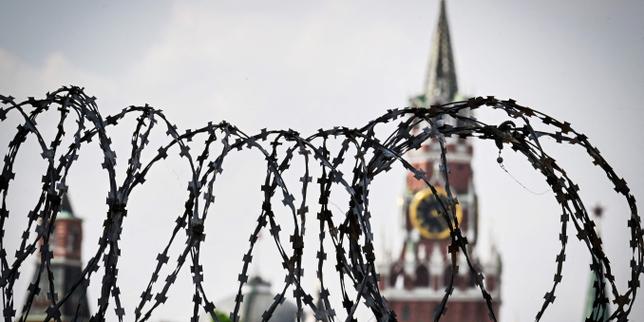
The stability of the Russian Federation relies on a specific equilibrium between the Kremlin and its socio-economic elites. This equilibrium—often characterized as a "loyalty for protection" agreement—is currently undergoing a fundamental breakdown. While Western analysis frequently focuses on the macro-indicators of GDP growth or the resilience of the central bank, these metrics obscure a deeper, structural failure: the state’s diminishing capacity to guarantee the physical and financial security of its most critical stakeholders. When the state can no longer provide safety, the elite's incentive to remain compliant shifts from calculated interest to fear-based paralysis, a transition that carries significant long-term risk for the regime's durability.
The Triad of Elite Security
To understand the erosion of this contract, one must first identify the three specific forms of protection the Russian state historically provided to its elites.
- Legal Immunity and Conflict Resolution: The state acted as the ultimate arbiter in corporate and personal disputes. By controlling the judiciary and the security apparatus (the siloviki), the Kremlin ensured that loyalty was rewarded with the "right" to operate within certain economic spheres without fear of predatory seizures by rivals.
- Asset Preservation and Global Integration: Before 2022, the state facilitated a dual-layer existence. Elites could extract rents domestically and secure them internationally in Western jurisdictions. The state provided the diplomatic and legal framework that made this capital flight possible and safe.
- Physical Security from External and Internal Threats: This is the most basic function of the state. It includes protection from organized crime, terrorist threats, and, crucially, the fallout from the state's own foreign policy decisions.
The current environment has compromised all three pillars simultaneously. The inability to stop incursions into sovereign territory, such as the Belgorod or Kursk raids, and the failure to prevent high-profile internal security breaches like the Prigozhin mutiny or the Crocus City Hall attack, have signaled a "protection deficit." This deficit is not merely a PR failure; it is a breach of the state's core obligation to those who manage its economy and administrative machinery.
The Shifting Cost Function of Loyalty
In a stable autocracy, the cost of loyalty is the surrendering of political agency, while the benefit is the monopolization of economic opportunity. This equation is currently being rewritten by two primary forces: the cannibalization of assets and the verticalization of risk.
The Russian budget's reliance on military-industrial output has created a "predatory" fiscal environment. To fund the war effort, the state has moved beyond standard taxation into a phase of forced redistribution. This is visible in the series of "nationalizations" and "deprivatizations" targeting assets owned by individuals deemed insufficiently enthusiastic about the state's current direction or simply possessing assets needed by more favored Kremlin insiders.
The cost of being an elite member has risen because:
- The exit ramp is closed: Sanctions and internal restrictions on movement have trapped capital and people.
- The entry price has increased: Maintaining status now requires active, material contribution to the war effort, rather than passive political compliance.
- The risk of "accidental" victimization is higher: As the state's focus narrows toward the front lines, the internal mechanisms for preventing "friendly fire" between competing siloviki factions have weakened.
Institutional Paralysis and the Management of Impotence
When elites perceive the state as impotent, their behavior shifts from proactive investment to defensive crouching. This creates an "administrative bottleneck." Mid-to-high-level officials, fearing that any decision could lead to prosecution or a loss of favor in a volatile environment, default to inaction.
This paralysis is exacerbated by the state’s move toward a wartime command economy. In this framework, the technocratic expertise that characterized the first two decades of the Putin era—embodied by figures in the Central Bank and Ministry of Finance—is increasingly sidelined by the ideological requirements of the security councils. The tension between economic reality (inflation, labor shortages, and technology deficits) and political imperatives (uninterrupted military production) creates a high-friction environment where the state must use coercion to achieve results that were previously managed through incentives.
The Mechanism of Social Contract Dissolution
The "Social Contract" in Russia was never a singular document but a tiered set of expectations. For the general population, it was "quiet life in exchange for political silence." For the elite, it was "wealth in exchange for obedience."
The dissolution of the elite contract is more dangerous to the regime than the dissolution of the popular one. The general population lacks the organizational capacity for dissent; the elites, however, control the logistics, the finances, and the local administrations. When the elites feel the state can no longer protect their interests—or worse, that the state has become the primary threat to their interests—the relationship shifts from institutionalized loyalty to opportunistic survivalism.
This survivalism manifests in several ways:
- Information Siloing: Withholding accurate data from the top to avoid being the messenger of bad news.
- Asset Liquidation: Converting physical assets into more portable, less traceable forms where possible.
- Hedging: Quietly establishing channels or "insurance policies" with alternative power centers or even external actors, despite the high risks involved.
The Inflation of Coercion
As the state's ability to provide positive incentives (protection, wealth, status) diminishes, it must compensate by increasing the "price" of defection through coercion. This is a classic trap for authoritarian systems. Increasing the level of repression can maintain order in the short term, but it further undermines the very "protection" the elites signed up for. If the state is the one doing the arresting, the seizing, and the threatening, the elites are no longer "protected" by the state; they are "hostages" of it.
The transition from a state that protects its elites to a state that holds its elites hostage changes the psychology of the ruling class. Fear is a powerful motivator, but it is a brittle foundation for a complex modern economy. It discourages the kind of long-term planning and risk-taking necessary to overcome the structural challenges of sanctions and technological isolation.
Strategic Trajectory
The current path suggests a narrowing of the regime's base. The circle of "protected" individuals is shrinking, leaving an increasing number of second- and third-tier elites exposed to both external pressures and internal predation. This creates a volatile "dispossession class"—individuals who have much to lose and see the state as the primary agent of their loss.
The state's response has been to double down on the "Sovereign Russia" narrative, attempting to replace material protection with ideological purpose. However, for a pragmatic, transactional elite, ideology is a poor substitute for the security of one's person and property.
The critical variable to monitor is the internal cohesion of the security apparatus. If the siloviki themselves begin to feel the state's impotence—either through a lack of resources or an inability to manage their own internal conflicts—the last pillar of the social contract will collapse. At that point, the state is no longer a sovereign entity providing a framework for elite life; it becomes a chaotic arena where the only rule is the immediate exercise of force.
The strategy for any external observer or stakeholder is to recognize that the Russian state is no longer a monolithic guarantor of stability. It is a decomposing security provider. Future stability will not depend on the public's opinion of the war, but on the elite's calculation of whether the state is still a net provider of security or its greatest liability. The moment the latter outweighs the former for a critical mass of the administrative and security apparatus, the current governance model becomes terminal.