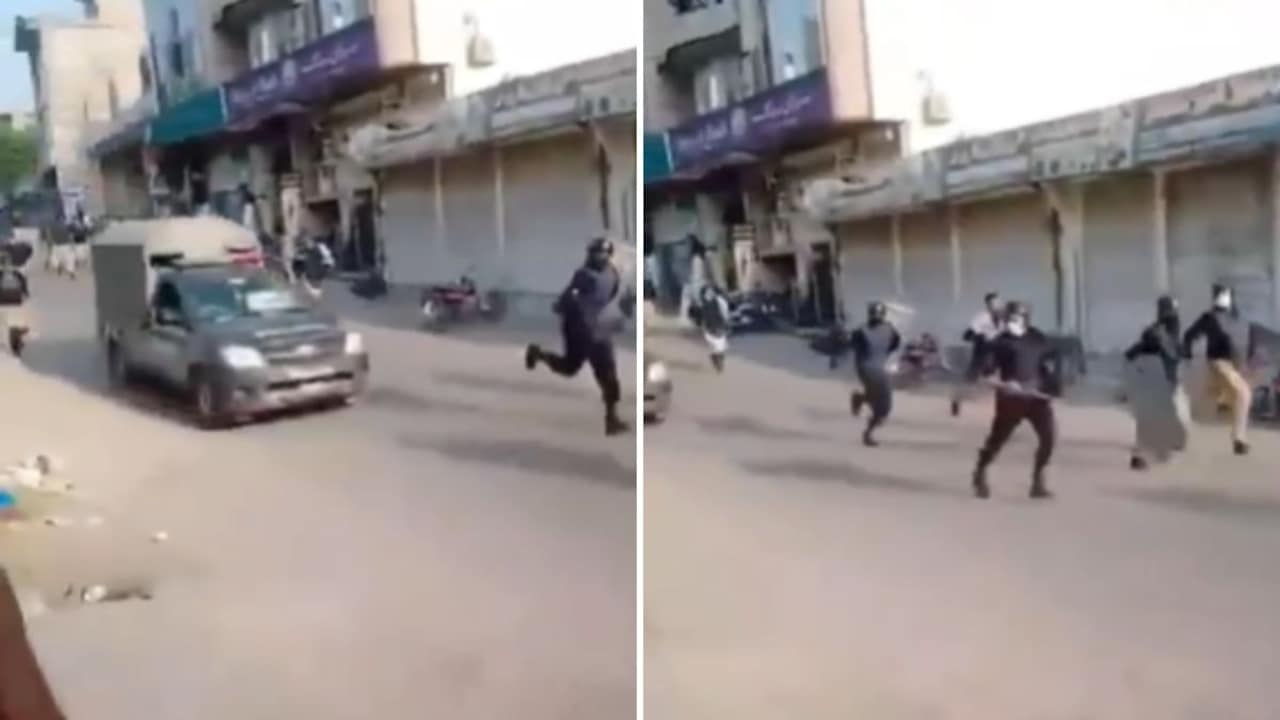
The escalating loss of life in Pakistan-Administered Kashmir (Muzaffarabad and Poonch divisions) is not an isolated outbreak of civic unrest; it is the structural consequence of a broken governance model colliding with macroeconomic insolvency. When civilian fatalities in a region scale from localized friction over utility costs to double-digit casualties, the phenomenon shifts from a law-and-order challenge to a systemic institutional breakdown.
The immediate trigger for the recent surge in violence—which has resulted in upwards of 20 deaths according to field reports—lies in the heavy-handed tactical response by state security forces against the Jammu and Kashmir Joint Awami Action Committee (JKJAAC). However, an objective, data-driven analysis reveals that the escalation is governed by three underlying vectors: structural economic extraction, institutional disenfranchisement, and the introduction of kinetic suppression frameworks that treat economic grievance as an existential threat to the state.
The Tri-Pillar Extraction Framework
To understand why a movement that began with simple demands for wheat flour and electricity subsidies has escalated into a lethal conflict, one must analyze the resource asymmetry defining the relationship between Islamabad and Muzaffarabad. The region's economic model functions on an extractive loop, broken down into three distinct pillars.
The Hydroelectric Asymmetry
The territory serves as a vital generation base for Pakistan’s national grid, anchoring major installations like the Mangla Dam and the Neelum-Jhelum Hydropower Project. The structural bottleneck is cost-generation decoupling. The region generates high-efficiency, low-cost hydroelectric power, yet its residents are billed using a national tariff matrix inflated by the inefficiencies, line losses, and independent power producer (IPP) capacity charges of the broader Pakistani energy sector. This creates an unsustainable economic friction point: local populations are structurally priced out of consuming the very resource generated on their sovereign land.
Agrarian Inflation and Subsidy Removal
The secondary driver is the breakdown of the basic food supply chain. Decades of economic dependence have tied local flour prices to federal procurement models. As federal fiscal space collapsed under macroeconomic stabilization programs mandated by international lenders, Islamabad systematically reduced the fiscal transfers allocated for wheat and essential commodity subsidies in the periphery. The sudden elimination of these price cushions triggered severe localized inflation, rendering basic sustenance a primary driver of civil mobilization.
The Refugee-Seat Apportionment Bottleneck
Beyond pure economics, the immediate political flashpoint stems from the structural allocation of legislative representation. The regional assembly reserves specific seats for refugees from Indian-Administered Jammu and Kashmir living across mainland Pakistan. Local civil society movements argue that these seats are routinely manipulated by the federal ruling elite to engineer artificial political majorities in Muzaffarabad, overriding the democratic preferences of the resident electorate. This structural bypass valve removes peaceful democratic recourse, leaving the street as the only viable arena for political negotiation.
The Kinetic Escalation Function
When civil movements shift from economic advocacy to systemic defiance, states with weak democratic consolidation typically resort to security-first strategies. The operational execution of this crackdown follows a specific kinetic escalation function where state inputs directly multiply civilian casualties.
[Macroeconomic Pressures]
       │
       ▼
[Subsidy Cuts & Tariff Hikes]
       │
       ▼
[Civil Mobilization (JKJAAC)] ──► [Anti-Terror Laws Applied] ──► [Kinetic Suppression] ──► [Sovereign Information Blackout]
The primary escalation vector occurred when the federal apparatus designated the JKJAAC under federal anti-terrorism legislation. By reclassifying an association of traders, lawyers, and students as a security threat, the state altered its rules of engagement. This legal reclassification lowered the threshold for the deployment of live ammunition and paramilitary formations—including the deployment of thousands of external troops from the mainland.
The tactical execution of this strategy created immediate friction points:
- The Preemptive Arrest Loop: Seeking to head off a major planned demonstration, security forces initiated midnight raids and mass arbitrary arrests of regional leadership. Rather than deterring mobilization, these actions created a leadership vacuum, decentralizing the protest movement and making clashes highly unpredictable.
- The Proximity Spark: The kinetic escalation peaked following the fatal shooting of activist Shahzeb Habib during a law enforcement encounter. The subsequent mobilization of unarmed mourners outside medical facilities in Rawalakot brought civilian crowds into direct, high-density contact with heavily armed security detachments operating under zero-tolerance mandates.
- The Sovereign Information Blackout: Simultaneously, the deployment of blanket mobile internet shutdowns and communication blackouts disrupted local coordination. While intended to break the organizational capability of the JKJAAC, this complete lack of information transparency fueled rumors, magnified collective panic, and prevented the verification of casualties, directly contributing to chaotic street violence that claimed the lives of both protesters and local law enforcement personnel.
Strategic Limitations of Content Containment
The current stabilization strategy deployed by the state relies on a classic containment model: restricting movement through localized curfews, halting digital transmission, and leveraging external diplomatic narratives to frame internal instability as foreign subversion. This approach possesses fundamental structural limitations.
First, an information blockade is highly ineffective against localized, physical networks. In high-density urban nodes like Muzaffarabad and Rawalakot, communication occurs via physical proximity and established merchant networks. The internet shutdown does not stop the crowd; it merely ensures that external observers and human rights monitors receive data with a 48-hour lag time, compounding international scrutiny rather than averting it.
Second, the use of externalized force—bringing in paramilitaries and police units unfamiliar with local tribal lines and regional sensitivities—creates a cognitive disconnect. Local police forces often show a reluctance to use lethal force against neighbors, whereas external deployments operate with zero social ties to the local populace. This friction invariably maximizes lethality, turning a protest over utility bills into a generational grievance against federal authority.
The Inevitable Fiscal Re-anchoring
The state cannot shoot its way out of a balance-of-payments crisis. The foundational cause of this unrest is that the state can no longer afford to subsidize its periphery, while the periphery can no longer afford to fund the core's fiscal mismanagement.
The immediate tactical play required to halt the cycle of violence demands a strict sequencing of concessions:
- De-escalate the Legal Framework: The classification of economic advocacy groups as terrorist organizations must be rescinded to reopen structural negotiation channels.
- Establish a Sovereign Energy Tariff: A localized tariff model must be established that calculates electricity pricing based on regional generation costs rather than national average costs plus transmission losses.
- Audited Sovereign Assistance: Any temporary financial package or subsidy injected into the region must be decoupled from the federal discretionary budget and locked via binding legislation to protect essential items from future macroeconomic shocks.
Without this structural realignment, any temporary truce achieved through brute kinetic suppression will simply act as an incubation period for the next, more violent wave of regional mobilization.


