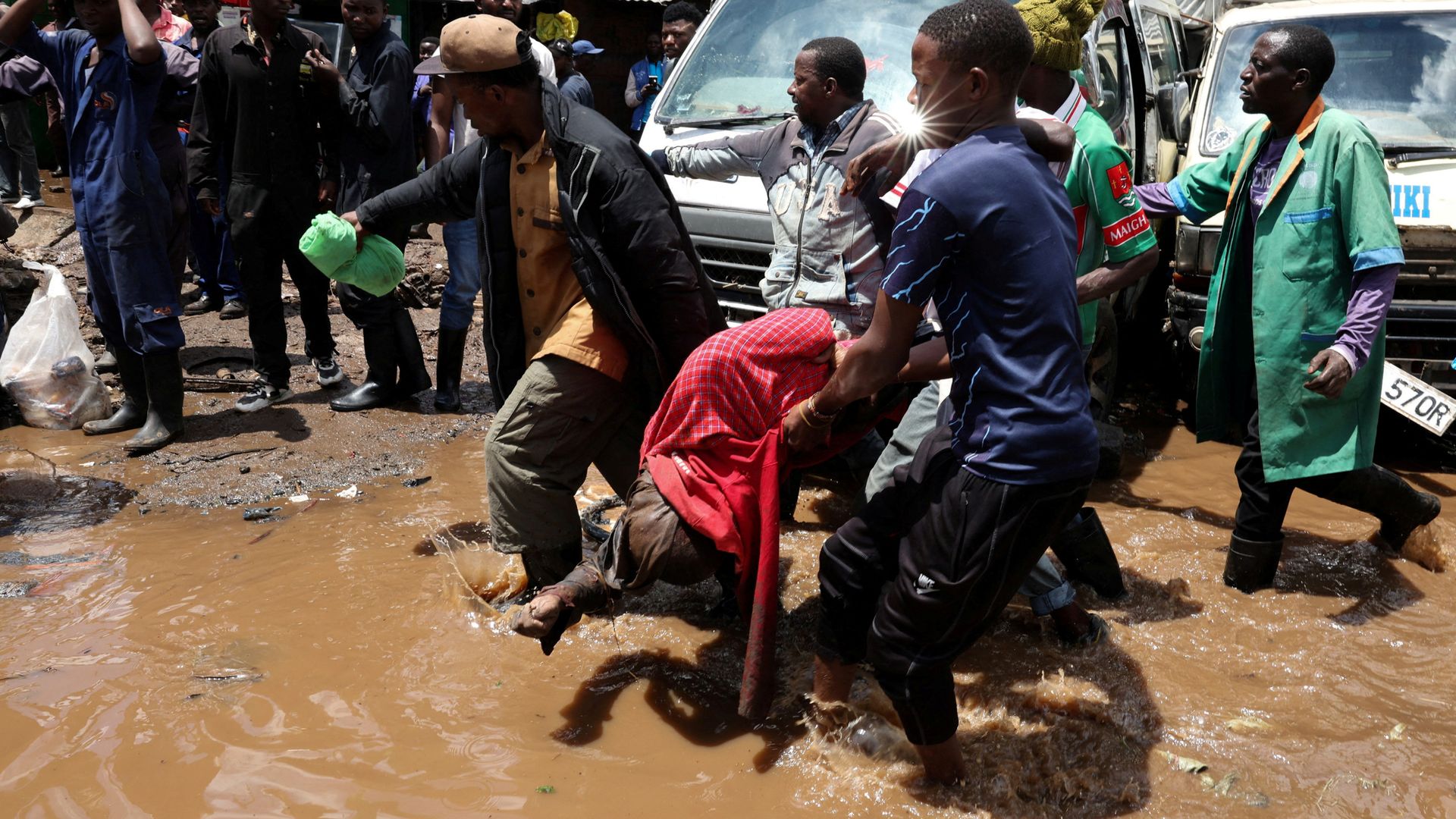
The death of over 60 individuals in Kenya’s recent flooding is not a random meteorological tragedy but the predictable output of a system where high-velocity climate shifts intersect with stagnant infrastructure and legacy urban planning. When precipitation rates exceed the soil’s infiltration capacity and the drainage system’s throughput, the resulting flash floods transform low-lying residential areas into high-risk hydraulic traps. To understand this crisis, one must look past the casualty counts and analyze the three specific failure points: atmospheric moisture loading, topographies of risk, and the decay of the urban hydrological cycle.
The Precipitation-Saturation Feedback Loop
The current flooding is driven by the convergence of the "long rains" season and intensified Indian Ocean Dipole (IOD) fluctuations. In a standard seasonal model, rainfall is distributed over a three-month window, allowing for periodic soil drainage and groundwater recharge. The current event, however, is characterized by high-intensity discharge over short durations.
This creates a saturation bottleneck. Soil has a finite infiltration rate, measured in millimeters per hour. Once the rainfall intensity exceeds this rate, the excess water becomes surface runoff. In many parts of Kenya, particularly the Great Rift Valley and the Tana River Basin, the soil composition includes high concentrations of clay. These soils reach their field capacity rapidly, meaning they can no longer absorb moisture. The result is a transition from vertical infiltration to horizontal displacement at a scale that exceeds the capacity of natural river channels.
The Urban Hydraulic Pressure Cooker
Nairobi and other rapidly expanding urban centers function as "impervious surfaces." In a natural ecosystem, up to 90% of rainwater might infiltrate the ground. In a densified urban environment, that figure drops to nearly 0%. This leads to a massive increase in the volume and velocity of runoff.
The infrastructure failure in these regions is twofold:
- Capacity Mismatch: Most drainage systems in Kenyan urban centers were designed for the climate data of the mid-20th century. These systems cannot handle the peak flow rates of 21st-century extreme weather events. The "return period"—the estimated interval between floods of a certain intensity—has shrunk. A "1-in-50-year" flood now occurs with decadal frequency, yet the concrete culverts remain sized for the old reality.
- Structural Impedance: Siltation and the accumulation of solid waste within drainage arteries create physical blockages. When the primary conduits are restricted, the water seeks the path of least resistance, which typically leads into informal settlements built in riparian zones. These areas lack the structural integrity to withstand the kinetic energy of fast-moving water.
The Cost of Informal Expansion
The high death toll is inextricably linked to the socio-economic geography of the affected regions. There is a direct correlation between land-use policy and mortality rates.
The "Riparian Encroachment" factor is the primary driver of casualty clusters. As urban populations swell, housing demand pushes the most vulnerable demographics into floodplains and "wayleaves"—land reserved for utilities or water bypass. These structures are often built with substandard materials that offer zero resistance to hydrostatic pressure. When a flash flood hits, the failure of one structure often triggers a domino effect, where debris from upstream shacks increases the destructive mass of the water flowing downstream.
This creates a kinetic multiplier effect. It is not just the water that kills; it is the sediment, uprooted trees, and structural debris carried by the water that turns a flood into a lethal surge.
The Logistical Failure of Early Warning Systems
While the Kenya Meteorological Department (KMD) provides atmospheric data, a significant gap exists between "data generation" and "actionable intelligence." An effective early warning system requires three distinct components to function in sequence:
- Detection: Satellite and ground-station monitoring of rainfall intensity.
- Dissemination: Relaying the threat to local populations through redundant communication channels.
- Response: The physical ability of the population to evacuate to pre-designated safe zones.
The breakdown occurs at the dissemination and response stages. Even when a warning is issued, the lack of localized, high-resolution topographical mapping means that residents do not know if their specific street is a "kill zone" or a "safe harbor." Furthermore, the absence of an institutionalized evacuation protocol means that many residents stay in their homes to protect their assets, unaware that the structural integrity of their dwelling is about to be compromised.
The Agriculture and Infrastructure Nexus
Beyond the immediate loss of life, the flooding triggers a secondary economic shock through the destruction of "Agricultural Capital." Kenya's economy relies heavily on smallholder farming. When floodwaters sweep across the Tana River or the Lake Victoria basin, they don't just destroy the current season's crop; they cause massive topsoil erosion.
The loss of the A-horizon (the nutrient-rich top layer of soil) means that land productivity will remain depressed for multiple cycles even after the water recedes. On the infrastructure side, the washing away of bridges and the breaching of dams represent a decapitalization of the national transport network. The cost of repair is significantly higher than the cost of "climate-proofing" would have been, yet the fiscal constraints of the state prioritize reactive disaster management over proactive hardening of assets.
Modeling the Future Risk
The trajectory of East African hydrology suggests that these events will increase in both frequency and volatility. The warming of the Western Indian Ocean is providing more energy for tropical cyclones and moisture-heavy weather systems.
The primary risk factor moving forward is the Dam Breach Variable. Kenya has numerous aging dams and smaller earth-fill water pans. Many of these have not undergone recent structural integrity audits. If the spillway capacity is exceeded or if the dam wall is overtopped, the resulting "dam-break wave" would produce a discharge magnitude several orders of magnitude higher than a standard flash flood. This represents the single greatest threat to human life in the downstream corridors of the Rift Valley and central highlands.
A Strategic Pivot Toward Hydrological Resilience
Mitigating the lethality of future rainfall events requires moving away from emergency response and toward "Hydrological Engineering."
Municipalities must prioritize the creation of "Sponge City" elements. This involves the intentional preservation of green spaces and the use of permeable paving materials to allow for localized infiltration. At the national level, the government must execute a mandatory relocation strategy for populations living within 30 meters of riparian boundaries. This is not a matter of choice but of physical necessity; water will always reclaim its natural path.
Investment should be diverted from general aid toward high-resolution LIDAR mapping of all major urban areas. By understanding the precise elevation changes of every square meter of a city, authorities can predict exactly where water will pool and flow. This data must then be integrated into a "cell-broadcast" emergency alert system that sends hyper-local instructions to mobile devices based on the user's GPS coordinates.
The final strategic move is the reinforcement of "critical transit nodes." If the main arteries connecting food-producing regions to Nairobi are severed, the flood crisis evolves into a food security crisis. Bridges must be rebuilt with higher clearance and deeper pilings to account for the increased scour and discharge rates of the new climate reality. Anything less is a managed retreat toward recurring catastrophe.