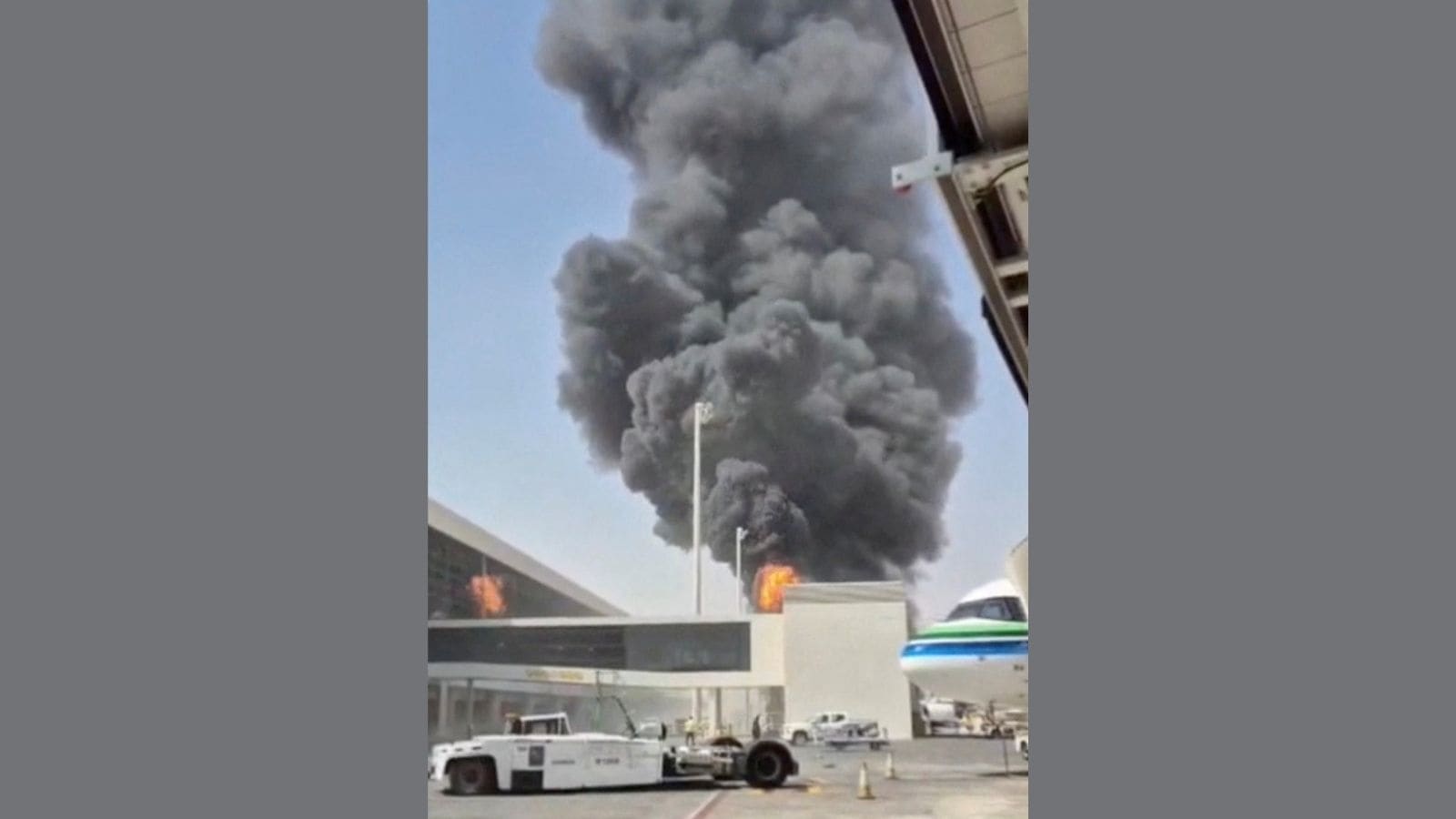
The operational stability of critical aviation nodes relies on a fragile equilibrium of continuous airspace surveillance, redundant air traffic control systems, and predictive scheduling models. When kinetic disruptions target hubs such as King Khalid International Airport, the immediate breakdown extends far beyond structural damage or temporary ground stops. The propagation mechanics of regional airspace restrictions create multi-tiered operational friction points across global carrier networks, insurance markets, and supply chains. Understanding this environment requires moving past immediate news cycles to examine the underlying risk matrix governing modern Middle Eastern aviation logistics.
The Operational Cost Function of Airspace Closures
When a primary transit hub experiences kinetic interference or active defense engagements, commercial aviation operators face an immediate optimization problem. Flight path redesign involves three core variables: fuel burn penalties, extended crew duty periods, and slot reassignment constraints at diversion airports.
The immediate decision matrix for carriers operating through the region involves strict risk thresholds. Long-haul operators connecting Europe and Asia through the Gulf corridor must calculate the financial penalty of rerouting around restricted zones against the liability of maintaining scheduled trajectories. Carriers lacking regional hub alternatives suffer higher disruption indices because their point-to-point network architectures cannot absorb sudden capacity dropouts.
Conversely, major regional network carriers possess structural buffers. They can redistribute displaced passengers across alternate hubs like Dubai or Doha, though secondary airports quickly experience gate congestion, ground equipment deficits, and baggage handling bottlenecks. The economic loss is not merely a function of cancelled flights, but of asset utilization decay. Aircraft parked on remote aprons generate zero seat-mile revenue while continuing to accrue lease costs and maintenance overhead.
Defense Architecture and Interception Dynamics
The mechanical interaction between incoming ballistic threats and terminal defense batteries dictates the severity of ground-level disruptions. Advanced interceptor systems operate on rapid decision loops, neutralizing projectiles at high altitudes. However, the operational footprint of these engagements creates predictable secondary effects:
- Falling debris fields frequently trigger mandatory temporary ground stops, even when primary infrastructure remains unpenetrated.
- Air traffic control handoff protocols must adjust to clear active engagement corridors, reducing overall sector capacity by up to forty percent during active alerts.
- Terminal structural integrity protocols mandate mandatory engineering inspections following close-proximity detonations, freezing gate allocations until clearance certificates are issued.
This creates a divergence between military claims of successful neutralization and the commercial reality of protracted delays. Insurance underwriters evaluate risk not by whether a missile was intercepted, but by the frequency of terminal shutdowns and the resulting exposure of grounded physical assets.
The Cascade Effect on Global Supply Chains
Modern passenger aircraft carry significant belly-cargo capacity, making major Gulf connectors vital arteries for international freight. When passenger schedules experience systemic cancellations, global supply chains absorb an immediate reduction in air cargo throughput.
High-value electronics, pharmaceuticals, and perishable goods destined for European or Asian markets face routing delays as carriers prioritize passenger repositioning over cargo payloads. Ground handlers in unaffected neighboring airports—such as Dammam or Jeddah—experience sudden surges in freight processing demand, exposing infrastructure limitations in regional logistics chains. This congestion translates into spot-rate volatility for air freight, forcing logistics managers to secure alternative maritime or overland corridors at a premium.
Strategic Forecast and Risk Mitigation
Airlines and corporate travel managers operating within high-risk geopolitical zones are shifting from reactive delay management to predictive resilience frameworks. The standard practice of waiting for official regulatory bans is being replaced by dynamic risk-scoring models that factor in interceptor availability, historical attack frequencies, and regional intelligence feeds.
Network vulnerability will continue to favor carriers with diversified fleet deployment and flexible crew-scheduling agreements. Operators that rely on rigid hub-and-spoke models with high asset concentration in single regional terminals will face compounding insurance premiums and capacity reductions. The strategic imperative for aviation stakeholders is clear: resilience is no longer measured by response speed to a single event, but by the systemic elasticity of the entire network configuration.