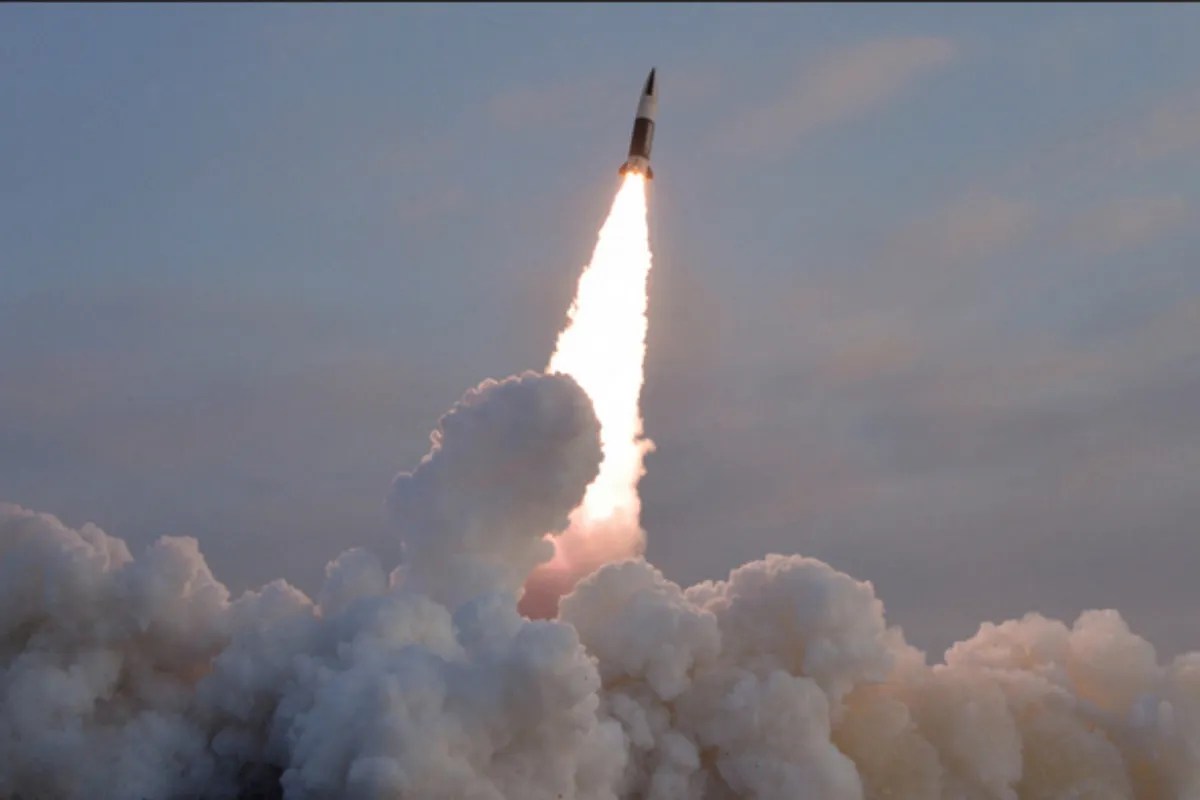
Headlines scream that Houthi attacks on Abha International Airport and Khamis Mushait airbase prove cheap drones and rockets can cripple modern defenses. That conclusion is lazy. Worse, it is analytically sloppy.
When low-cost unmanned aerial vehicles and short-range projectiles cross into southern Saudi Arabia, commentators rush to declare the end of traditional air power and air defense. They point to the price gap between a $20,000 loitering munition and a multi-million-dollar interceptor missile. On paper, the math looks devastating. In practice, turning a single headline or a handful of strikes into a universal law of modern warfare ignores basic operational friction, terminal accuracy limits, and the difference between political nuisance and military collapse.
I have spent years studying air and missile defense architectures, watching defense budgets swell while operational assumptions lag behind reality. I have seen governments pour billions into shiny hardware while ignoring sensor integration, reload cycles, and basic physical geography. The real story behind strikes on southern hubs like Abha and Khamis Mushait is not that expensive defenses are obsolete. It is that asymmetric bombardment thrives in a narrow band of effects—and hits hard walls outside it.
You Are Asking the Wrong Question About Asymmetric Strikes
Most coverage asks a deceptively simple question: How did cheap drones and missiles get past expensive air defenses?
Ask that, and you will chase ghosts. No air defense system on Earth is a magic dome with zero leakage. Radar horizons curve. Terrain masks low-altitude flight paths. Clutter from mountains, civilian flights, and weather complicates tracking. Even high-end layered networks have seams, especially when defending dispersed facilities near rugged terrain in southwestern Saudi Arabia.
The smarter question is this: What can a low-cost strike package actually achieve once it leaks through?
There is a massive gap between penetrating airspace and destroying hardened military capacity. A drone that slips past an outer radar ring still has to navigate terminal guidance, survive point defenses, hit a meaningful target rather than an empty apron or perimeter fence, and deliver enough explosive mass to matter.
Defining Terms Before We Argue
Precision starts with clean definitions. People toss around terms like "drone," "cruise missile," and "ballistic rocket" as if they are interchangeable. They are not.
- One-way attack UAVs (loitering munitions) trade speed and payload for range and low cost. They fly relatively slowly, making them noisy on acoustic and radar sensors over time, and carry modest warheads suited more for soft targets, fuel storage, or psychological shock than deep bunkers.
- Short-range ballistic missiles and rockets trade stealth and course flexibility for speed and steeper terminal angles. Higher speed compresses reaction time, though ballistic trajectories are predictable once tracked.
- Air defense interception is not a single button push. It is a kill chain: detect, track, classify, assign, engage, and assess. Break any link—or saturate the magazine of a forward battery—and a low-cost projectile gets through.
When commentators treat every incident at Abha or Khamis Mushait as proof of total defensive failure, they confuse leakage with decisive destruction. A commercial terminal building or an unhardened structure catching debris or a small warhead makes dramatic television. A fighter wing operating from a sprawling military base with dispersed shelters, redundant runways, and mobile support is a very different target set.
The "Cheap vs. Expensive" Math Is Half-Baked
Every viral thread on asymmetric warfare repeats the same arithmetic. Attackers spend a few tens of thousands of dollars on a drone. Defenders fire an interceptor costing hundreds of thousands or millions. Therefore, the attacker wins on cost-exchange.
That math is incomplete. It stops at the moment of launch.
A real cost-exchange calculation has to account for four variables that lazy analysts skip:
- Cost per effective hit, not cost per launch. A cheap drone that misses, gets jammed, is shot down by cannon or electronic warfare, or hits a low-value spot costs the attacker money without degrading the defender's combat power.
- Logistics and launch signatures. Moving launchers, fuel, guidance components, and crews into firing positions carries risk. Once a launch pattern becomes predictable, counter-battery fire, intelligence collection, and border security tighten around the launch zones.
- Opportunity cost of interceptor magazines. Firing a high-end strategic interceptor at a slow, low-value drone is poor resource management. That is why modern militaries push harder for layered point defense—short-range missiles, radar-guided guns, electronic warfare, and directed energy—to handle low-end threats without burning high-tier stock.
- Economic and political resilience. Absorbing periodic harassment is expensive and annoying, yet rich states with deep infrastructure can sustain prolonged friction far longer than cash-strapped actors can sustain high-tempo industrial production under pressure.
Imagine a scenario where a defense planner allocates only top-tier strategic interceptors to every low-altitude contact over a border region. Within weeks, magazine depth becomes a bottleneck even if technical hit rates stay high. The flaw in that scenario is not that physics failed. The flaw is force design and doctrine, not the inherent supremacy of cheap drones.
Dismantling the Usual "People Also Ask" Traps
When tension flares around southern Saudi facilities like Abha and Khamis Mushait, search engines fill up with predictable questions. Most of them rest on shaky premises.
"Can drone and missile strikes shut down major airports and airbases permanently?"
Permanent shutdown requires sustained, high-volume, accurate bombardment combined with an inability to repair surfaces, reroute traffic, or disperse aircraft. Occasional or episodic strikes create delays, precautionary closures, insurance headaches, and security lockdowns. They rarely produce permanent paralysis against a state with engineering crews, alternative airfields, and deep financial backing. Runway craters get filled. Damaged glass and cladding get replaced. Air forces adapt dispersal and alert postures.
"Why don't air defenses stop every single incoming threat?"
Because physics and economics impose trade-offs. Covering every square kilometer of mountainous terrain against low-flying, low-signature targets at 100% certainty would require an absurd density of sensors and interceptors—and even then, statistical probability never hits zero in real combat. Perfection is a marketing slogan, not an engineering standard.
"Do these attacks prove traditional air forces are obsolete?"
No. That claim has been recycled after every new weapon since the machine gun and the anti-ship missile. Aircraft still provide range, payload flexibility, intelligence, strike persistence, and rapid theater mobility that short-range rockets and slow prop-driven drones cannot match. What changes is basing vulnerability and hardening requirements, not the utility of air power itself.
What Serious Defense Analysts Actually Watch
If you want to understand the real stakes of strikes near Abha and Khamis Mushait, stop counting dramatic photos and start tracking operational indicators.
- Target selection discipline: Are strikes hitting clear military logistics, air defense radars, and aircraft shelters, or defaulting to broad area/infrastructure targets that signal range and guidance limits?
- Salvo size and coordination: A lone drone or small volley tests seams and creates headlines. Coordinated multi-axis salvos combining different speeds and altitudes stress sensor fusion and fire control far harder.
- Sensor-to-shooter speed: How fast do warning networks pass tracks from border radar and airborne early warning to ground batteries and combat air patrols?
- Base hardening and dispersal: Are critical fuel farms, command nodes, and aircraft protected by blast walls, revetments, decoys, and rapid recovery teams?
Thinkers who study modern air warfare—from classic airpower theorists like John Boyd and Robert Pape to contemporary missile-defense analysts such as Thomas Karako and Ian Williams—consistently emphasize a sobering truth: technology shifts friction, it does not erase it. Every offensive breakthrough triggers counter-tactics, electronic adaptation, and cheaper interceptors.
Where My Contrarian Take Can Go Wrong
Intellectual honesty requires admitting blind spots. My argument rests on the premise that strikes against facilities like Abha and Khamis Mushait remain episodic or bounded in volume and precision.
That premise could fail in three ways:
- Volume surge: If an attacker scales domestic production and smuggling enough to sustain large, frequent, multi-vector salvos over months rather than sporadic bursts, magazine depletion and crew fatigue become real operational hazards.
- Guidance and autonomy leaps: Better terminal seekers, terrain-relative navigation, and resilient datalinks would turn today's "harassment and occasional hit" profile into far higher lethality against specific point targets.
- Psychological and commercial compounding: Even modest physical damage can trigger outsized economic effects if airlines suspend routes, insurers hike premiums, or leadership feels domestic pressure to overreact militarily.
Acknowledging those risks does not hand the crown to hype. It keeps analysis grounded in reality rather than wishful thinking.
Actionable Moves for Decision-Makers and Analysts
If you manage security, risk, aviation operations, or defense analysis in high-tension regions, stop reacting to single-incident shock and build around realities that hold up under stress.
- Price the tail risk, not the average headline. Model what happens during a coordinated multi-wave surge, not just a single intercepted or partially successful strike.
- Tier your defenses ruthlessly. Match low-cost threats with low-cost defeat mechanisms—electronic warfare, gun/short-range systems, and counter-UAS layers—while reserving high-value interceptors for high-value threats.
- Invest in recovery speed, not just interception. Rapid runway repair, redundant power and fuel lines, mobile command posts, and dispersed operations cut an attacker's return on investment fast.
- Audit your information diet. Separate verified battle damage and operational impact from sensationalized social media clips and political messaging.
Cheap drones and rockets are real problems that punish complacency and bad force design. They are not a magic wand that erases geography, air superiority, or industrial depth.
Stop mistaking a pinprick for a knockout.