Conventional protest coverage treats street clashes in Tirana as a simple clash between angry youths and an entrenched prime minister, missing the incentive structure that turned months of demonstrations into violent confrontations. When protests stretch past one hundred days without yielding institutional concessions, peaceful marches face a structural decay problem: participants lose belief that orderly assembly changes policy, while state actors treat routine containment as an acceptable operating cost.
What makes Albania's unrest analytically distinct is how two separate grievances converged on the same streets. One track grew out of environmental and anti-corruption opposition to coastal tourism developments—including projects around Sazan and Zvërnec and controversial foreign-linked resort plans—while a second track mobilized students and pupils around rising higher-education costs, campus conditions, and broader frustration with a socialist government in power since 2013. Standard headlines report counts of detained demonstrators, injured officers, and damaged facades, yet they rarely model the feedback loop connecting prolonged non-responsiveness, radicalization at the fringes, and selective police incentives.
The Escalation Mechanism Behind Street Unrest
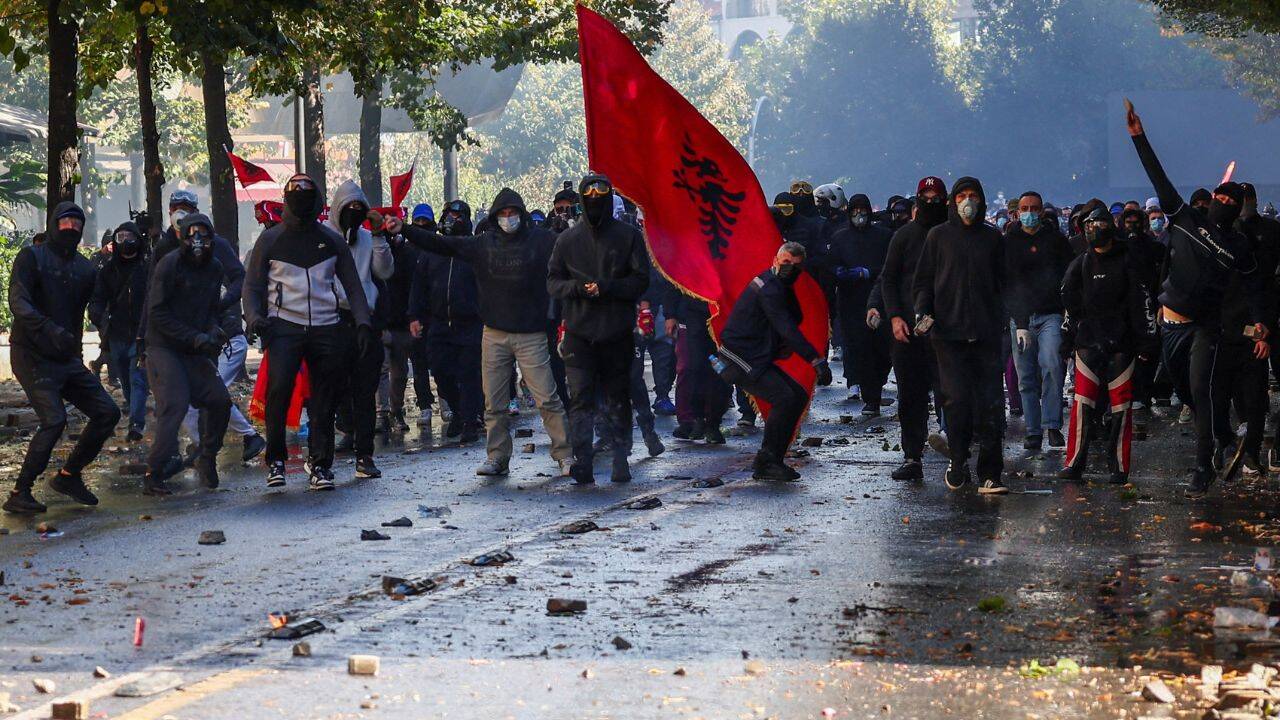
Violent spikes in Tirana do not emerge out of thin air when a movement has already spent months gathering outside government offices. In mobilization dynamics, prolonged peaceful rallies that produce no policy reversal create a strategic dilemma for organizers and participants. If peaceful presence yields mockery or inaction, radical tactics gain relative appeal among a subset of actors who conclude that disruption is the only signal the executive cannot ignore.
This mechanism has two distinct components. First, grievance aggregation pulls disparate complaints—tuition and living costs for students, ecological and transparency concerns over coastal land deals, and long-running complaints about state capture and corruption—into a single demand for Prime Minister Edi Rama's resignation. Second, tactical polarization shifts crowd composition and behavior during evening confrontations, where bricks, fireworks, or petrol bombs appear alongside tear gas, water cannons, and rubber bullets.
Consider a stylized demonstration outside a ministry building. During daytime hours, students and civic activists march with banners focused on university fees and transparency. After dusk, smaller aggressive cohorts test police perimeters, prompting chemical or kinetic dispersal measures that sweep up bystanders, journalists, and peaceful demonstrators alike, which in turn fuels fresh outrage over heavy-handed policing.
The Cost Function of State Repression and Concessions
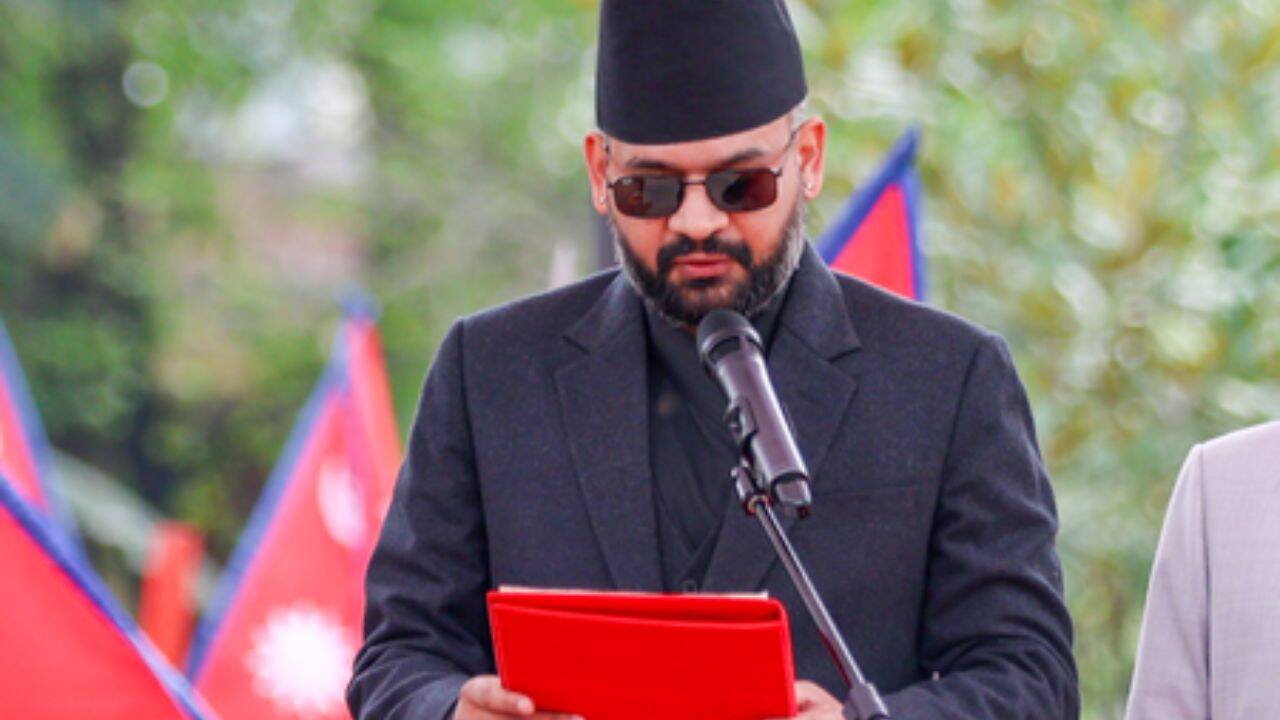
Rama's posture reflects a calculated trade-off between short-term street costs and long-term political survival. Stepping down or canceling flagship investment projects carries an immediate, irreversible political price for a long-serving leader who frames his administration around modernization and European Union integration. By contrast, absorbing street friction—while pairing targeted disciplinary suspensions of individual officers with financial bonuses and pay raises for frontline police—keeps the security apparatus cohesive and signals resolve.
That strategy carries measurable friction costs rather than free stability. Every clash generates injuries among both civilians and police, detentions that include young adults and minors, legal disputes over arrests, and reputational strain abroad when European institutions or international observers scrutinize public order and democratic norms.
- Direct security expenditure: Overtime deployments, riot control supplies, and bonus or wage commitments raise fiscal pressure on the state budget.
- Institutional and legal friction: Mass arrests, court proceedings, and prosecutorial probes into alleged police excess consume administrative capacity and keep the crisis in daily headlines.
- Reputational and investor drag: Visible street clashes, damaged commercial property, and disputes over high-profile development deals complicate the narrative of smooth institutional stability.
- Political legitimacy risk: Dismissing protesters as foreign-backed agitators or non-students may rally loyalists, yet it alienates swing citizens who view the grievances as domestic and economic.
Known Facts Versus Analytical Hypotheses
Separating verified reporting from interpretive modeling prevents overclaiming when street counts fluctuate rapidly across cities and days. Reporting from Tirana and international outlets establishes that student-led and anti-government demonstrations have persisted across 2026—including multi-day escalations in October and ongoing mobilization into mid-November—resulting in dozens to more than a hundred reported injuries across multi-day spikes, dozens or hundreds of detentions including minors, tear gas and water cannon deployments, and property damage to public and commercial buildings. It is also established that Rama has refused to resign, proposed stricter penalties for unauthorized protests and online incitement, offered conditional dialogue while condemning vandalism, and linked his broader political project to EU accession.
Exact figures on total crowd sizes, the exact share of violent actors who are enrolled students versus outside agitators, and long-term economic losses remain contested or incomplete in real time. Claiming that a specific percentage of protesters acted on foreign instructions—or conversely claiming that every clash was purely organic student self-defense—goes beyond verified evidence. A more disciplined hypothesis is that a broad, mostly nonviolent core of students and citizens provides moral legitimacy and crowd volume, while a smaller confrontational fringe drives property destruction and triggers broad police pushback.
Why Standard Narratives Miss the Strategic Bottleneck
Coverage that focuses primarily on dramatic photos of clashes and dueling quotes often misses the central bottleneck of the standoff: neither side has a credible off-ramp that preserves its core objective. Student leaders and protest organizers demand tangible accountability or executive departure, viewing incremental rhetoric or symbolic talks as a stalling tactic. Rama treats concession under street pressure as a precedent that would invite perpetual mobilization against his government and its economic agenda.
Even when authorities announce legal crackdowns or fines for unauthorized assemblies, deterrence faces limits once grievances are deeply entrenched. Harsh penalties can raise the personal cost of showing up, yet they can also harden resentment if citizens perceive the justice system or police force as partisan. Conversely, protest movements that lack unified institutional representation often struggle to convert street energy into durable policy shifts or electoral leverage on their own.
Tactical Playbook for Monitoring and De-Escalation
For analysts, policymakers, and risk teams tracking the crisis, evaluating trajectory requires watching operational indicators rather than relying on rhetoric alone. Every strategy carries trade-offs, and no single measure resolves structural distrust overnight.
- Track daytime-to-nighttime incident ratios: Compare peaceful daytime marches against after-hours clashes to distinguish broad civic participation from localized confrontational cells. The limitation is that aggressive tactics during a march can shift public perception of the entire movement overnight.
- Audit police discipline versus incentive signals: Watch whether disciplinary actions against officers who use excessive force are matched by clear operational rules of engagement, rather than offset by rewards that signal unconditional backing. The limitation is that tightening rules of engagement can increase perceived vulnerability among frontline units during volatile crowd control.
- Separate negotiable policy items from non-negotiable demands: Identify whether concrete concessions on student costs, campus conditions, or specific land permits can peel away pragmatic participants even if leadership demands resignation. The limitation is that activist coalitions may reject partial concessions as co-optation.
- Monitor judicial and legislative escalation: Follow how courts handle protest detentions and how parliament treats new public-order fines or digital speech rules. Heavy-handed legal measures may quiet streets temporarily while expanding political grievances among families and civil society.
Strategic Action for Decision-Makers
Any durable de-escalation requires separating crowd-control policing from policy dispute resolution while establishing transparent accountability for both property damage and police abuse. Government authorities should pair strict, proportionate containment of violence with verifiable policy commitments on education affordability and public contract transparency, backed by independent review of injury and arrest complaints so grievances do not compound through perceived impunity. Until concrete policy concessions and credible accountability give peaceful participants a reason to expect results without escalation, street confrontations in Tirana will remain prone to sudden spikes around major political dates and flashpoint issues.