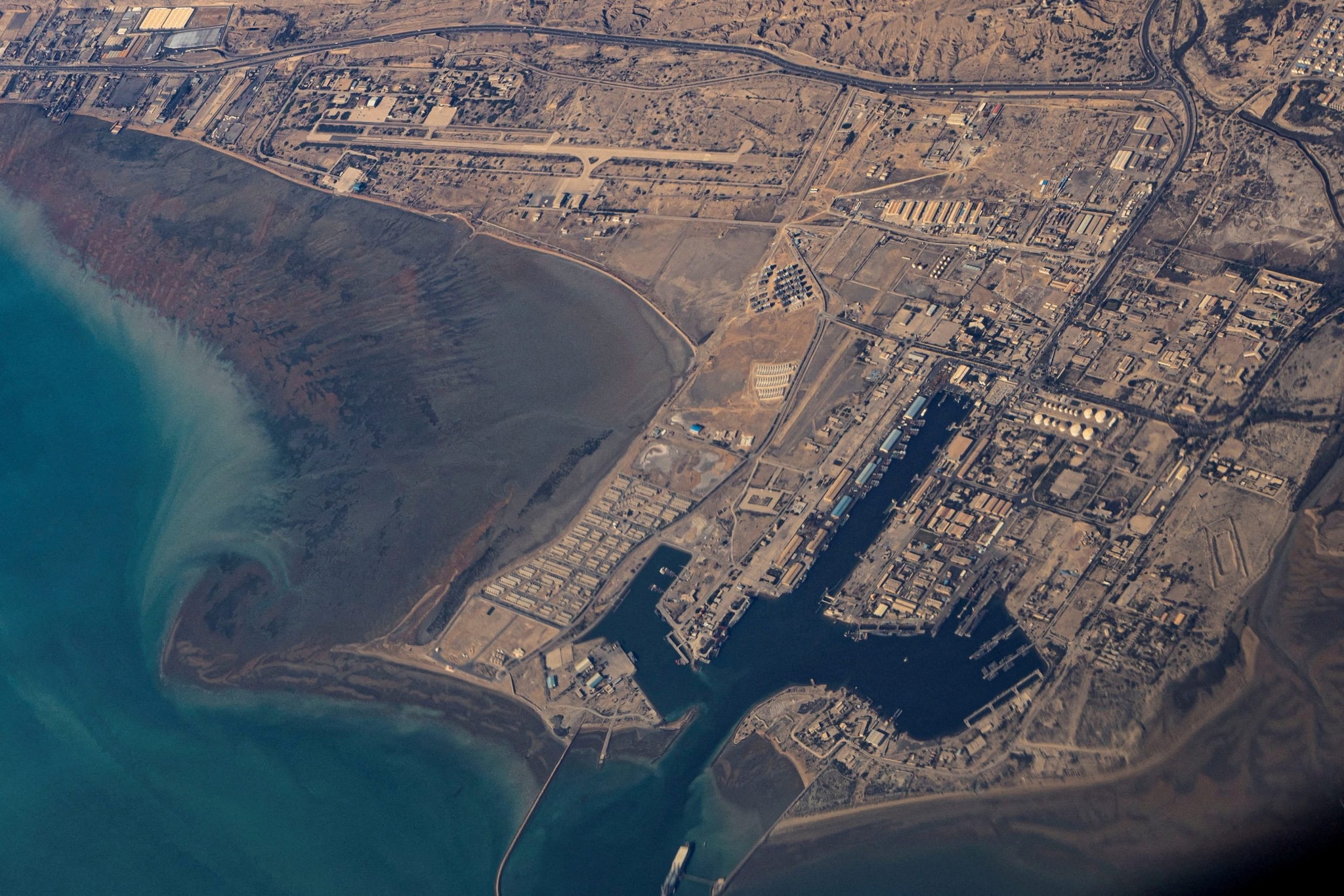
The Strait of Hormuz functions as the central nervous system of global energy markets, a maritime artery through which approximately 21 million barrels of oil flow daily. When Iranian officials link the continued functionality of this waterway to the cessation of US-led economic blockades, they are not merely issuing a threat; they are defining the operational parameters of a high-stakes kinetic and economic deterrent. The stability of the Strait is tethered to a principle of reciprocal security: if Tehran cannot export its primary commodity due to sanctions, the incentive to maintain the security of the corridor for other exporters diminishes toward zero.
The Triple Architecture of Maritime Deterrence
Iranian strategy regarding the Strait of Hormuz is structured around three distinct operational pillars. Each pillar serves a specific function in the broader goal of neutralizing the impact of US economic pressure.
1. Asymmetric Naval Doctrine
The Iranian Revolutionary Guard Corps Navy (IRGCN) utilizes a swarm-based doctrine designed to overwhelm technically superior naval forces. This approach relies on a high volume of fast inshore attack craft (FIAC) equipped with short-range missiles and naval mines. The narrowness of the Strait—only 21 miles wide at its tightest point—nullifies the long-range advantages of carrier strike groups, forcing engagements into a littoral environment where maneuverability and sheer numbers dictate the outcome.
2. The Legalistic Interpretation of UNCLOS
Tehran maintains a specific interpretation of the 1982 United Nations Convention on the Law of the Sea (UNCLOS). While the convention generally provides for "transit passage" through international straits, Iran—which has signed but not ratified the treaty—frequently asserts that only "innocent passage" applies to its territorial waters. Under the "innocent passage" framework, Iran claims the right to suspend transit if it deems the passage prejudicial to its peace, good order, or security. This creates a legal baseline for interdiction actions that can be escalated or de-escalated depending on the intensity of external sanctions.
3. Proxy-State Integration
The threat to the Strait is not confined to the Persian Gulf. By integrating the capabilities of the Houthi movement in Yemen, Iran extends its "choke point" influence to the Bab el-Mandeb. This dual-threat capability forces Western military planners to split their assets between two critical waterways, effectively doubling the cost of maritime security operations and complicating the logistics of any prolonged blockade.
The Economic Cost Function of Closure
A closure of the Strait of Hormuz is rarely a binary state of "open" or "closed." Instead, it is a spectrum of friction that increases the cost of global commerce. The economic impact can be quantified through three primary mechanisms.
- Insurance Risk Premiums: Even a credible threat of closure causes a spike in "War Risk" insurance premiums for tankers. During periods of heightened tension, these premiums can increase tenfold within a week, adding millions of dollars to the cost of a single voyage. These costs are immediately passed to the consumer, regardless of whether a single barrel is actually blocked.
- Brent Crude Volatility: Because the global oil market operates on a just-in-time delivery model, the removal of 20% of the world's liquid fuels would trigger an immediate liquidity crisis. Financial analysts estimate that a total blockage would cause Brent crude to exceed $150 per barrel within 48 hours, triggering recessionary pressures in energy-dependent economies like China, India, and the European Union.
- The Containerized Cargo Lag: While focus remains on oil, the Strait is also a vital path for container ships carrying manufactured goods. A disruption here creates a bullwhip effect in global supply chains, leading to inventory shortages in retail and manufacturing sectors six to eight weeks after the initial event.
Logistics of the US Blockade and Iranian Counter-Response
The "blockade" referenced by Iranian officials is primarily a financial and secondary-sanctions regime designed to decouple the Iranian economy from the SWIFT banking system and global oil markets. This creates a specific cause-and-effect chain.
When the US enforces "Maximum Pressure," it restricts Iran's access to foreign currency. In response, Iran utilizes the Strait as its primary geopolitical lever. The logic is one of shared pain: if the Iranian state's survival is threatened by economic strangulation, the global economy must share in that existential risk. This is a rational, albeit high-risk, application of "Game Theory" where the weaker actor seeks to make the status quo intolerable for the stronger actor.
The Geography of Vulnerability
The shipping lanes in the Strait of Hormuz are divided into two-mile-wide channels for inbound and outbound traffic, separated by a two-mile-wide buffer zone. Most of these lanes fall within Iranian or Omani territorial waters. The depth of the water and the presence of islands like Abu Musa and the Greater and Lesser Tunbs provide ideal locations for the deployment of anti-ship cruise missiles (ASCMs) and mobile coastal batteries.
Strategic Limitations of the Closure Threat
While the threat is potent, it carries significant risks for Iran that are often overlooked in standard news reporting.
- Alienating Key Partners: China is the largest importer of Iranian oil and a critical diplomatic ally. A total closure of the Strait would damage the Chinese economy more than the US economy, as the US has achieved a high degree of energy independence through shale production. Tehran must balance its deterrent against the risk of losing its most important economic lifeline.
- The Infrastructure Paradox: Iran has invested heavily in the Goreh-Jask pipeline, which aims to bypass the Strait of Hormuz by transporting oil to a terminal on the Gulf of Oman. As this infrastructure becomes more operational, the "Strait closure" threat becomes less credible, as Iran would essentially be blocking its own ability to export oil through its new bypass.
- The Inevitability of Kinetic Escalation: Any physical attempt to block the Strait would almost certainly trigger a regional war. Once the first mine is laid or the first tanker is seized, the window for diplomatic resolution closes. Iran’s leadership understands that while they can start a disruption, they cannot control the scale of the military response that follows.
Technical Framework of Maritime Interdiction
To understand the reality of the threat, one must look at the specific hardware involved. Iran has moved away from large, vulnerable frigates toward a distributed network of capabilities.
- Mini-Submarines: The Ghadir-class midget submarines are difficult to detect in the shallow, noisy waters of the Persian Gulf. They are capable of laying mines or firing torpedoes with minimal acoustic signature.
- Drone Swarms: The Shahed series of loitering munitions provides a low-cost method for targeting the bridge or engine rooms of tankers. These do not need to sink a ship to be effective; they only need to make the ship uninsurable.
- Coastal Artillery: Mobile batteries of Noor and Gader missiles can be repositioned rapidly along the rugged coastline, making them difficult to target with pre-emptive strikes.
The Geopolitical Endgame
The standoff over the Strait of Hormuz is a symptom of a larger structural conflict regarding the post-Cold War maritime order. The US views the freedom of navigation as a global public good that it must enforce. Iran views the presence of US naval assets in its "backyard" as a colonial vestige that threatens its sovereignty.
The current trajectory suggests that as long as the US uses its control over the global financial system to block Iranian trade, Iran will use its geographic control over the Strait to threaten global energy stability. This is a stable, if dangerous, equilibrium.
The strategic play for global stakeholders is not to wait for a resolution, but to diversify energy transit routes and increase strategic reserves. For the US, the move involves strengthening the "Combined Maritime Forces" (CMF) to provide a multilateral shield that reduces the political cost of any individual nation's involvement. For Iran, the strategy remains the refinement of "Grey Zone" tactics—actions that fall below the threshold of open war but are sufficiently disruptive to force concessions at the negotiating table. The Strait of Hormuz remains not just a waterway, but the world's most sensitive barometer of geopolitical tension.